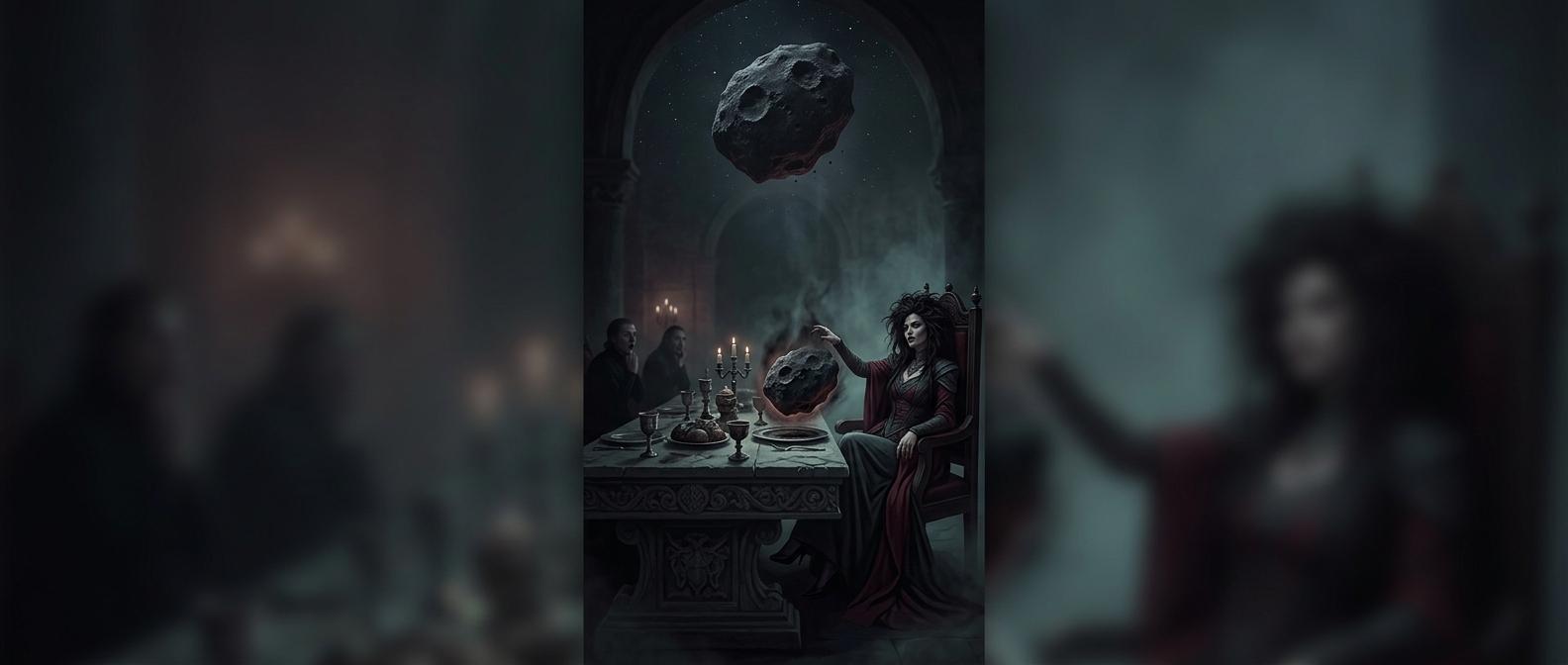
What astrologers mean by Lilith
In many modern birth-chart readings, “Lilith” refers to Black Moon Lilith: not a planet or physical moon, but a calculated point connected to the Moon’s orbit around Earth. Astrologers treat its position in a chart as symbolic, using it to explore themes they associate with the mythic Lilith, including autonomy, refusal, and what a person has been taught to hide or soften.
The name has several uses in astrology, so a reading may mean Black Moon Lilith, an asteroid named Lilith, or another chart point. These are not the same object. When a chart emphasizes Black Moon Lilith, the sign and house—an area of life in the chart—shape how an astrologer interprets that symbolism.
Why rebellion can be part of the reading
The idea is less “breaking rules for its own sake” than noticing where social approval has become a constraint. An astrologer might read Lilith in a relationship-focused part of a chart as a prompt to examine pressure to be agreeable, while a placement tied to public life might raise questions about whose standards shape a person’s ambitions. These are interpretive prompts, not established predictions about behavior.
That gives the symbol its sharper edge: politeness can be a genuine kindness, but it can also be demanded unevenly. In a Lilith reading, rejecting the demand may represent reclaiming a boundary—not permission to disregard other people. The useful question is what a person is refusing, and whether that refusal protects honest choice or simply causes harm.