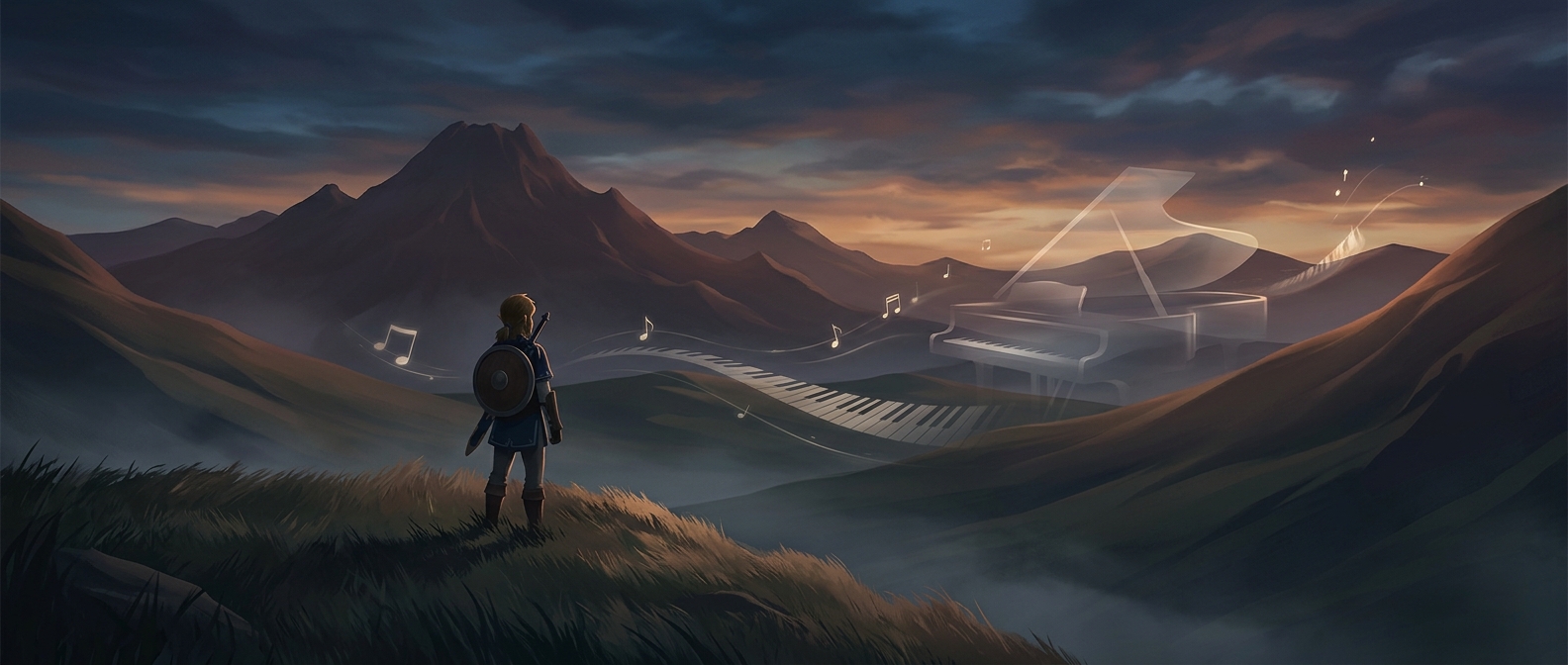
Music that leaves room for the world
A continuous score would tell players how to feel about every stretch of travel. Breath of the Wild often does the opposite: its widely spaced piano phrases leave long gaps in which wind, footsteps, wildlife, and the player’s own actions can be heard. The quiet is not an absence of design; it changes what counts as the foreground.
That choice suits a game where there is rarely one required route or pace. A sweeping melody could make an empty plain feel like a grand, directed journey. A few notes let the same ground feel uncertain and open, while leaving room for a player to pause, wander, or notice something unexpected.
Contrast makes events stand out
Sparse music also gives the soundtrack room to change when the situation changes. A sudden danger or a more active sequence can feel sharper against the quiet that came before it. Rather than maintaining epic momentum everywhere, the game reserves musical intensity for moments that earn it.
The result is that crossing a field is not treated as a scene with a prescribed emotional message. The player’s attention—and the sounds of the place—gets to fill the space between notes.