How the Largest Cup Changes the Comparison
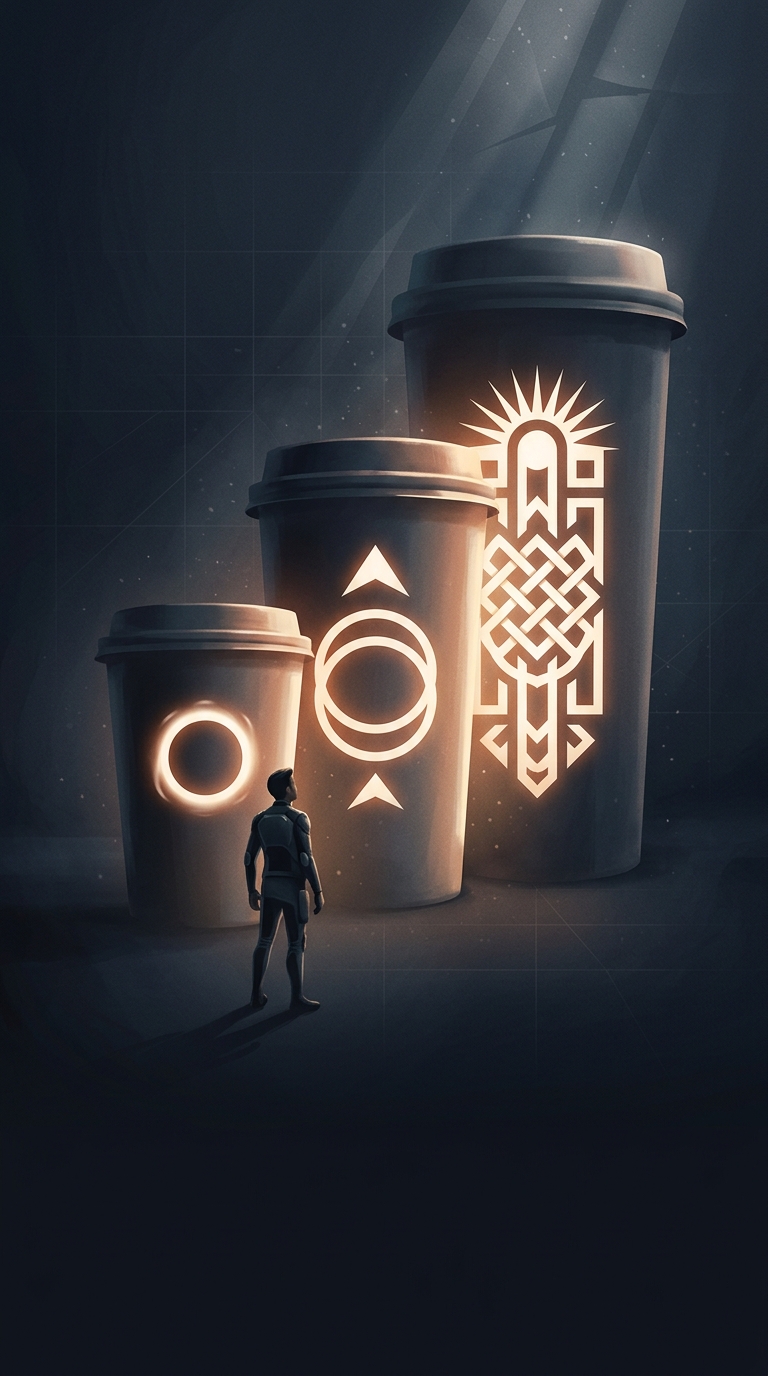
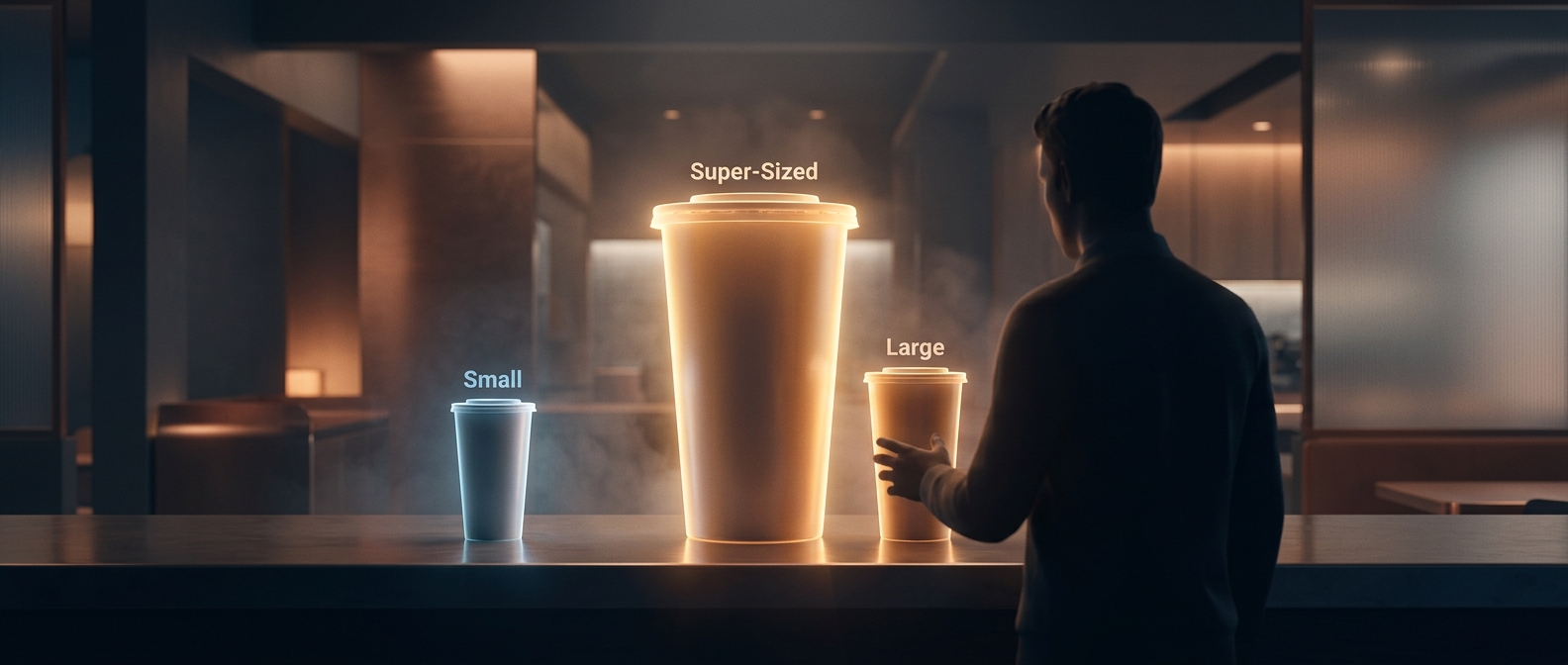
A 32-ounce drink has no fixed visual meaning. Put it beside a gallon-sized cup—128 ounces—and it stops looking large and starts looking moderate. The gallon cup becomes a reference point: instead of judging 32 ounces on its own, customers judge it against the biggest option they can see.
That shift can make the middle size feel like a sensible compromise. It is far less than a gallon, but it is also clearly more than a small drink. The customer may feel they are avoiding both extremes, even if they had not planned to buy 32 ounces before seeing the choices.
Why the Middle Can Be Better for the Seller
A menu of sizes is also a menu of comparisons. When the biggest option looks excessive, the next size down can seem restrained by contrast. That can steer customers toward the middle without requiring a discount or a sales pitch.
The economics depend on the prices and costs, but the seller has a reason to welcome that shift if the middle drink earns a higher profit margin than the smaller one. A customer who trades up from a small drink then spends more, while the store gains the difference between the added revenue and the added cost. The largest size can do its selling even when few people choose it: its presence can make the middle option look more appealing.