The low blast that made trailers feel bigger
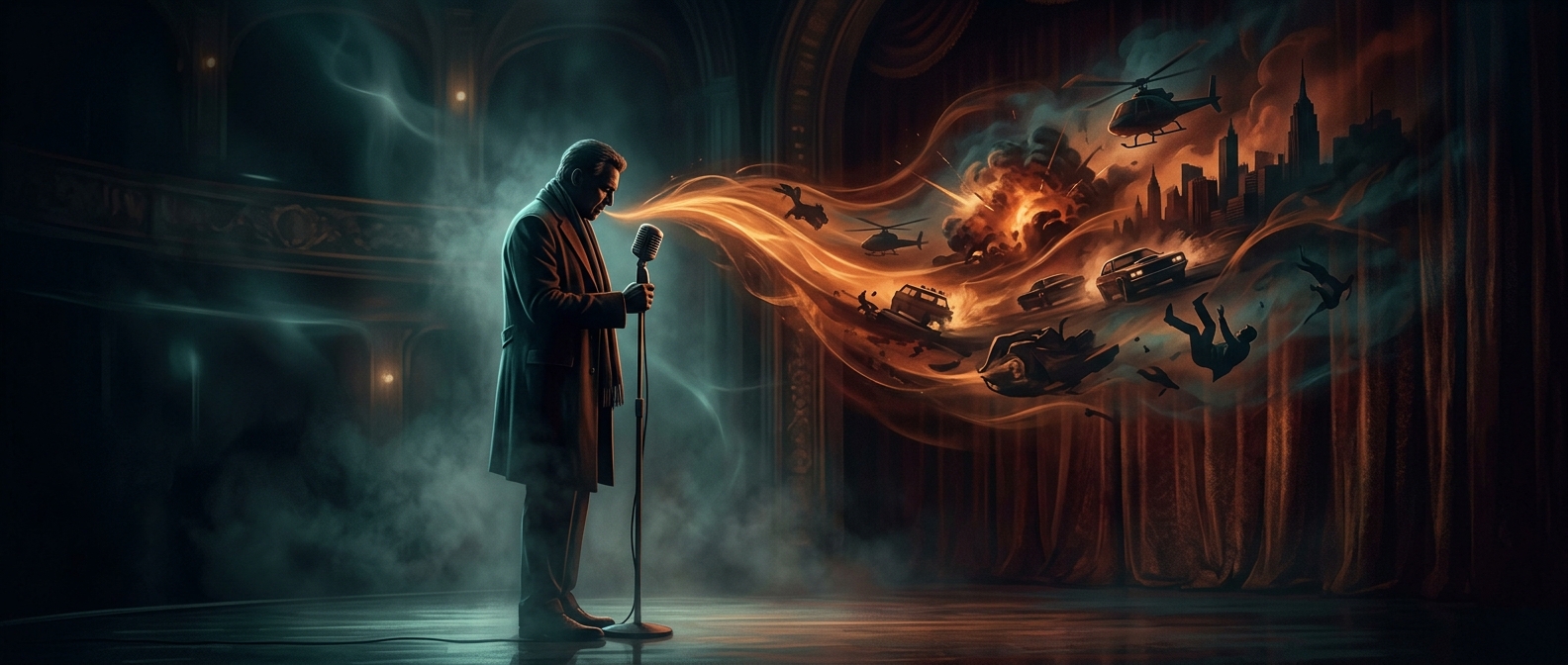
A sudden, cavernous “braaam” became a familiar sound in blockbuster marketing around the release of Inception. It is a designed impact: a low brass-like note, often layered with synthesizers and distorted or stretched sounds, that swells or strikes with enough bass to feel almost physical. The name is an imitation of the noise, not a formal musical term.
Why the sound works in a trailer
Trailers have to suggest scale and urgency in a few minutes, often while competing with dialogue, rapid cuts, and music. A braaam can cut through that mix and make a transition feel momentous. Placed after a quiet pause, it turns the pause into suspense; repeated in a steady rhythm, it can make quick images feel like parts of one accelerating sequence.
Its low register matters. Deep sound is less about carrying a tune than announcing weight and danger. On large cinema speakers, the impact can be felt as well as heard. Editors can also synchronize it with a title card, an explosion, or a sudden change of image, so one sound helps bind several visual beats together.
From signature to shorthand
The effect caught on because it was both dramatic and easy to adapt. Trailer composers and sound designers could vary its pitch, texture, and timing without copying one exact recording. Soon, the blast became a kind of shorthand for “this is big”—useful for action, science fiction, and fantasy films, but also prone to overuse.
That is the tradeoff: the sound can make a moment land, but repeated too often it stops feeling like a discovery. Its lasting influence is less a single horn noise than a new expectation that a trailer’s biggest turn should arrive with a low, unmistakable hit.