Why a Tiny Crack Can Break a Whole Pane
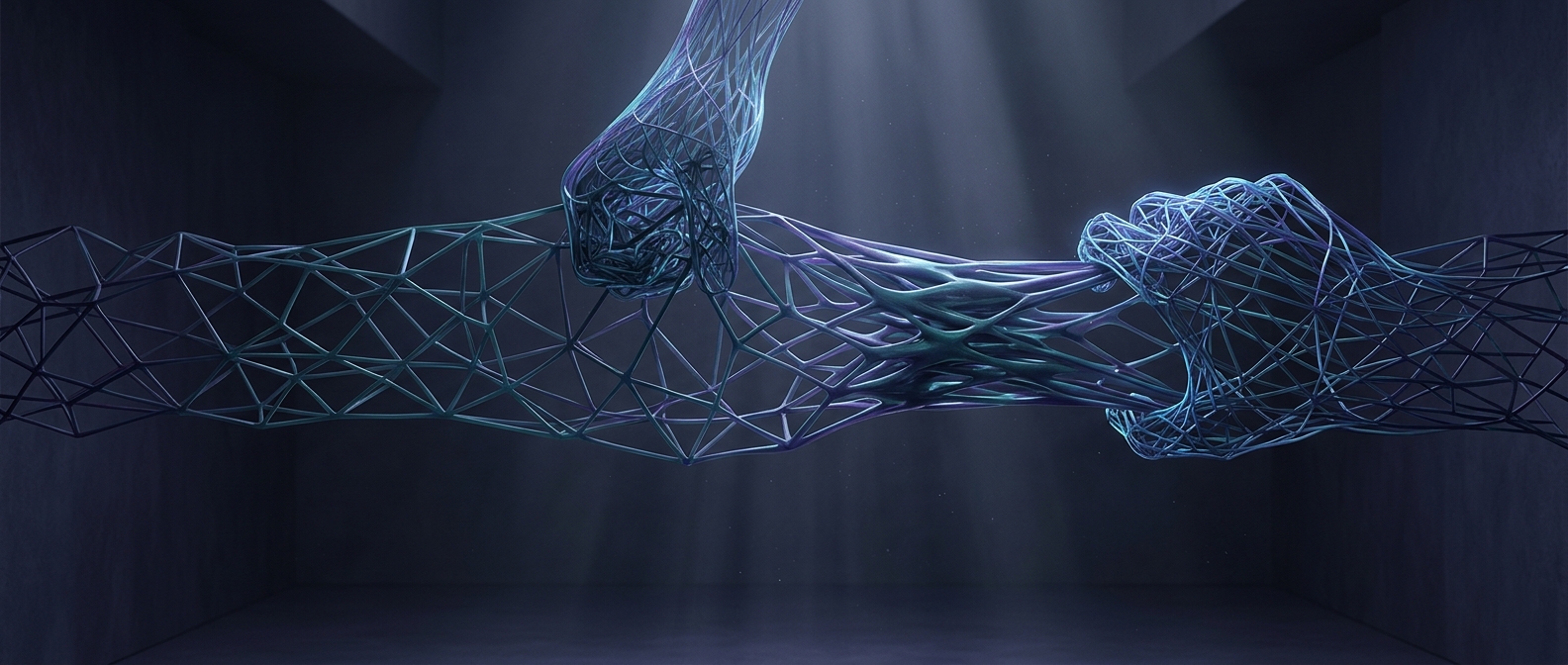
Tempered glass is made by heating ordinary glass and then cooling its surfaces rapidly. The outside solidifies first and is left squeezed inward; as the warmer interior cools more slowly, it becomes trapped under tension. This arrangement of opposing forces makes the pane stronger under everyday impacts—but also gives a crack energy to release.
How the Break Races Across the Glass
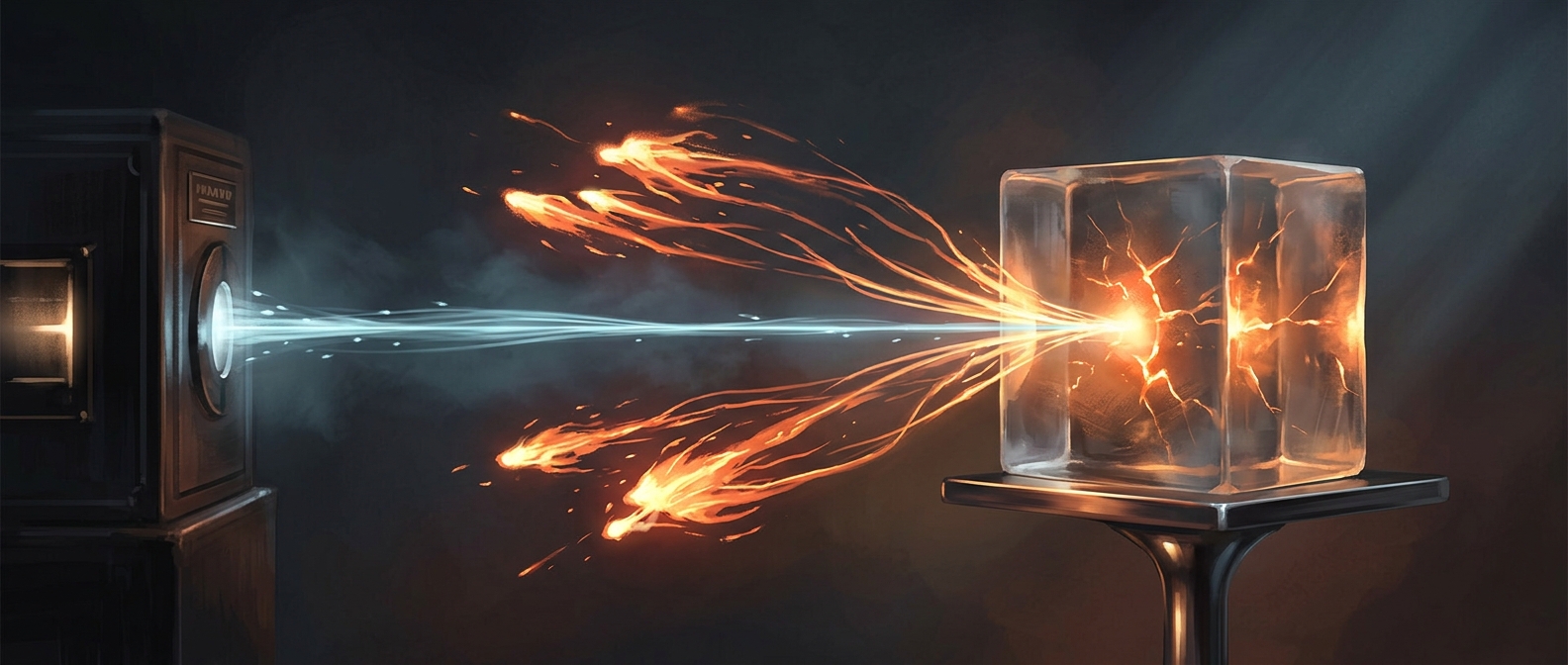
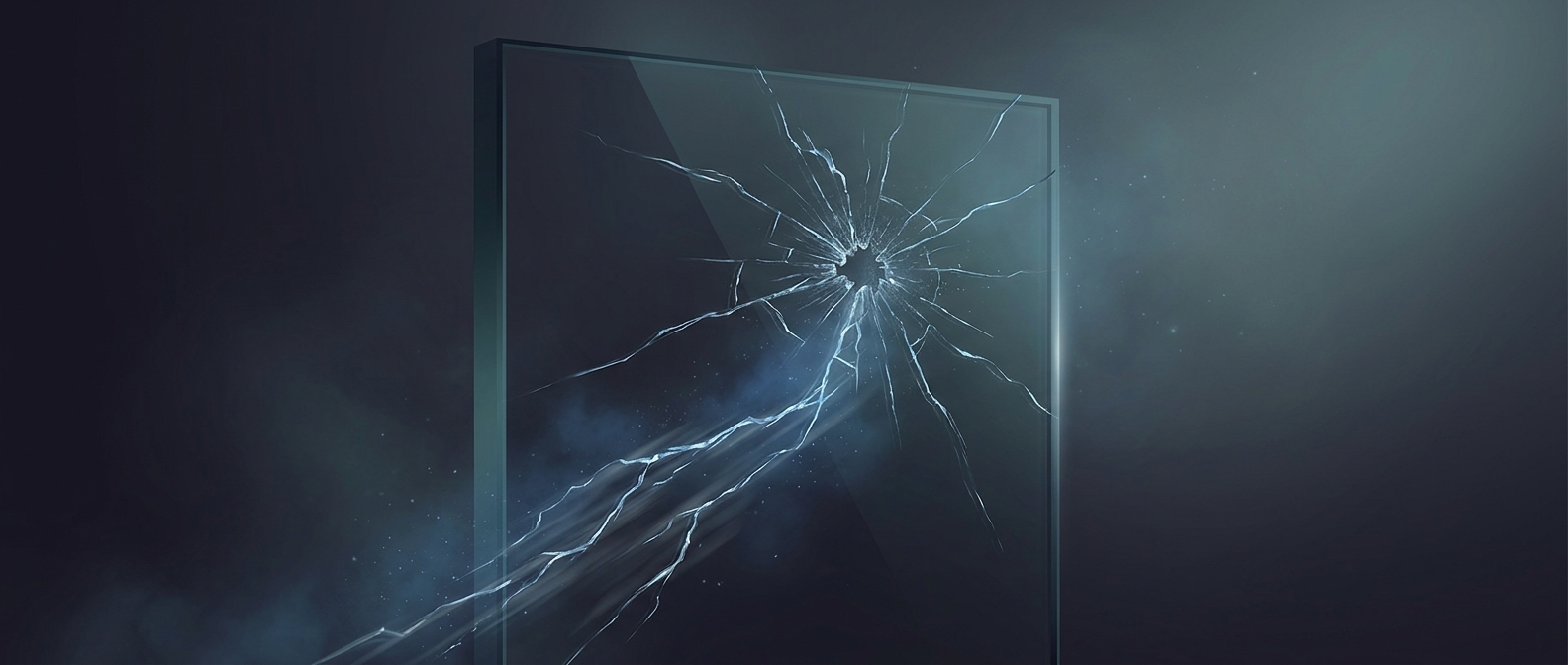
A crack is a moving boundary between intact glass and glass that has separated. At its tip, the material is intensely stressed. Once the crack starts, the pane’s built-in tension helps open and extend it, while the crack redirects that stored energy into breaking the surrounding glass. The reported speed describes this rapid fracture front, not a single piece of glass flying across the room.
The break can spread so quickly that a pane appears to fail all at once. As the fracture branches through the glass, it divides the sheet into many small pieces. Tempered glass is designed to break this way: its internal stress pattern encourages widespread fragmentation instead of the large, sharp-edged shards more typical of ordinary glass.
Strength Comes With a Tradeoff
The same treatment that helps tempered glass withstand greater force than untreated glass also means it cannot usually be repaired by replacing just a cracked corner. A small flaw can set off a break across the pane, so the whole piece may need to be replaced. Its toughness is not an ability to remain intact after cracking; it is a carefully engineered balance between resisting damage and breaking into less dangerous pieces when failure finally begins.