A Drawing Made by Removing a Coating
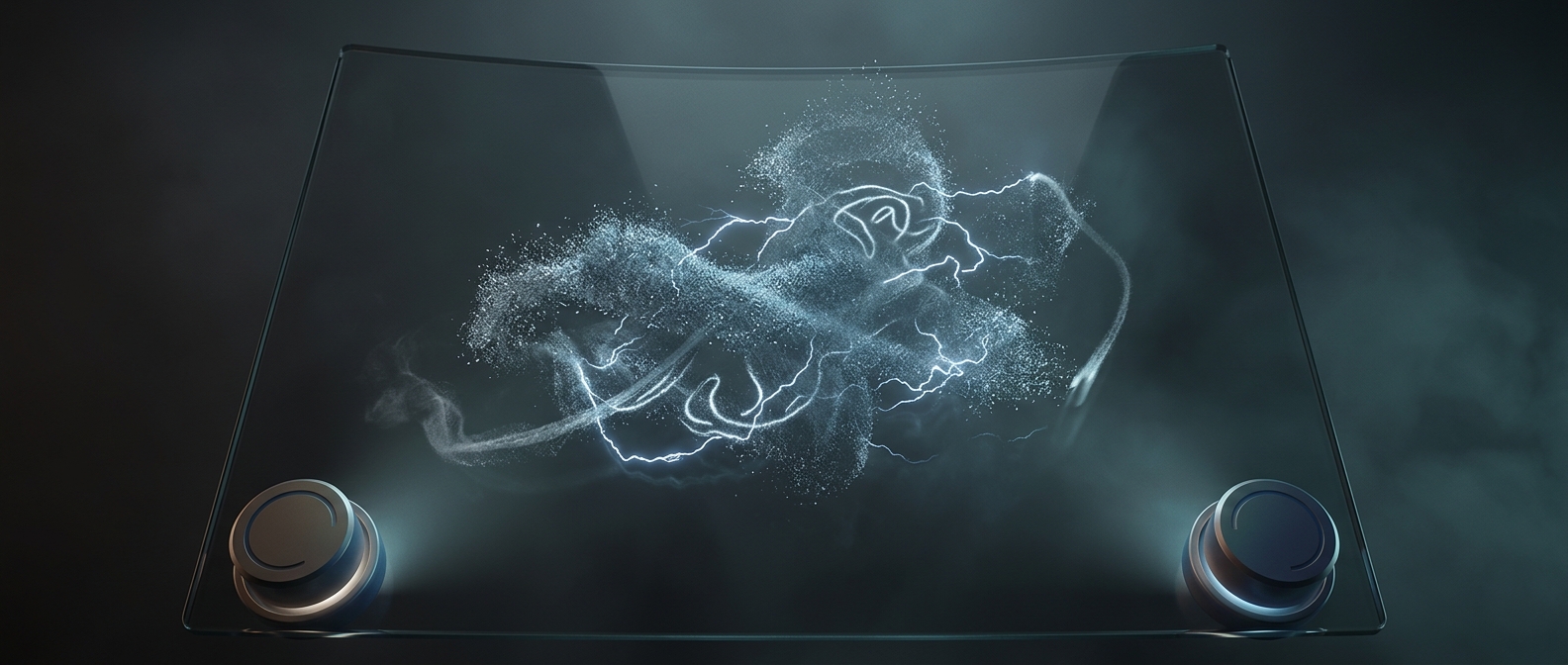
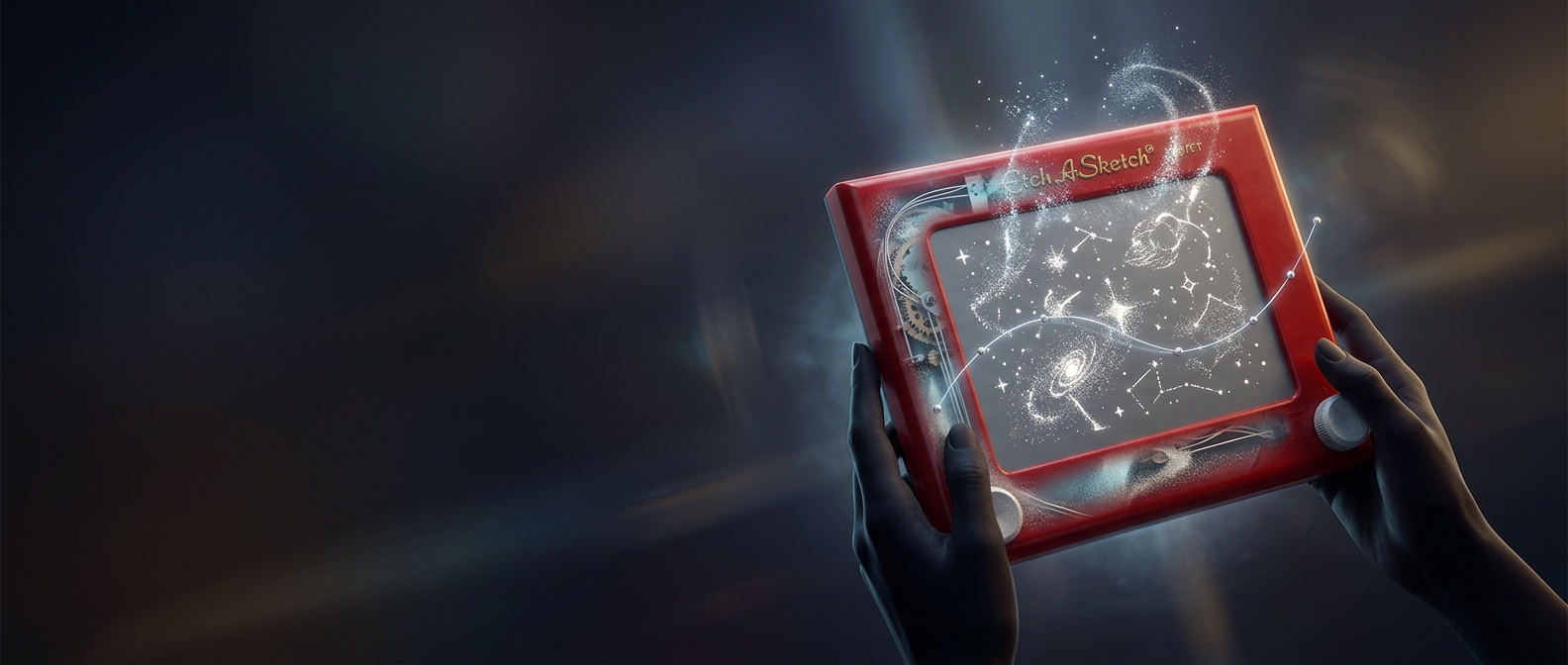
Inside an Etch A Sketch, the screen is the back of a glass pane coated with fine aluminum powder. A movable stylus sits behind the glass. As it travels, its tip scrapes powder away, leaving a clear path through the reflective coating; the darker space behind the screen makes that path visible as a line.
The drawing is therefore not ink deposited on a surface. It is a pattern of places where the powder has been removed. That reversal explains why the line appears as the stylus moves, even though nothing is being added to the glass.
Two Knobs, Two Directions
Each knob controls one direction of the stylus’s movement. Turning one shifts it horizontally; turning the other shifts it vertically. Moving both at once combines those motions, letting the tip trace diagonals and curves. The mechanism turns a pair of simple controls into a small, hand-operated plotting system.
Because the stylus is constrained to those two axes, the artist must build a picture from continuous paths rather than freely placing separate marks. A line can be drawn, but lifting the stylus to start elsewhere is not part of ordinary operation. The limitation is also the toy’s distinctive design challenge: every shape has to be planned as a route.
Why Shaking Erases the Picture
To clear the screen, the toy is turned over and shaken. The loose powder spreads back across the glass, covering the paths the stylus scraped clean. The image disappears not because the lines are rubbed out individually, but because the material that made them visible is redistributed. One shake resets the drawing surface—and turns the same powder that enabled the picture into its eraser.