Jasmine’s Scent Has a Nighttime Side
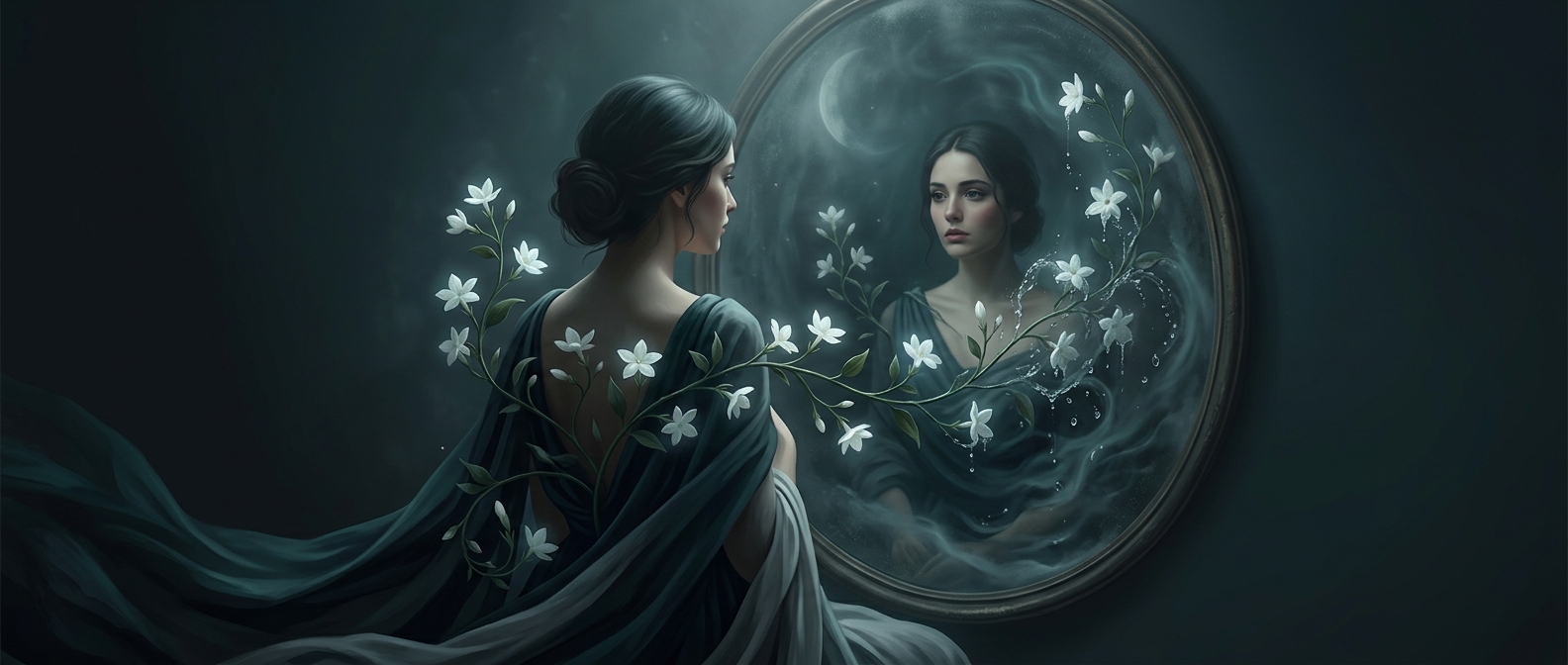
Jasmine’s fragrance comes from volatile compounds: aromatic molecules that leave the flower and travel through the air. In some jasmine varieties, scent becomes especially noticeable after dark, when flowers are open and their fragrance can help attract nighttime pollinators. Damp air can make the scent feel more present, though the pattern varies among species and conditions.
Why the Cancerian Comparison Resonates
In astrology, Cancer is often associated with privacy, sensitivity, and the inward pull of the Moon. The jasmine comparison works as a piece of symbolism: a flower whose character seems to emerge most fully in darkness is paired with an archetype imagined as guarded and emotionally deep. It is a poetic correspondence, not a claim that the zodiac causes the plant’s behavior.
The detail that makes the pairing memorable is sensory: jasmine does not need bright daylight to announce itself. Its scent can become the clearest part of the flower precisely when the garden grows dim.