How a crab’s legs sample the water
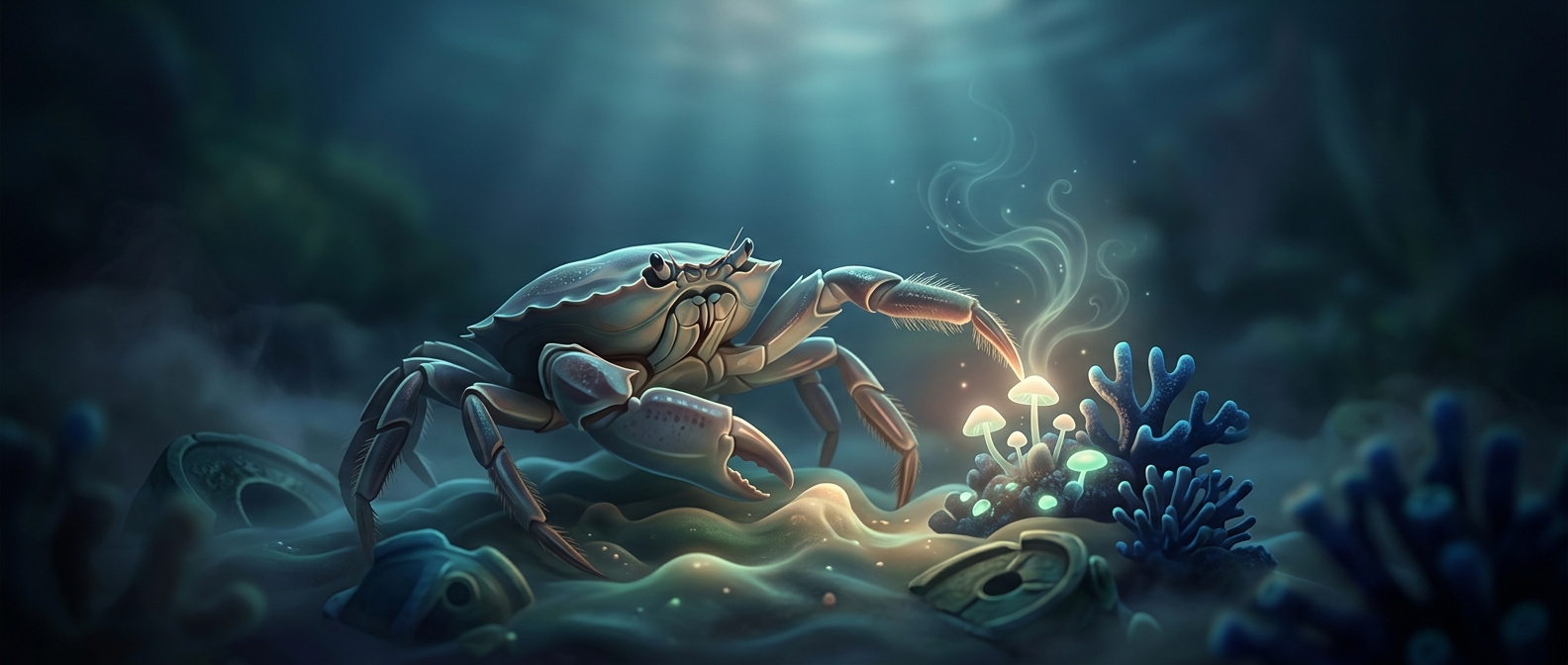
The fine bristles on a crab’s legs are called setae. Some contain chemoreceptors—tiny sensory structures that respond to particular chemicals. When dissolved substances from food or other sources touch the bristles, receptors help the crab detect those chemical cues.
That is a little different from tasting with a tongue. The crab is sampling its surroundings through contact: a leg brushing a surface or moving through water can bring chemical traces within reach. Other sensory structures, including ones near the mouth, help it investigate what it finds.
From chemical cue to movement
A crab can use these signals while searching for food or deciding where to move. The legs are already in constant contact with the bottom, objects, and water, so they offer a broad way to check what is nearby without first picking it up.
The striking part is that a crab’s legs do more than carry it: their bristles also help turn a chemical trace into information about its environment.