How an Irritation Becomes a Pearl
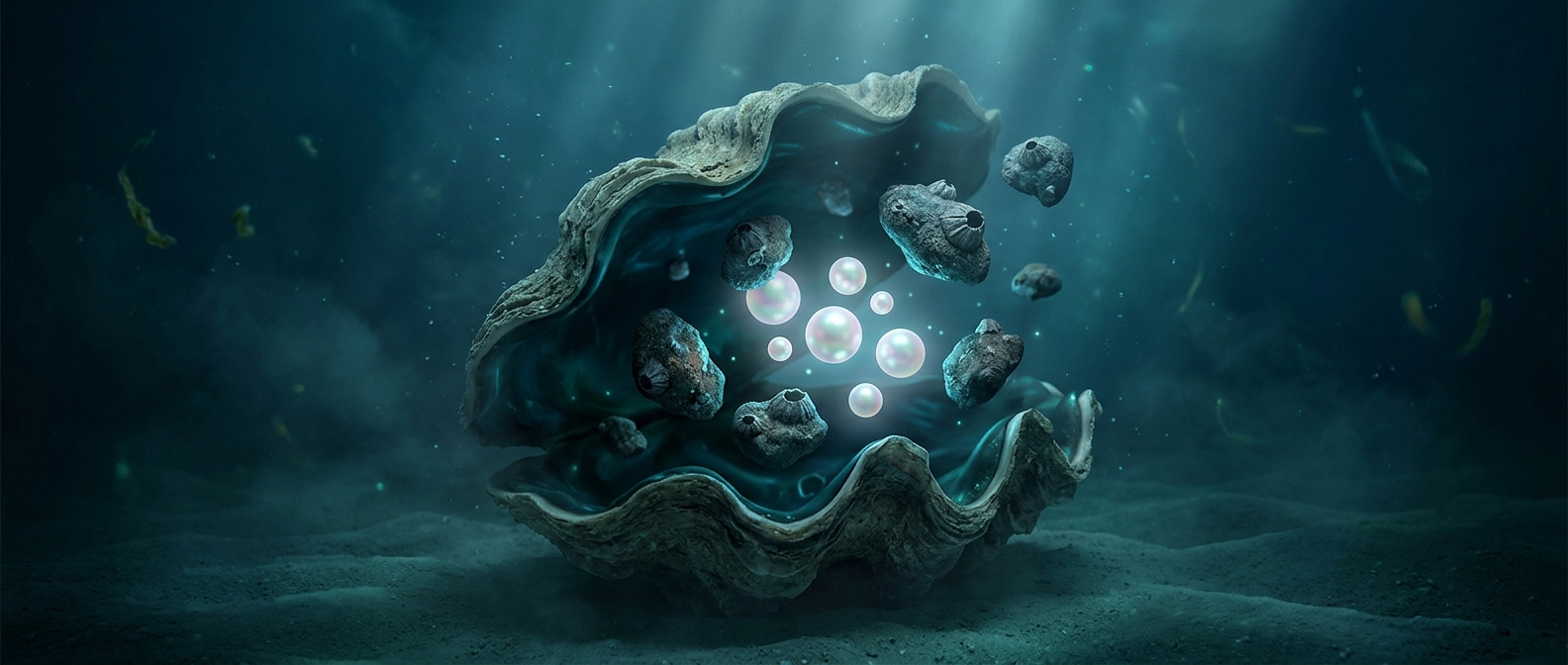
A pearl forms when a mollusk—such as an oyster—builds a small pocket of tissue around material lodged inside its body. The material may come from an injury or parasite; in cultured pearl farming, people deliberately start the process by placing a bead or a tiny piece of donor tissue in the animal. The mollusk’s mantle, the tissue that also makes its shell, then lines the pocket with nacre, the lustrous substance made of microscopic mineral layers held together by organic material.
Layer by layer, nacre covers the pocket’s interior. A pearl is not literally an allergic reaction: it is the result of this protective tissue response, which can also occur while the mollusk repairs damage. The same material that gives the shell its strength gives the pearl its sheen as light reflects through its stacked layers.
Why the Process Makes a Useful Metaphor
The symbolic comparison turns on transformation, not on the biology being identical to a human emotion. An irritation does not vanish; instead, it becomes the focus of repeated responses, and those responses change what surrounds it. In the pearl, the outcome is visible and beautiful. In a person, a lingering grievance can shape habits and relationships, though it need not do so permanently.
That contrast is what gives the image its bite: a covering built for protection can become part of the thing’s identity. In a pearl, the layers are literal nacre; in the metaphor, they are the accumulated ways someone carries an old hurt.