How a CAPTCHA Reads the Path to a Button
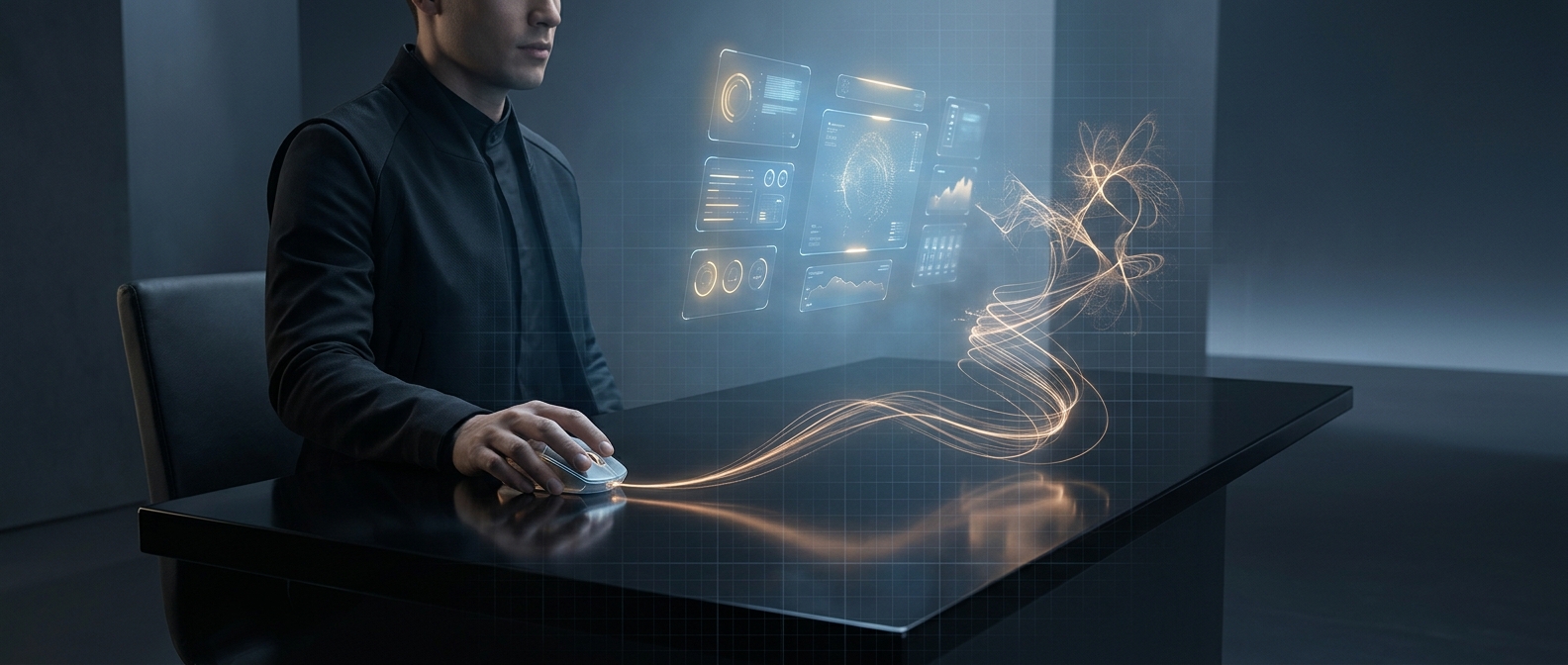
A mouse pointer leaves more information than its final position. As it travels across a page, software can examine the shape and timing of the movement: whether speed varies, whether the pointer pauses, and how it approaches a target. These details form a behavioral signal—a pattern of interaction that can help estimate whether a visit resembles ordinary use or automated traffic.
That estimate can begin before a person presses the CAPTCHA’s button. The system does not need to identify who is holding the mouse; it only needs enough evidence to decide how much trust to place in the interaction.
Why One Gesture Cannot Prove Anything
A smooth line is not proof of a bot. A person using a trackpad, moving quickly, or steering with a steady hand may produce a simple path. And a sufficiently sophisticated program can add variation to its movements. Pointer behavior is therefore useful as a clue, not a reliable identity test.
CAPTCHAs can weigh it alongside other signals, such as how the page is being interacted with. If the combined evidence looks reassuring, a user may face less friction; if it raises doubts, the system can ask for an additional challenge. The practical advantage is that a test can adapt to risk instead of treating every visitor as equally suspicious.
This approach also explains why a CAPTCHA may appear to do little before it presents a puzzle: the interaction itself can already be supplying evidence. A small hesitation or course correction is not a verdict—it is one piece of a larger decision.