Why a Trojan Needs a Convincing Disguise
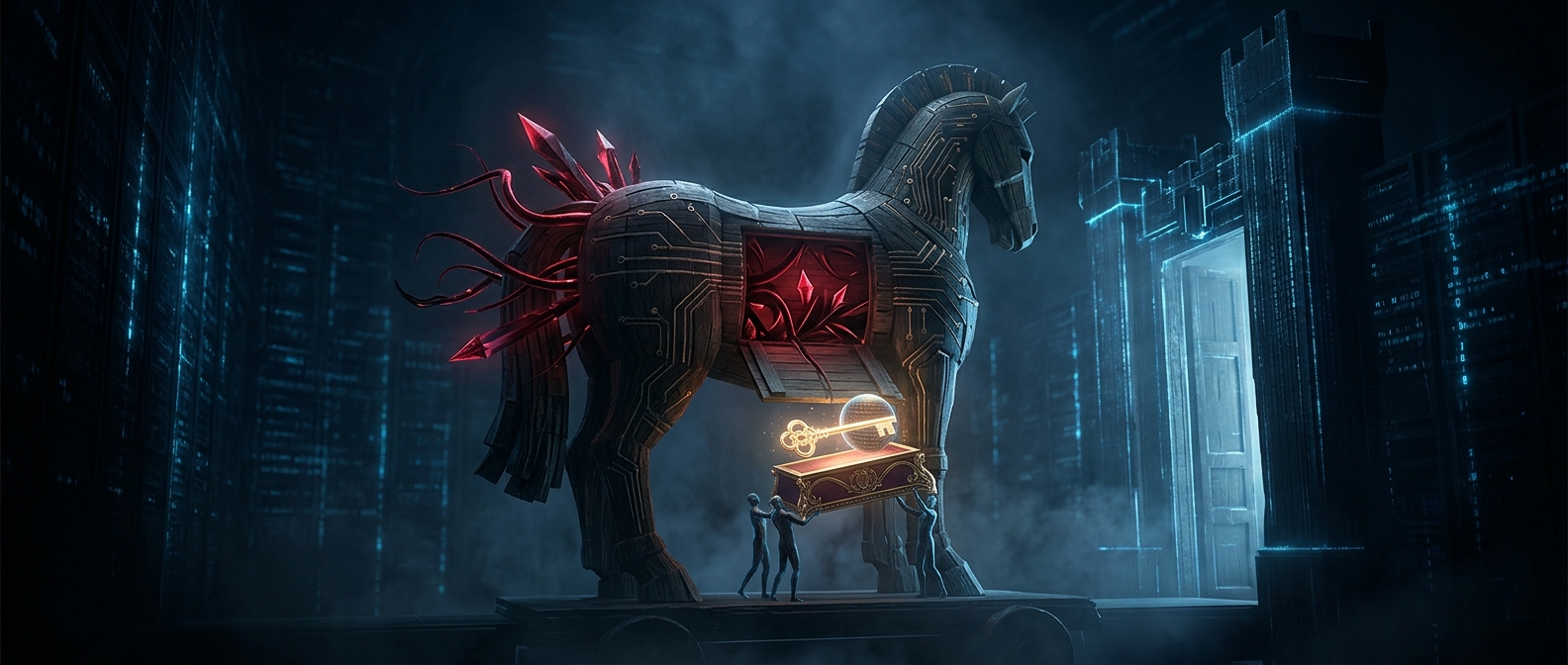
A Trojan is named for its deception, not for a special way of spreading. Unlike a worm, which can copy itself across systems, a Trojan typically relies on someone to download or open it. That makes the apparent purpose of the file part of the attack: a fake utility, pirated app, or attachment can seem useful enough that a person supplies the click the malware cannot make for itself.
The harmful code may be bundled with a working program, or the program may be little more than a launcher that installs the real payload after it starts. In either case, the visible software gives the user a reason to run code they would otherwise reject. The disguise can fool a person even when the file is not technically hidden from the operating system.
What Happens After the Click
Launching the file gives its code a chance to run with the permissions available to that program or user. It might then install additional software, copy information, or change system settings. A backdoor is one possible result: a way for an attacker to regain access later through a route that avoids the ordinary sign-in process. It does not automatically mean the attacker has unlimited control; what they can do depends on the access the malware gains and the system’s defenses.
That sequence is why a Trojan can be dangerous even when the file appears to work as advertised. A useful-looking app may complete its visible task while quietly performing another one. The decisive moment is often not a dramatic system failure, but an ordinary launch that gives the hidden code its first opportunity to act.