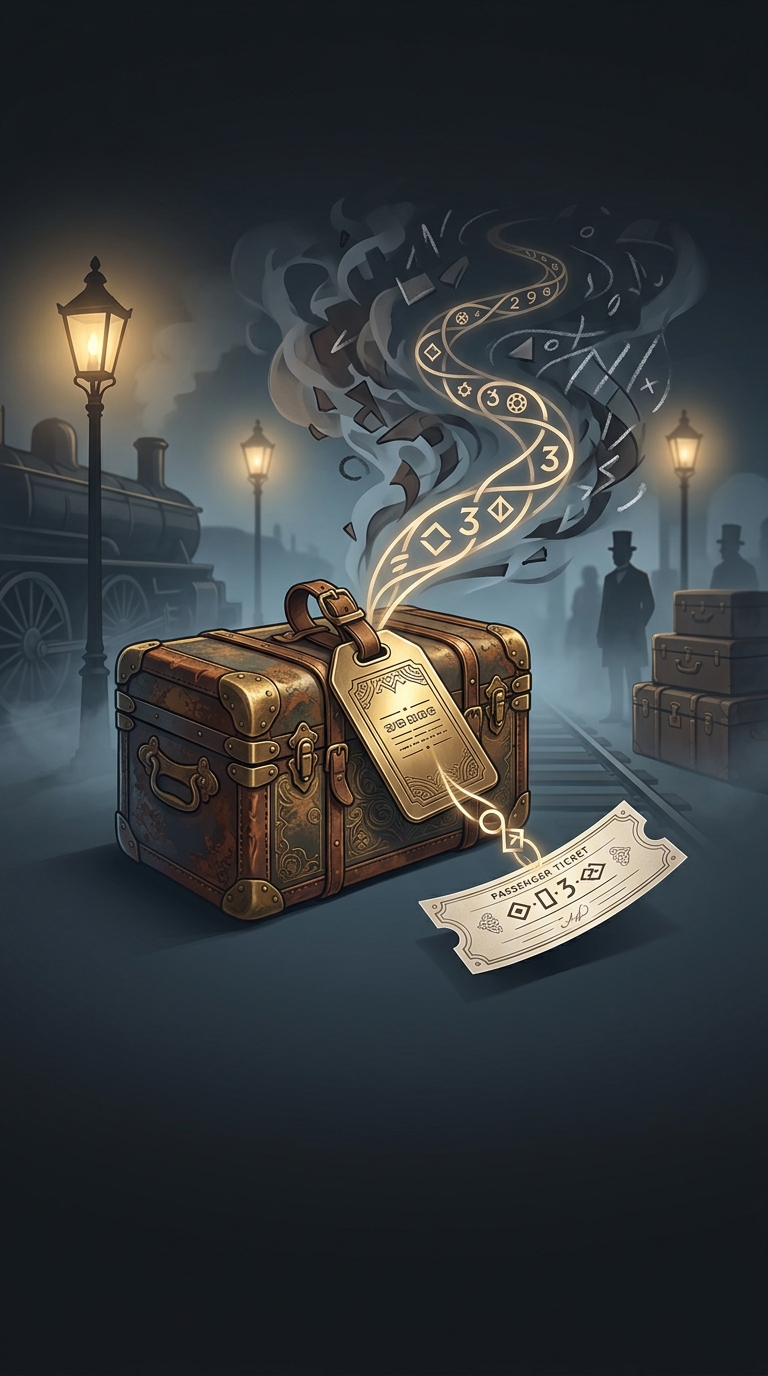
The key was a shared number, not just a destination
On a railway journey, a passenger and a trunk could quickly become separated. Bags might be loaded before their owners, transferred between trains, or sent through a station while the traveler continued onward. A tag that named only a destination could help route a bag, but it could not reliably show which passenger had claimed it.
John Patrick Bowman helped popularize a system that gave the bag and its owner matching numbered records. Railway staff could use the number on the bag to connect it with the stub held by the passenger. That turned identification into a simple cross-check: the traveler had a counterpart to the mark on the luggage, rather than having to describe a trunk among many similar ones.
A small paper link changed the recovery process
The system mattered because it made a lost bag traceable through the railway’s own handling process. When a trunk turned up at the wrong station or was separated from its route, staff had a specific identifier to investigate and a way to confirm who it belonged to. The number did not prevent every loading mistake; it made the consequences easier to sort out.
That distinction helped baggage handling scale alongside rail travel. As more passengers and bags moved through busy stations, matching records provided a practical way to reconnect an object with its owner. The lasting idea was simple: give both sides of a handoff the same identifier, and a misplaced trunk becomes a solvable mismatch rather than an unidentifiable piece of luggage.