How earwax could shield steel from an acid bath
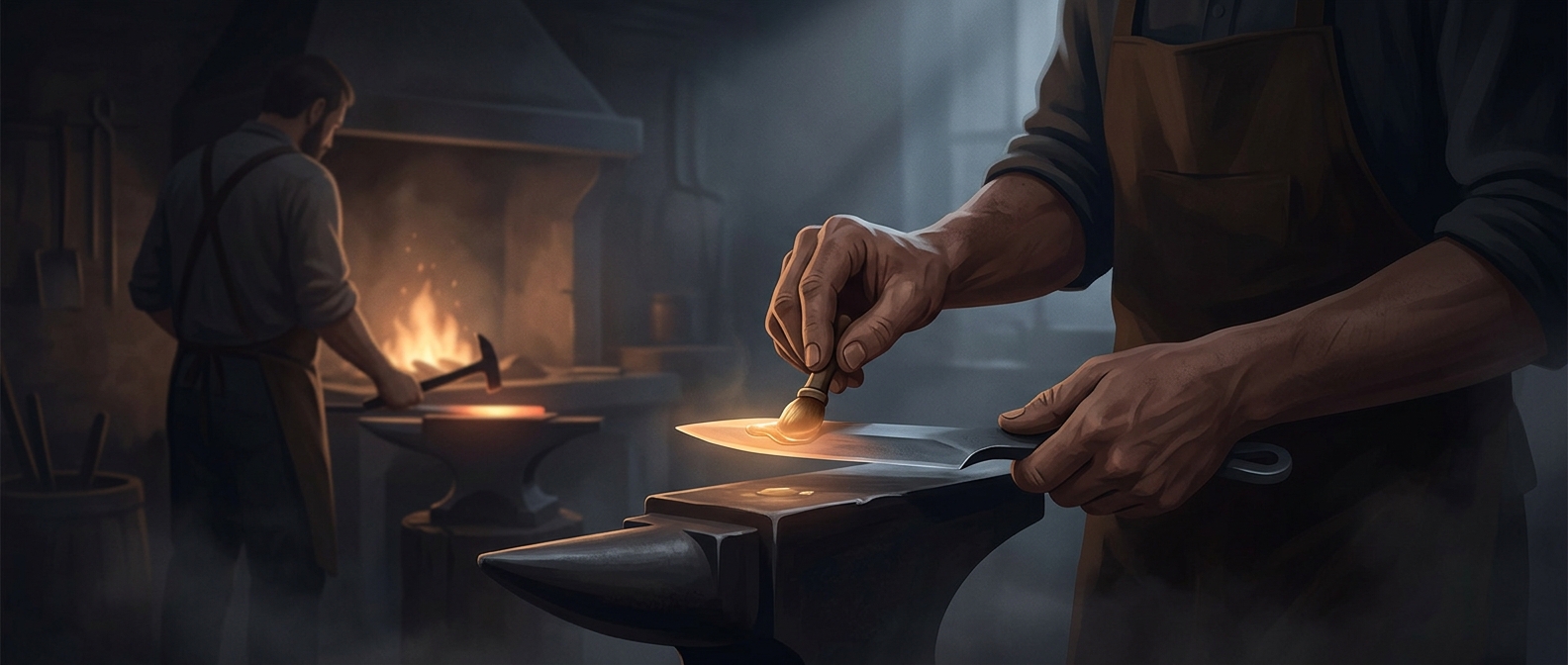
Etching makes a pattern by letting acid react with exposed metal. To control where that reaction happens, a craftsperson covers the areas that should stay smooth. This covering is called a resist: a temporary barrier between the metal and the acid.
Earwax could serve as an improvised resist. Its waxy, oily texture helped keep the etching liquid from touching the steel beneath it. The uncovered areas, by contrast, were exposed to the acid and gradually eaten away, leaving a shallow mark or design. After etching, the protective coating could be removed.
A small workshop solution, with limits
The method turns on a simple contrast: protected steel remains relatively untouched, while bare steel changes. A smith could use that difference to make lines, lettering, or other details without cutting every mark directly into the metal. Earwax was not a special-purpose tool; it was a material close at hand that could do a job normally handled by a more deliberate coating.
The result depended on the coating staying in place. Any gap or thin spot let acid reach the steel, so an improvised mask was best suited to limited work rather than assumed to provide perfect protection. The memorable part is the practical logic: in a workshop, even a substance from the blacksmith’s own body could become a temporary shield, because the essential requirement was simply to keep acid off selected parts of the surface.