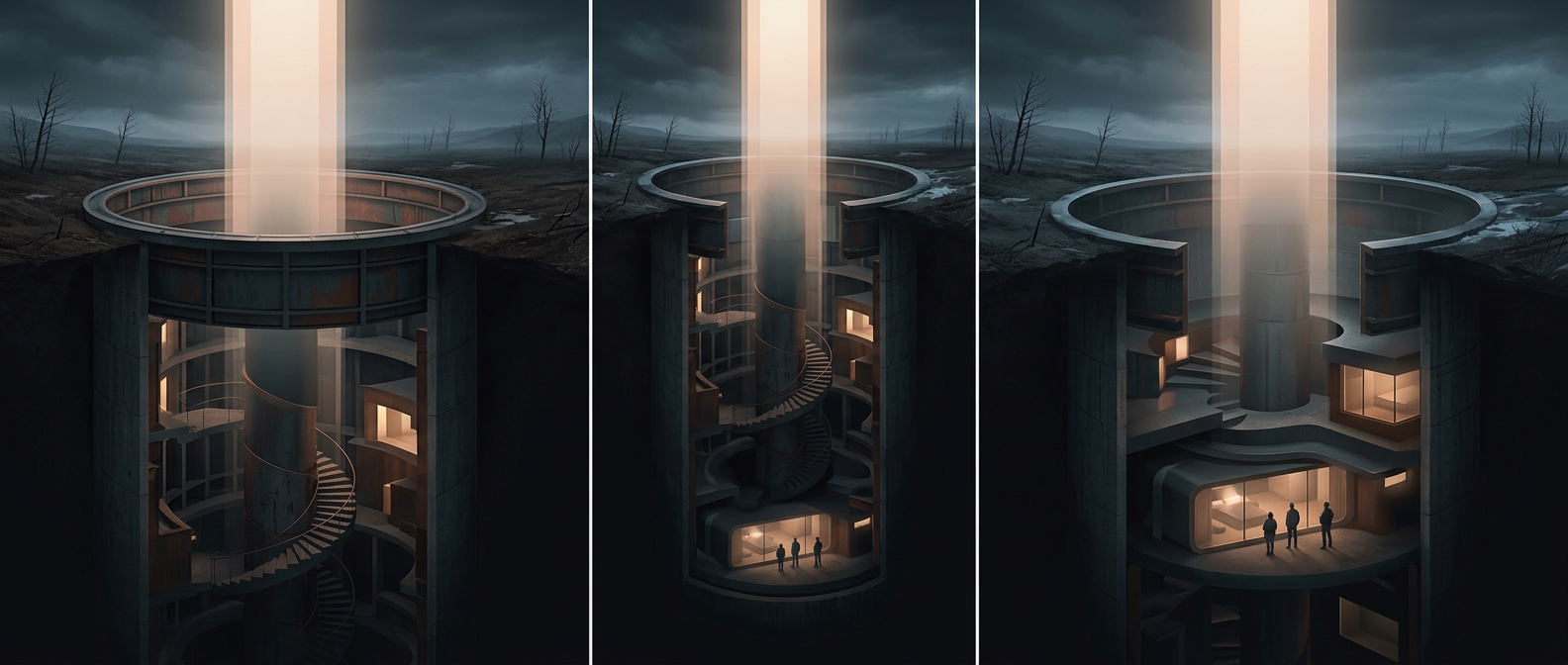
Turning a missile silo into a private refuge
A decommissioned missile silo is not an ordinary building with thick walls. It was designed to house military equipment deep underground, behind heavy structures intended to protect it. That makes a silo a rare starting point for an emergency shelter—but not a ready-made home. Developers have to adapt the space for people: dividing the vast interior into residences, adding plumbing and climate control, and creating systems for power, water, food storage, and air filtration.
The same features that make a silo attractive also make it difficult to convert. Its depth and reinforced construction are useful, but residents would depend on equipment that must keep working when ordinary services are unavailable. A survival condo therefore sells more than square footage: it sells access to shared infrastructure designed to support life below ground.
The economics of buying time
For wealthy buyers, the appeal is a form of insurance against an extreme disaster. Instead of building a private bunker from scratch, they can buy into a project where major construction and survival systems are already in place. The developer, in turn, gets to repurpose an obsolete military structure as scarce, high-priced housing.
That trade has limits. A shelter can protect occupants from some outside hazards, but it cannot make a crisis disappear. People inside still need reliable systems, supplies, and a way to live together in a confined community. The silo’s transformation turns a weapon site into a refuge—but its most valuable feature is ultimately not the concrete. It is the promise that, for a time, essential services can continue underground.