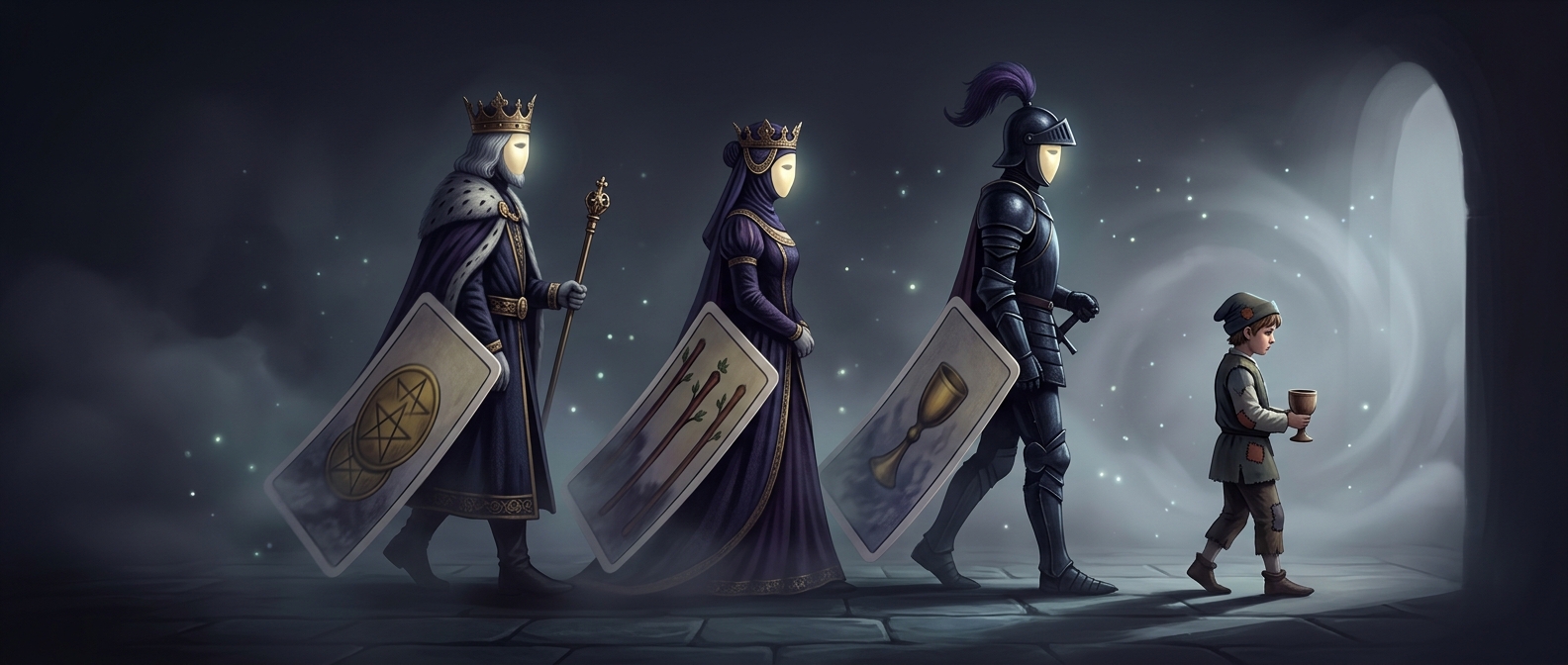
Tarot began as a card game in Renaissance Italy
The earliest known tarot decks were made in 15th-century northern Italy for playing a trick-taking game—not for predicting the future. In a trick-taking game, players each play a card, and the strongest card in a round, or “trick,” wins the cards played. Tarot added a special sequence of picture cards that could outrank the ordinary suit cards.
Those extra cards were called trionfi, Italian for “triumphs.” They gave the game its distinctive structure: players had to weigh the power of a trump card against the value of cards in the regular suits. The deck was therefore designed for competition and strategy, even though its elaborate images could also carry religious, political, or moral associations familiar to people of the time.
The mystical use came later
For centuries, tarot’s main role was as a game. Its shift toward fortune-telling happened much later, after the cards reached France. In the late 18th century, writers there began assigning hidden meanings and ancient origins to the deck, helping establish the divinatory tradition now associated with tarot readings.
That later history can make the cards’ symbolic artwork seem like proof that they were invented for prophecy. But the original practical purpose was more straightforward: the images supplied a powerful set of trump cards for a game. The same deck could eventually serve a very different purpose because its striking, memorable pictures invited interpretation.