How slow-growing trees may have shaped a Stradivarius’s sound
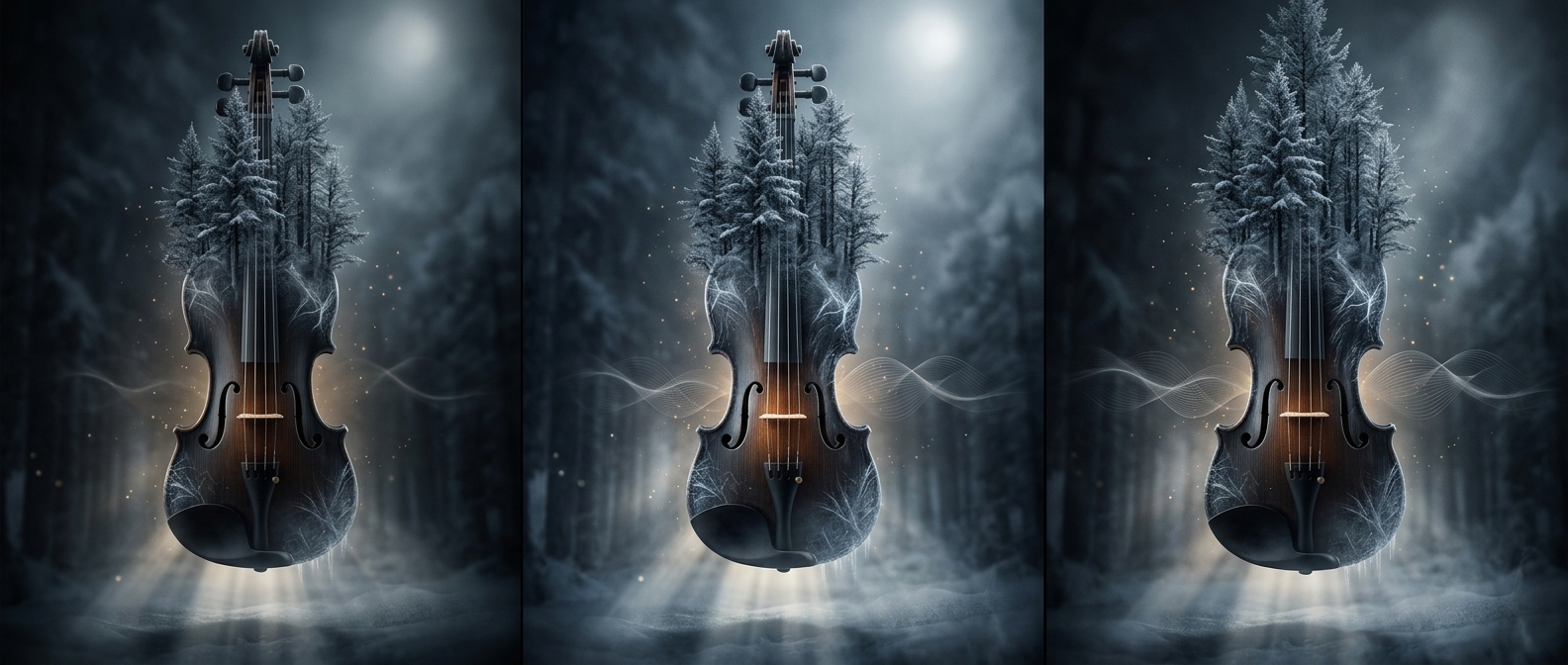
A violin’s top plate—the thin wooden surface that moves when the strings vibrate—is usually made from spruce. Its job is to turn the strings’ relatively small vibrations into the larger movements of air that we hear as sound. The wood must be light enough to vibrate, yet stiff enough to do so in a controlled way.
One explanation for the celebrated sound of some Stradivarius violins points to the spruce available in Europe during the Little Ice Age, a long stretch of generally cooler climate. Shorter growing seasons can slow a tree’s growth, producing narrower annual rings. If that growth also results in wood that is unusually even and dense, it may give a violin maker a useful combination of lightness and stiffness.
From growth rings to vibration
Wood is not uniform: its structure changes from one growth ring to the next. That affects how it bends and carries vibrations. A top plate made from carefully selected spruce can respond to the strings and pass energy to the surrounding air; its thickness and shape help determine how it moves. Dense, tightly grained wood could therefore have contributed to the way an instrument projects and colors its sound.
But a tree’s climate history does not dictate a violin’s tone by itself. The wood’s properties vary, and the maker’s choices—how a plate is carved, assembled, and finished—also matter. The Little Ice Age explanation is best understood as a possible advantage in the raw material, not a complete recipe for Stradivari’s sound.
That possibility is still compelling: a violin’s voice begins, in part, with the conditions under which its wood grew, years before the wood reached a workshop.