Morgana turns the calendar into a boundary
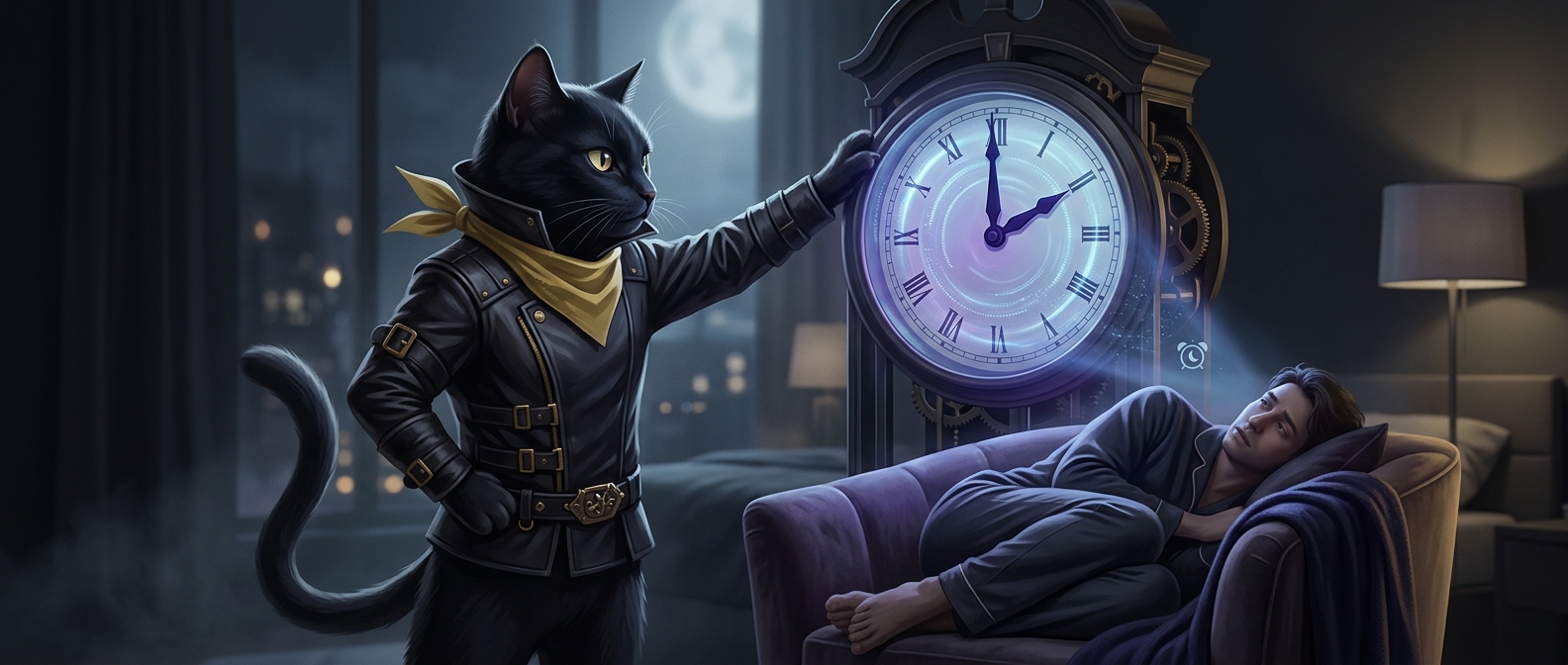
In Persona 5, each in-game day offers a limited number of chances to act. The player might spend an afternoon building a relationship or exploring a dungeon, then hope to use the evening for another task. But after many daytime activities, Morgana—the catlike companion who rides in the protagonist’s backpack—insists that it is time to sleep. The game ends the day instead of letting the player roam freely.
That restriction is part of the game’s time-management design, not a punishment for staying out too late. Persona 5 asks players to choose among more possible activities than they can fit into the calendar, so the lost evenings help make those choices matter. A night spent studying or working cannot also be spent strengthening a friendship.
A story reason for a design limit
Morgana gives the rule a voice inside the story. Rather than presenting the cutoff only as a menu or calendar limitation, the game has a companion tell the protagonist to go to bed. His insistence can feel comic—and frustrating—because the player knows there are still things to do.
The rule is not absolute: on some nights, the game does allow evening activities. Whether the player gets that time depends on the day’s events and the game’s progression. That makes Morgana’s familiar warning a signal that, for now, the schedule has closed.
The result is a small but memorable collision between character and system: the same backpack companion who travels with the player also helps decide when the player’s day is over.