Turning surplus electricity into stored heat
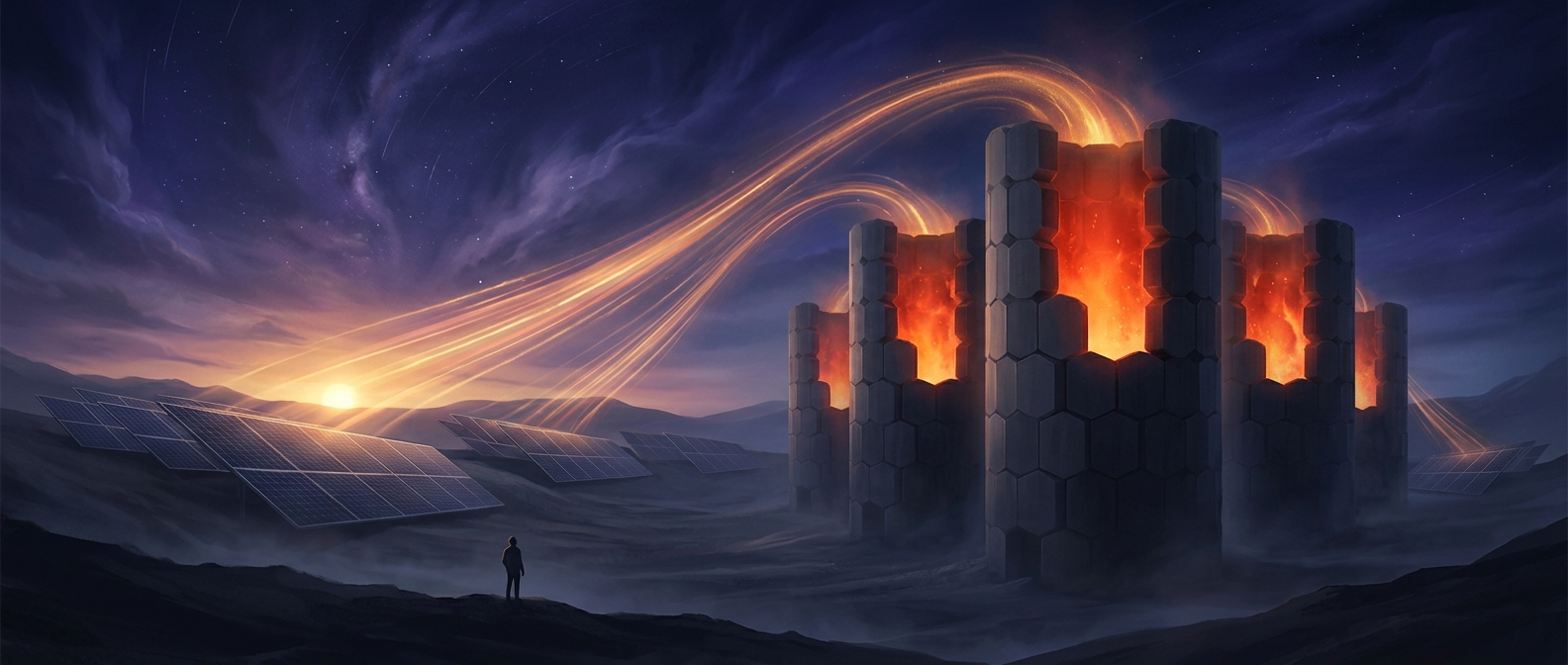
Solar panels can produce more electricity around midday than a factory needs at that moment. Rondo Energy’s approach uses that temporary surplus to heat dense refractory bricks—materials designed to withstand very high temperatures—rather than trying to store the electricity in a conventional battery. Electrical heating raises the bricks to about 1,500°C, leaving energy held as heat in the masonry.
The key is to keep that heat from escaping too quickly. An insulated enclosure slows heat loss, allowing the bricks to remain hot for days. The system is therefore storing energy in the bricks’ temperature, not preserving a supply of sunlight or electricity inside them.
Heat when industry needs it
When demand rises or solar production falls after sunset, the stored heat can be drawn out and used to make steam. That matters because many industrial processes need reliable high-temperature heat, often supplied by burning fuel. A heat battery can shift some of that energy use to hours when renewable electricity is plentiful.
The same stored heat can also be used to generate electricity, though that requires converting heat back into electrical power. In either case, the design’s practical advantage is timing: electricity that might otherwise go unused at a sunny hour becomes heat available later. It does not make solar power constant; it gives factories another way to bridge the gap between when the sun produces energy and when industrial equipment needs it.