Why the Mona Lisa can feel unexpectedly small
Reproductions have trained many people to imagine the Mona Lisa as a large, room-dominating canvas. In person, its scale is closer to that of an intimate portrait: Leonardo painted it on a poplar wood panel, not a vast canvas meant to command a hall. The modest dimensions suit the image’s original focus—a single seated figure seen from about the waist up.
The room changes the encounter
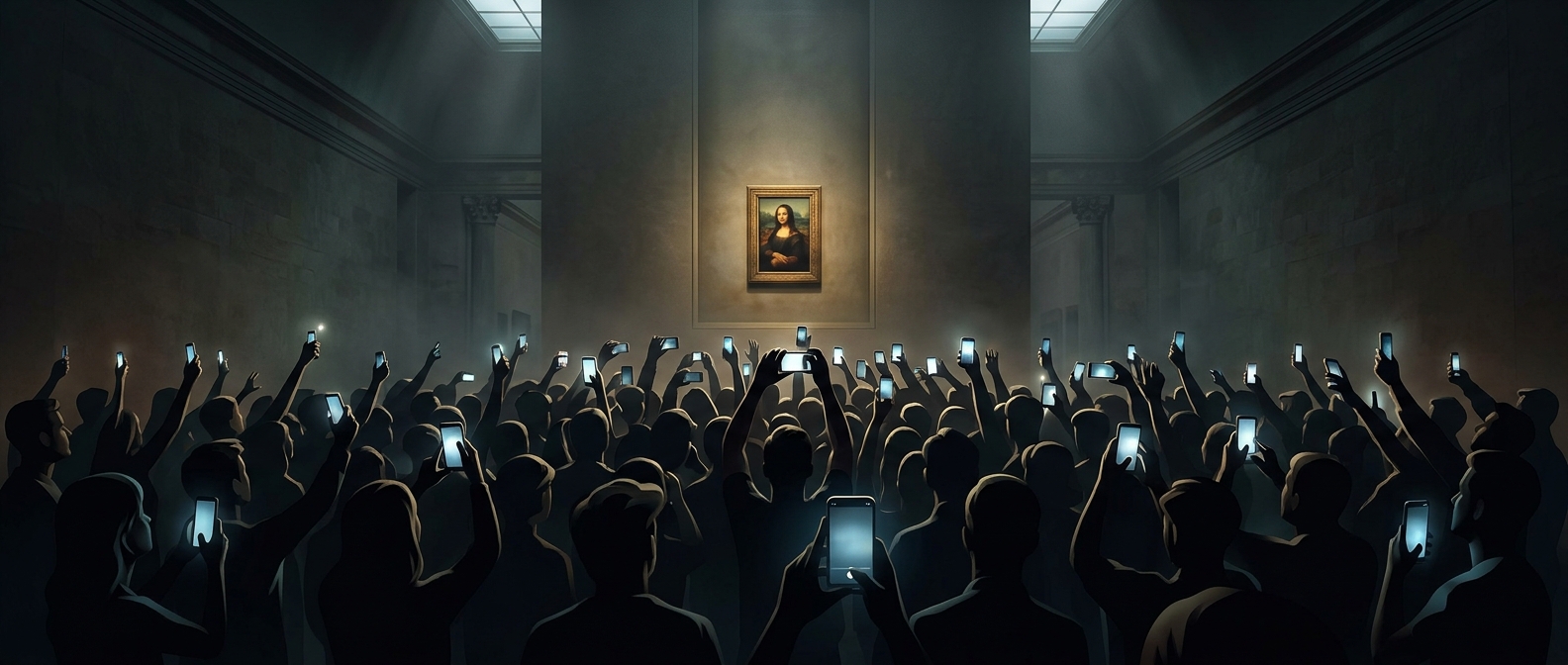
At the Louvre, the painting is displayed in the Salle des États, a large gallery that also contains monumental works. That contrast can make Leonardo’s portrait seem even smaller: visitors cross a broad room toward one tightly concentrated point of attention. Protective glazing and the steady flow of people shape the view, too; the experience is less like studying a picture alone than approaching a famous landmark amid a crowd.
The painting’s subtle modeling rewards close attention. Leonardo softened transitions between light and shadow—a technique known as sfumato—so the face and landscape seem to emerge gradually rather than from sharp outlines. From a distance, that softness can be hard to pick out through reflections and moving visitors. Its physical size is modest, but the surrounding room, protective display, and worldwide fame give the encounter a scale far beyond the panel itself.