A portrait that feels like an addressee
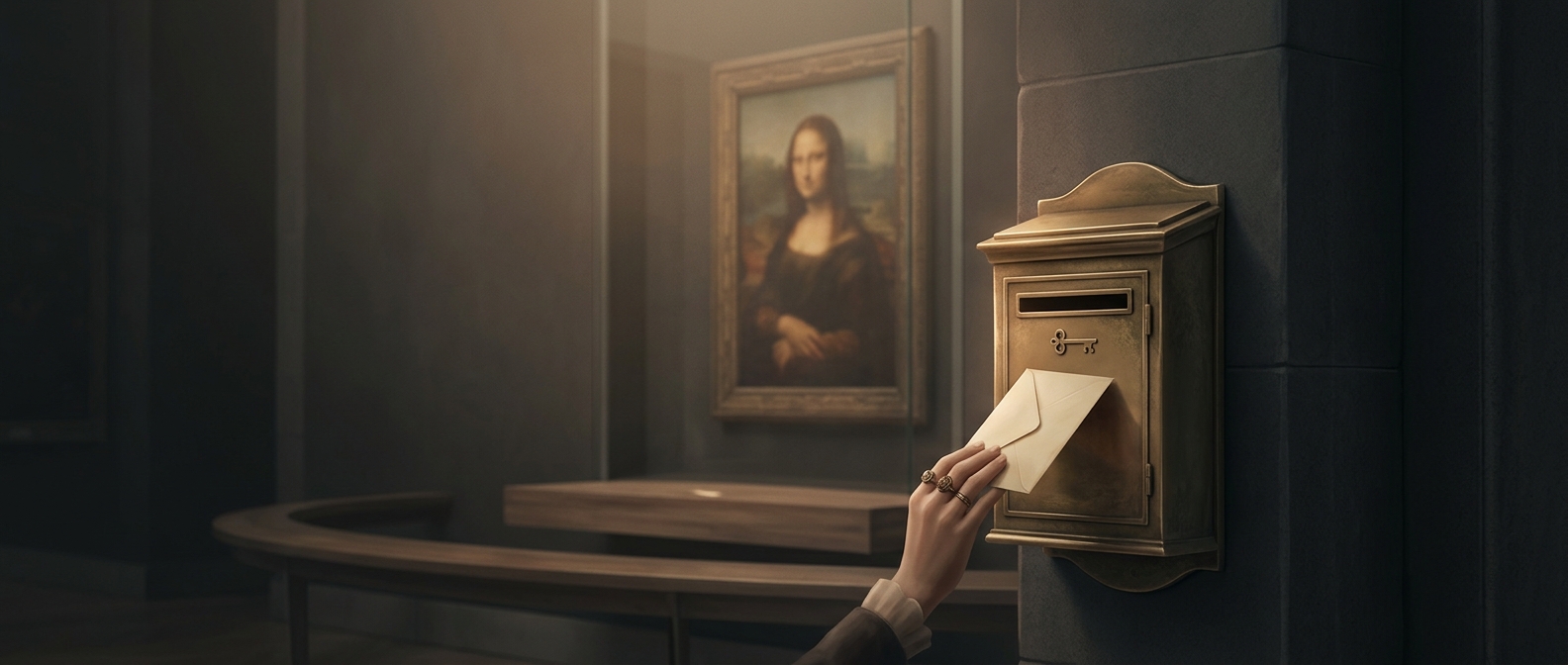
A letter to the Mona Lisa is not really meant for paint and wood. It treats the woman in the portrait as someone who might receive a message. That shift—from looking at an artwork to addressing a person—is what makes the correspondence more intimate than ordinary praise of a famous painting.
The portrait encourages that response without explaining its subject. Her face is turned toward the viewer, and the faint, hard-to-pin-down smile can seem warm, amused, or unreadable. Leonardo’s soft blending of light and shadow gives her expression no sharply defined edge, leaving viewers room to decide what they see. A declaration of love turns that uncertainty into a personal exchange: the writer supplies the answer the painting cannot give.
Fame makes the encounter feel personal
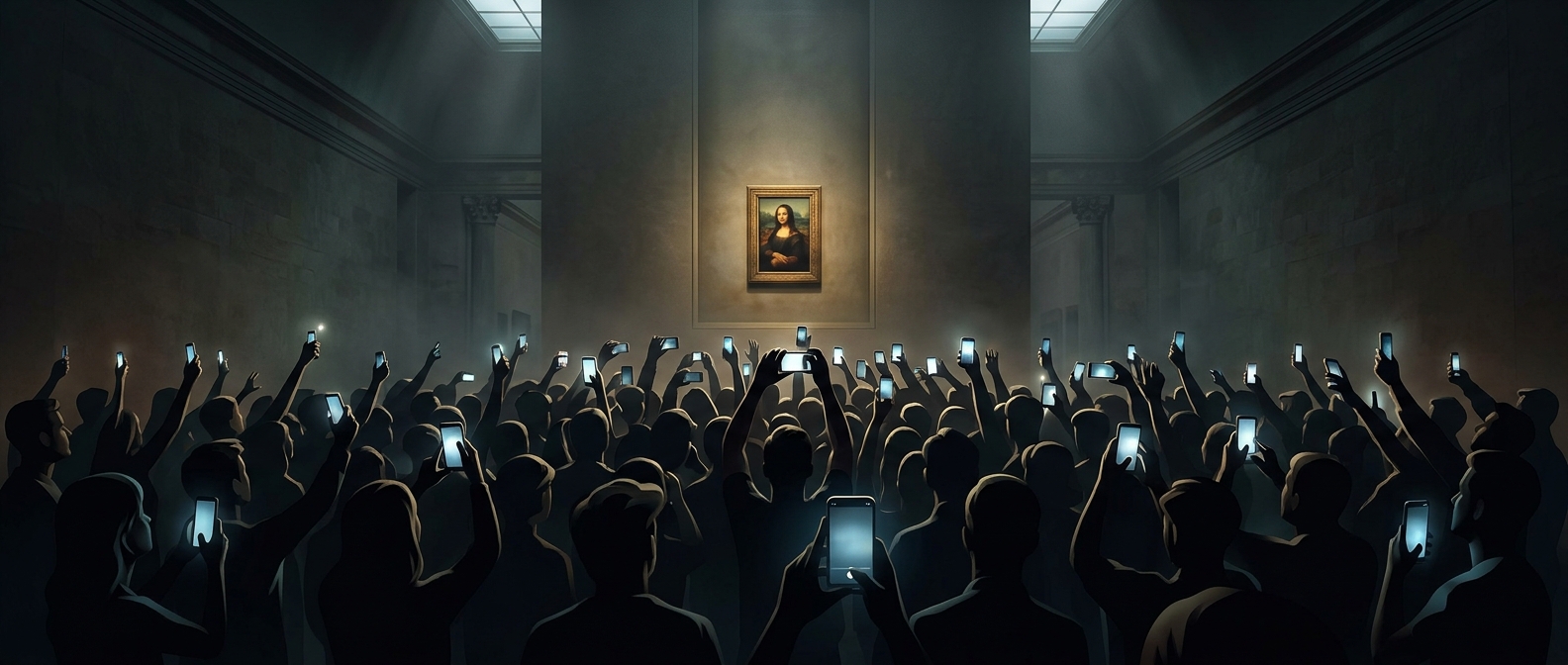
At the Louvre, visitors encounter the painting as a celebrated public work, but the image presents one person looking back. That contrast helps explain why some admirers write to the woman rather than simply about the artwork. The letters turn a brief museum encounter into an imagined relationship, even though the portrait cannot reply.
The striking detail is the direction of the message: fan mail goes to the Louvre, but it is addressed to the woman in the frame.