A village where departures leave a shape behind
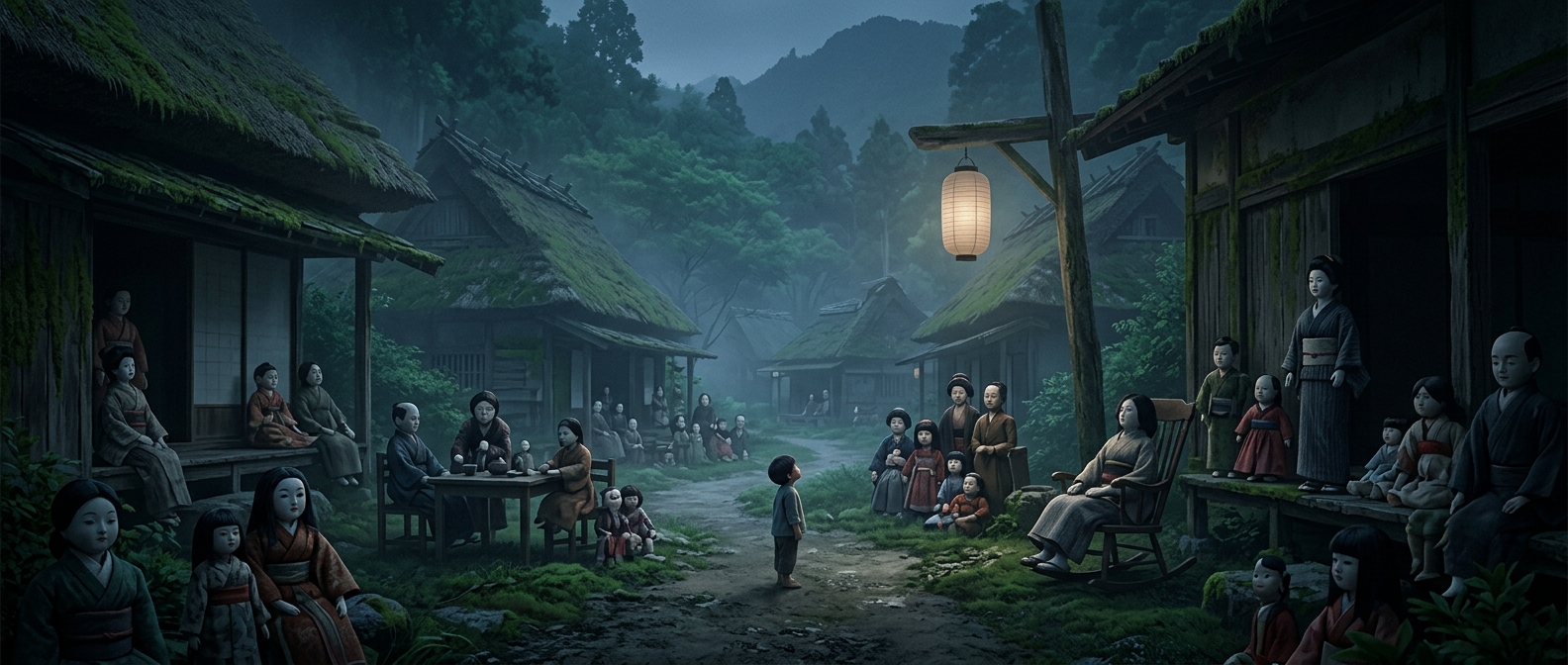
In Nagoro, the figures are more than decoration. As people moved away and familiar places grew quieter, handmade scarecrows appeared where daily life had once gathered: at a bus stop, in a classroom, or along a village road. Their ordinary poses make absence visible. A figure waiting for a bus suggests not just a person, but a routine that may no longer happen there.
From field protection to village portrait
Scarecrows are traditionally made to keep birds from crops, using a human outline to make a field seem occupied. In Nagoro, that practical form became a way to represent the people who had left. Each figure is built by hand from simple materials and dressed in clothes, then placed in a recognizable setting. The familiar details—where someone might sit or wait—turn the village itself into part of the portrait.
The result is striking because the figures do not simply fill empty space. They point to the change that created it: when residents leave a small rural community, shops, schools, and public gathering places can lose the people who gave them purpose. A scarecrow at a school can make that loss especially legible; it evokes the busy human scene even when the real building is quiet.
A visit among everyday scenes
Nagoro’s figures invite visitors to look closely at places they might otherwise pass without noticing. The village’s unusual sight is also a record of local life—not a claim that the figures replace the residents, but a handmade response to their absence. A bus stop populated by cloth-and-straw passengers makes the point in one glance: the village remembers its routines by giving them visible bodies.