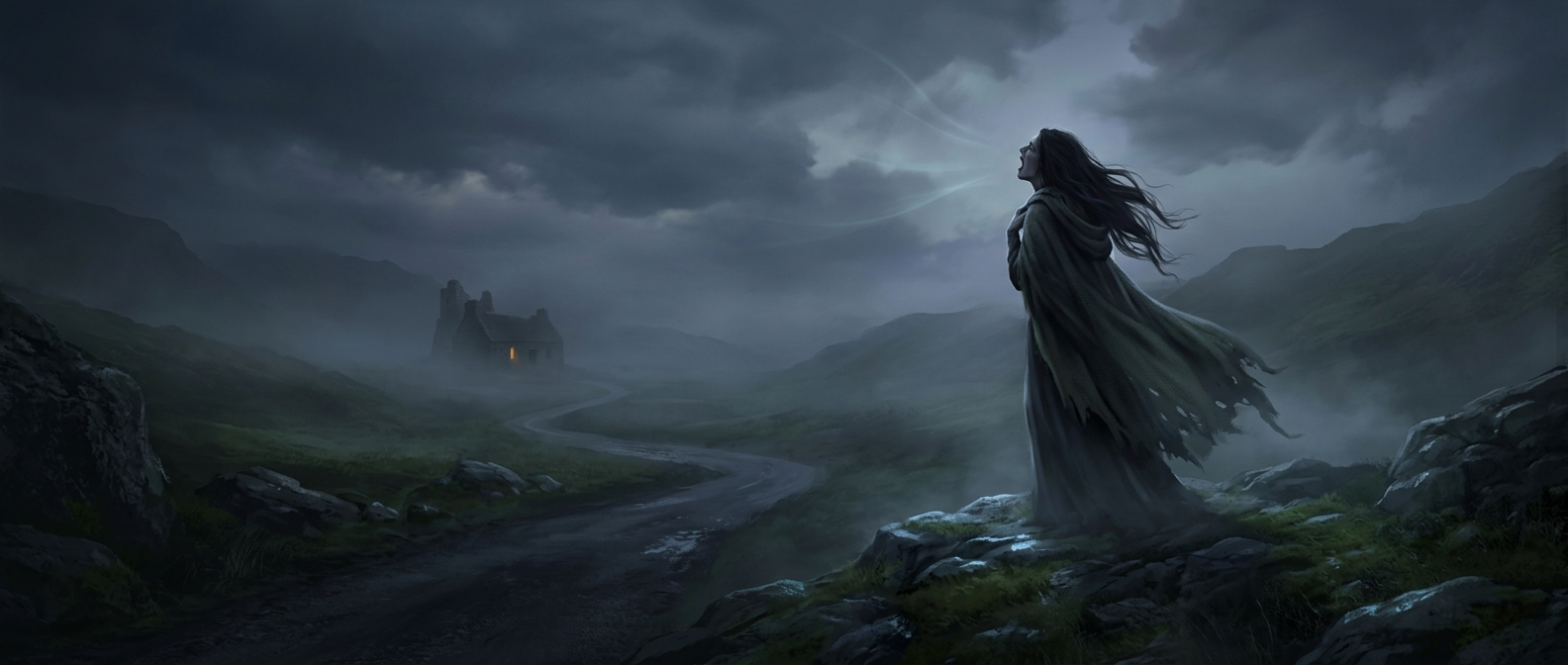
A warning shaped like a lament
In Irish folklore, a banshee is less a creature that causes death than a messenger whose cry announces it. The name comes from the Irish bean sí, often translated as “woman of the fairy mound.” Stories differ from place to place, but the banshee is commonly linked to a particular family and heard before a death in that family.
Her wail draws on a sound people already knew from mourning: keening, a vocal lament traditionally performed for the dead. That connection makes the warning feel less like a prediction delivered from nowhere and more like grief arriving before its time.
Why the cry mattered
The legend gives a voice to the moment when a death is feared but has not yet happened. A cry in the night turns uncertainty into a story with a recognizable sign: someone in the family is nearing the end. It also links individual loss to family memory, since the banshee is often said to watch over a lineage rather than appear at random.
That association can make the figure unsettling, but not necessarily evil. In many tellings, she does not choose who dies or bring about the death; she mourns what is coming. The banshee’s wail is frightening because it sounds like mourning before there is anyone to mourn.