The “boxing” starts with balance
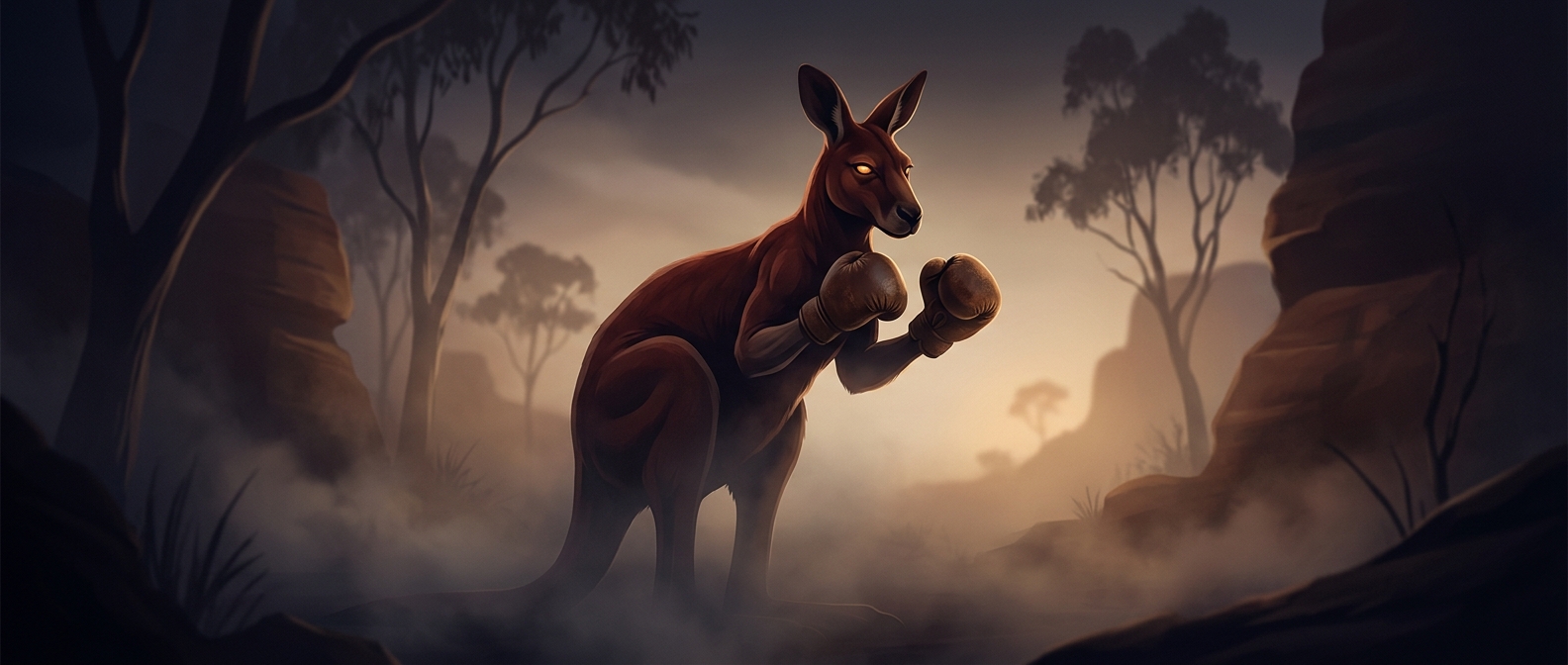
A kangaroo’s upright pose can look like a fighter’s stance, but it is also a practical way to use its body. Its heavy tail acts as a support when it leans back, freeing the hind legs to push or kick. Those legs are built for powerful movement, while the forelimbs can grab and shove at close range. In disputes—often between males competing for access to mates—kangaroos may grapple and kick, giving observers the ingredients for a distinctly human-sounding “boxing” story.
Why the joke has a serious edge
The comparison is vivid, but a kangaroo is not play-acting as a boxer. Its kick is an ordinary defense or fighting move, and strong hind legs and claws can injure someone who gets too close. A person approaching, cornering, or trying to touch one can turn a seemingly harmless wildlife encounter into a stressful confrontation.
For visitors, the useful distinction is between watching the posture and entering the animal’s space. From a safe distance, the upright stance is a striking glimpse of how the tail and legs work together. Up close, the same anatomy that makes the “boxing” legend memorable is what makes giving the kangaroo room essential.