Why the Strigoi Threatened the Household
In Romanian folk belief, a strigoi was not simply a frightening corpse. The idea made misfortune feel personal: if someone in a family grew weak or died, a dead relative might be blamed for taking vitality from the living. Stories often placed the danger inside the circle of kin, where grief and suspicion could mingle.
The word also covered more than one kind of being in different tellings. Some accounts described strigoi as restless dead; others associated the name with living people believed to have uncanny powers. That variation is a reminder that folklore was passed through local stories, not set down as one uniform doctrine.
A Way to Make Unexplained Loss Legible
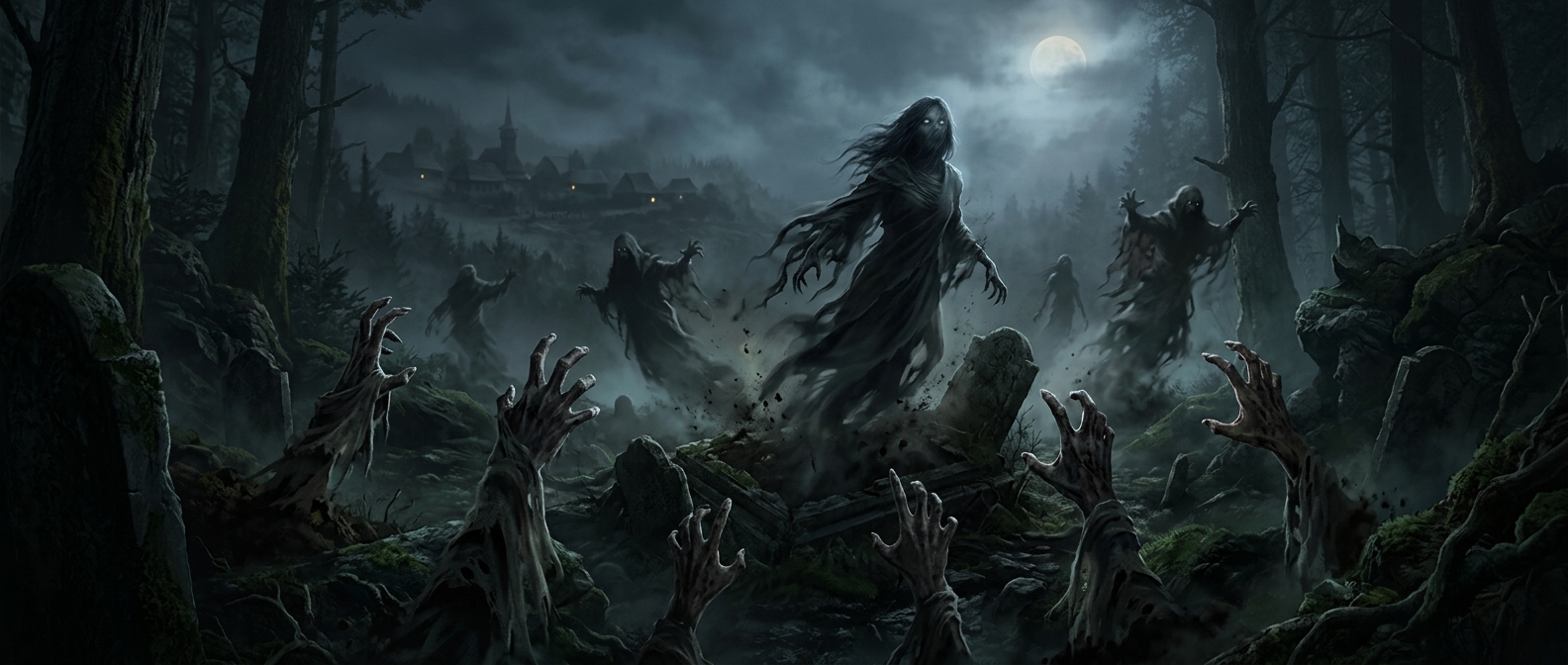
Before illness could be explained in modern medical terms, a sudden decline might seem to have no visible cause. A strigoi story supplied one: the dead were crossing a boundary that should have held, and the family’s suffering had an agent. The belief could shape how people interpreted sickness, death, and the obligations the living still owed the dead.
That makes the figure more than a Romanian counterpart to a generic vampire. Its most unsettling feature is the intimacy of the threat: the danger was imagined as coming back through the grave from someone the household had known.