A winter visitor with a job to do
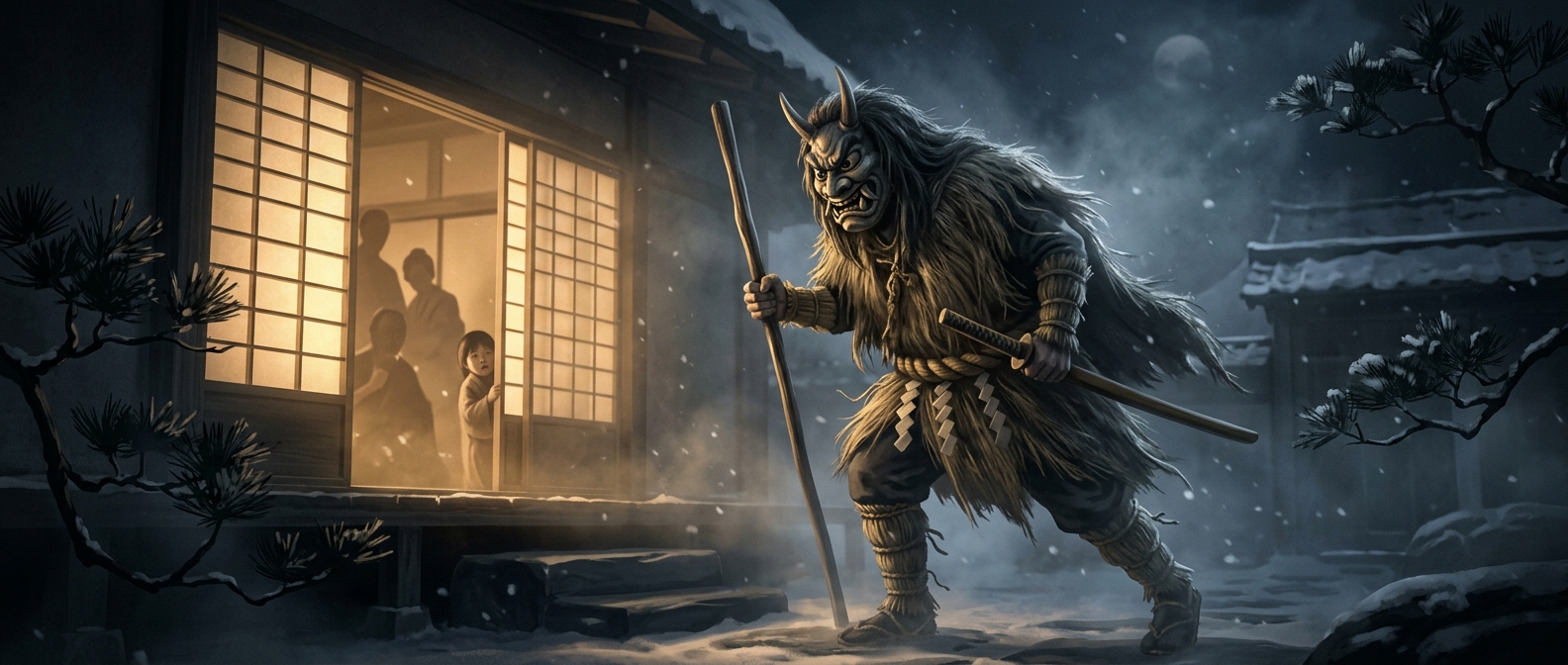
On Japan’s Oga Peninsula, in Akita Prefecture, the masked figures are known as Namahage. They appear around the New Year, dressed in shaggy straw garments and wearing fierce masks. Their frightening appearance is part of the performance: they embody unruly forces that must be confronted as the household prepares to begin another year.
The visit is not simply a prank aimed at children. Namahage call attention to laziness and misbehavior, but the ritual also gives families a chance to reflect on how the past year has gone. Children experience the encounter as an ordeal; adults help shape it by answering the visitors and assuring them that the household is being looked after.
The household is part of the ritual
The visitors do not just shout from the street. They enter homes, where residents receive them according to local custom. That exchange matters: the performance depends on a household hosting the figures, responding to them, and seeing them off. The mask may look threatening, but the visit is understood within a community tradition, not as an actual invasion by supernatural beings.
That blend of fear and hospitality is what makes Namahage memorable. A child may hide behind a parent, while the adults treat the encounter as a yearly reminder to behave responsibly and welcome the new year. The demons’ inspection turns an ordinary home into the setting for a shared local drama.