From coastal mud to festival material
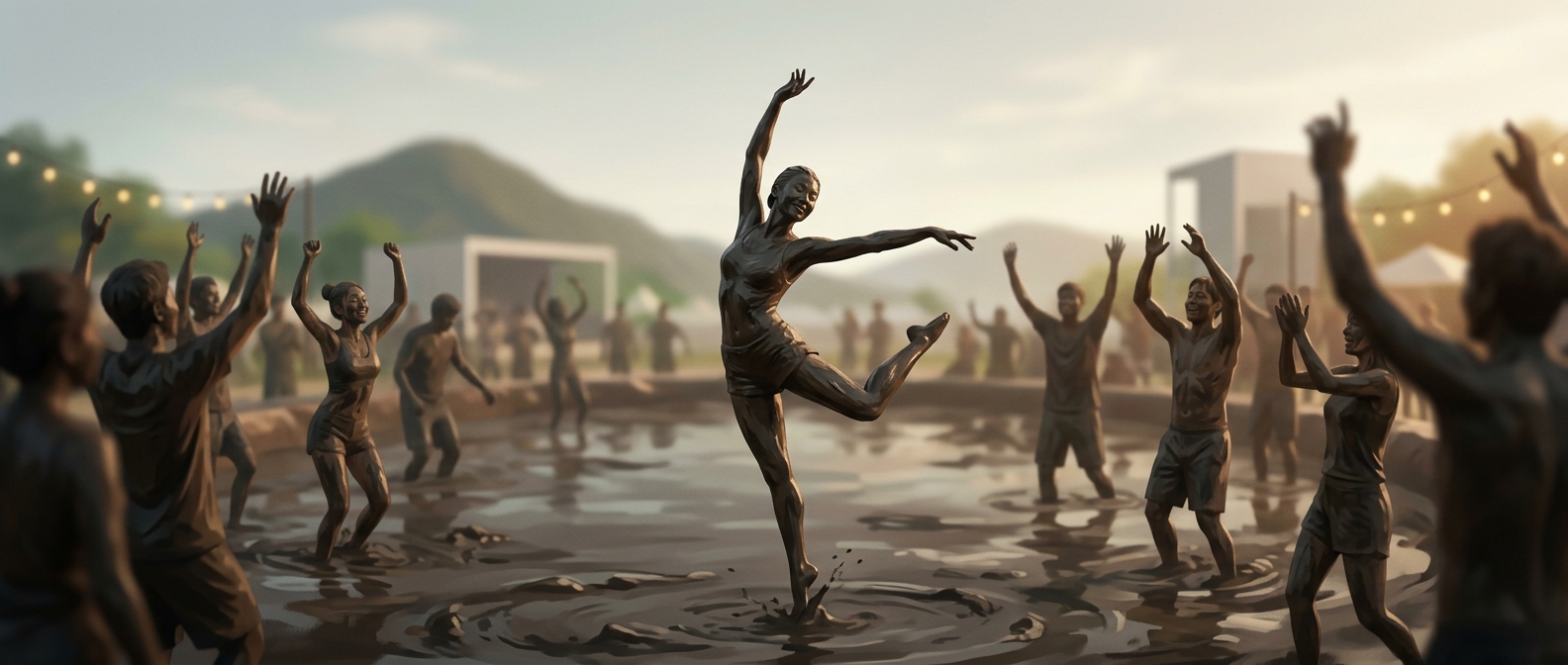
Boryeong’s mud festival turns a local coastal resource into something visitors can actually play in. Mud gathered from the area is brought to the festival grounds and prepared for large pits, slides, and wrestling spaces. That matters because natural mudflats are not ready-made event venues: the festival needs a dependable supply of material in a place where crowds can gather safely and move between activities.
The mud also links the spectacle to Boryeong’s identity. It is used in local cosmetic products, so the festival gives visitors a hands-on version of a resource they might otherwise encounter only as an ingredient on a label.
A beauty claim becomes a group activity
Festivalgoers often hear that the mud is good for the skin. Mud and mineral-rich clay are common in cosmetic products, but that does not mean a day in a mud pit is a medical treatment. At the festival, the claim functions more as part of the experience: people cover themselves in the gray mud, then test its slipperiness and weight by racing, sliding, or wrestling.
Those activities make the mud more than scenery. It slows people down, makes balance difficult, and turns ordinary competition into a messy spectacle that is easy to join and fun to watch. The result is a festival where the local material is both the attraction and the equipment—and where visitors leave with a much more tactile memory of Boryeong than a souvenir bottle could provide.