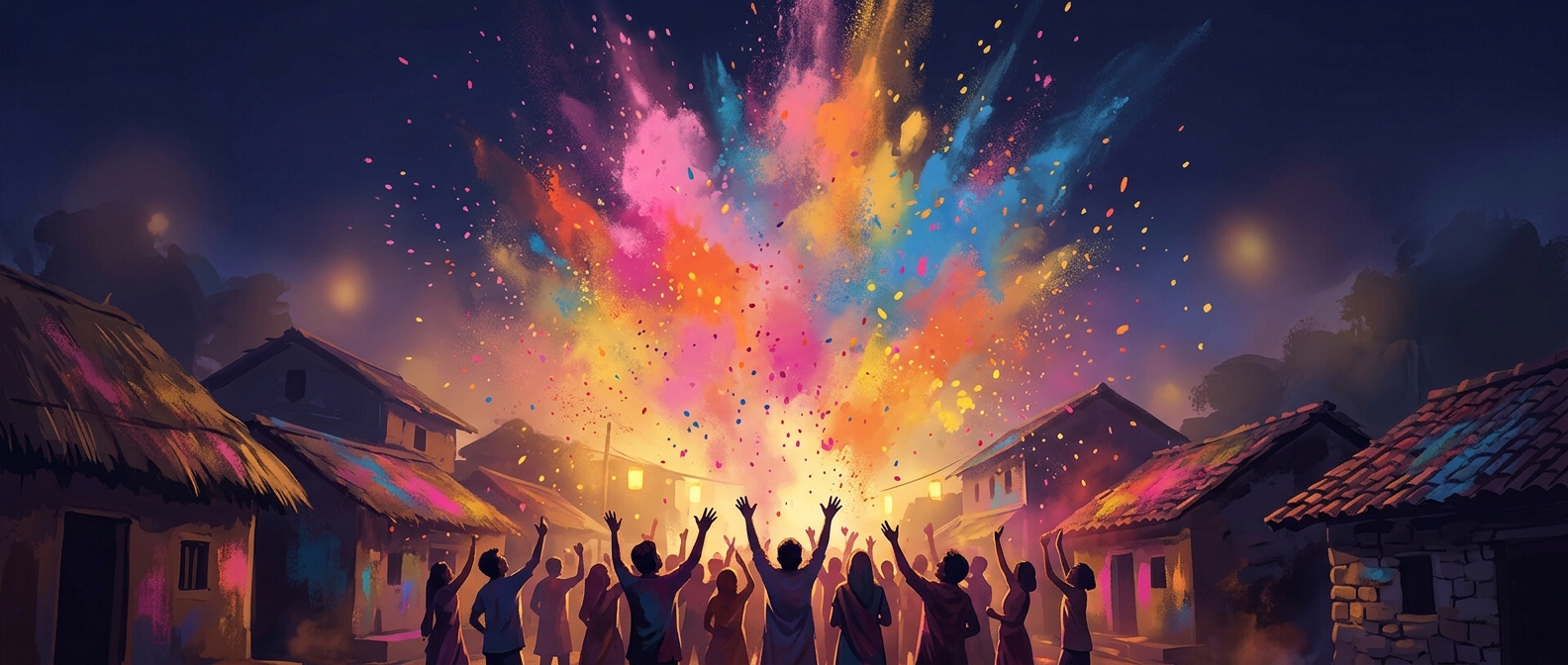
Why Holi’s colors rise above the street
The clouds form through a simple, exuberant exchange: people toss handfuls of colored powder into the air and smear it onto one another’s faces and clothes. The fine particles catch the light, while movement—dancing, running, and greeting friends—keeps them swirling over lanes and courtyards. The powder is often called gulal, a familiar part of the celebration, though materials and customs vary by place.
A village becomes the festival ground
In many communities, Holi is not confined to a stage or a ticketed event. The shared outdoor spaces where neighbors ordinarily meet become places to play. A doorway, courtyard, or narrow street can quickly join the celebration: someone steps outside, receives a bright mark of color, and passes the greeting along. That close, informal setting helps explain why the festival can feel less like a performance to watch than an invitation to take part.
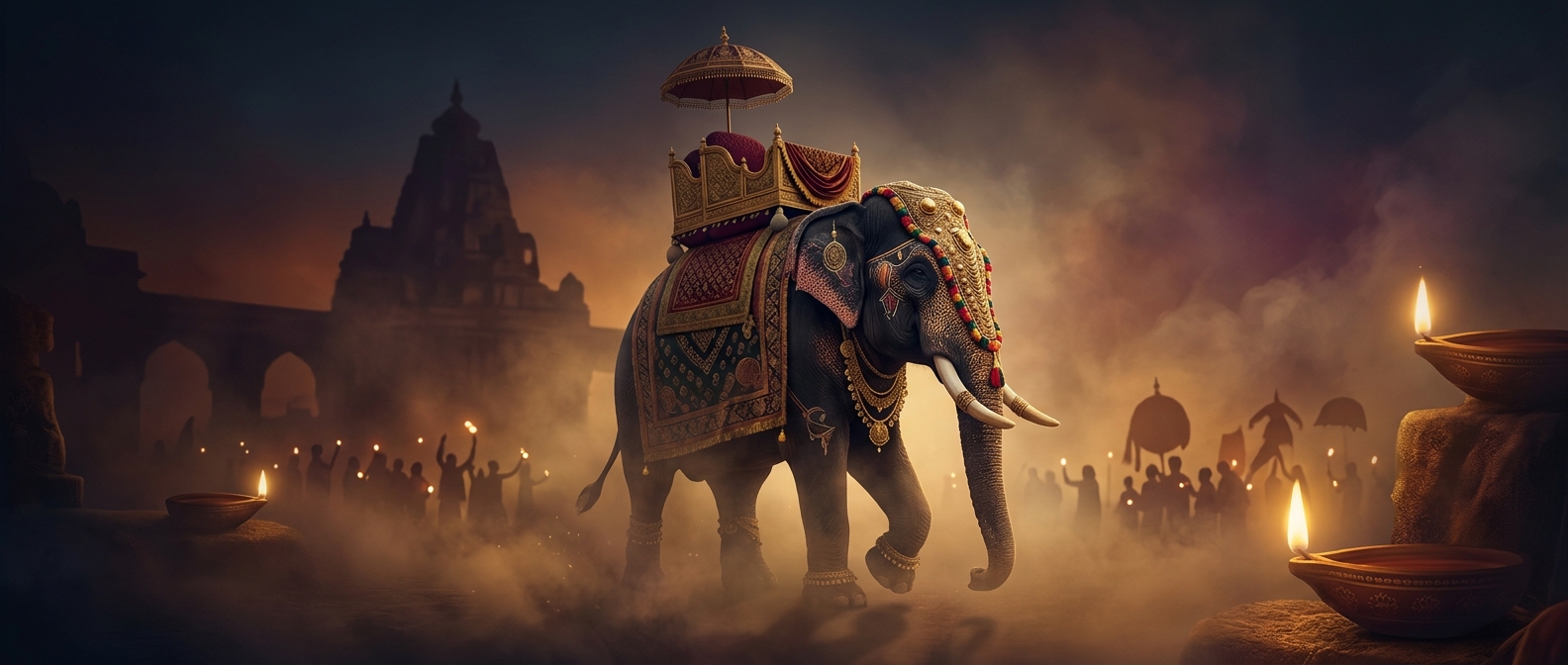
Holi falls around the arrival of spring, but its observances differ across India. In many places, a bonfire is lit on the preceding evening in a ritual known as Holika Dahan; the next day’s color-play is the more visible scene. The festival also draws on Hindu stories and traditions, whose emphasis can vary by region.
Color as a temporary social permission
For a few hours, ordinary clothes and careful boundaries give way to vivid, playful mess. The color makes participation visible: a stranger marked pink or green is no longer simply passing through but has been welcomed into the moment. By evening, the powder settles, but the streets have briefly become a common celebration rather than a route from one private home to another.