A circus arrived on paper first
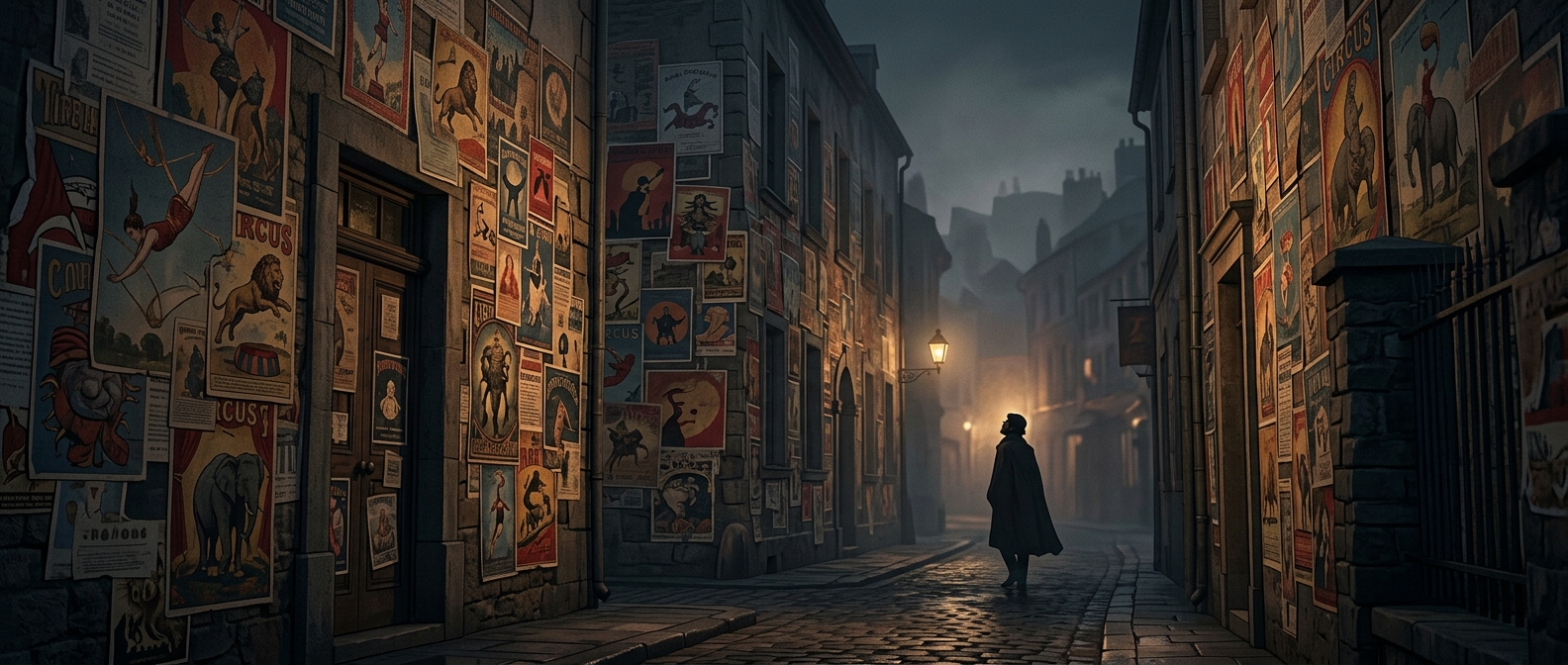
For a touring circus, reaching a town was only part of the journey. People had to know when it was coming and where to find it. Advance teams handled that work ahead of the performers, putting up bright posters—often called bills—while the show was still on the road.
The posters turned a future visit into a visible local event. A resident might encounter the announcement on a wall during an ordinary trip through town, then see it again elsewhere. That repetition helped make the date and destination familiar without relying on a single announcement or a way to send messages instantly.
Advertising was part of the route
A circus could not simply advertise everywhere at once: its show moved from town to town. Publicizing each stop in advance connected the traveling schedule to the people who might attend. By the time the wagons and performers arrived, the posters had already made the circus’s presence part of the town’s streetscape.
For a few weeks, the show was both a coming attraction and a patch of color on familiar walls. The first glimpse of the circus, for many residents, could come well before the circus itself.