When daylight becomes a deadline
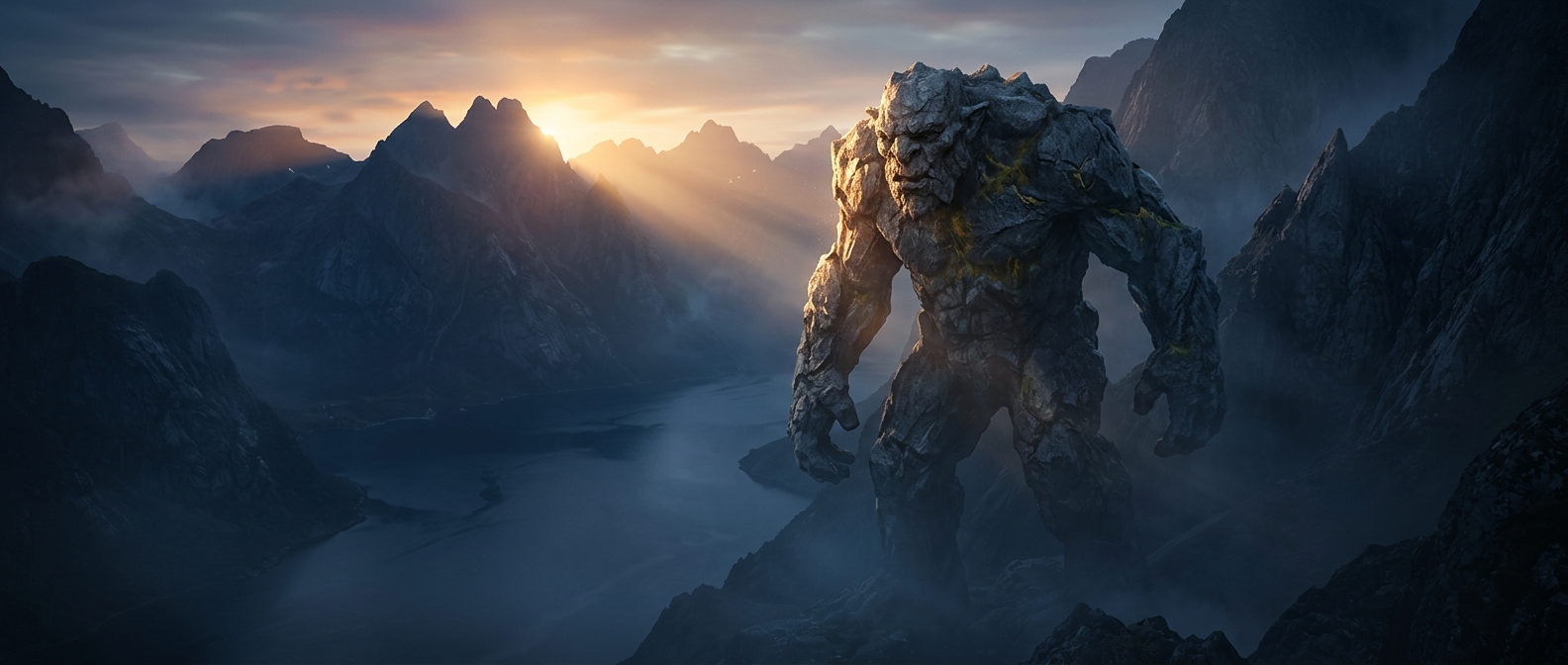
In Scandinavian folklore, trolls are often creatures of the wild—at home in mountains, caves, and forests rather than in settled, human spaces. In many stories, daylight is more than an inconvenience: it can expose or destroy them. The threat gives a night’s adventure a sharp ending. A troll that fails to reach shelter before sunrise may be frozen in place, its hidden life turned into part of the landscape.
A story attached to the terrain
That transformation makes an unusual rock formation feel like evidence of an event. A lone boulder, a jagged peak, or a cluster of stones can be imagined as a troll or a group caught by the morning light. The tale works especially well in a landscape where rock is impossible to ignore: it gives a memorable shape a character and a past, without requiring a written monument or a named hero.
The stones themselves have ordinary geological histories. Some large boulders, for example, were carried and deposited by glaciers. Folklore offers a different kind of explanation—not for how the rock physically formed, but for how people might remember and talk about a striking place.
Reading the landscape twice
For a traveler, the legend changes the question from “How did this rock form?” to “What story did people attach to it?” That doesn’t make every boulder a troll in local tradition; the details vary from tale to tale. But it helps explain why a familiar stretch of stone can feel like more than scenery: in the story, the landscape is what remains after the action is over.