Why camel racing belongs in Alice Springs
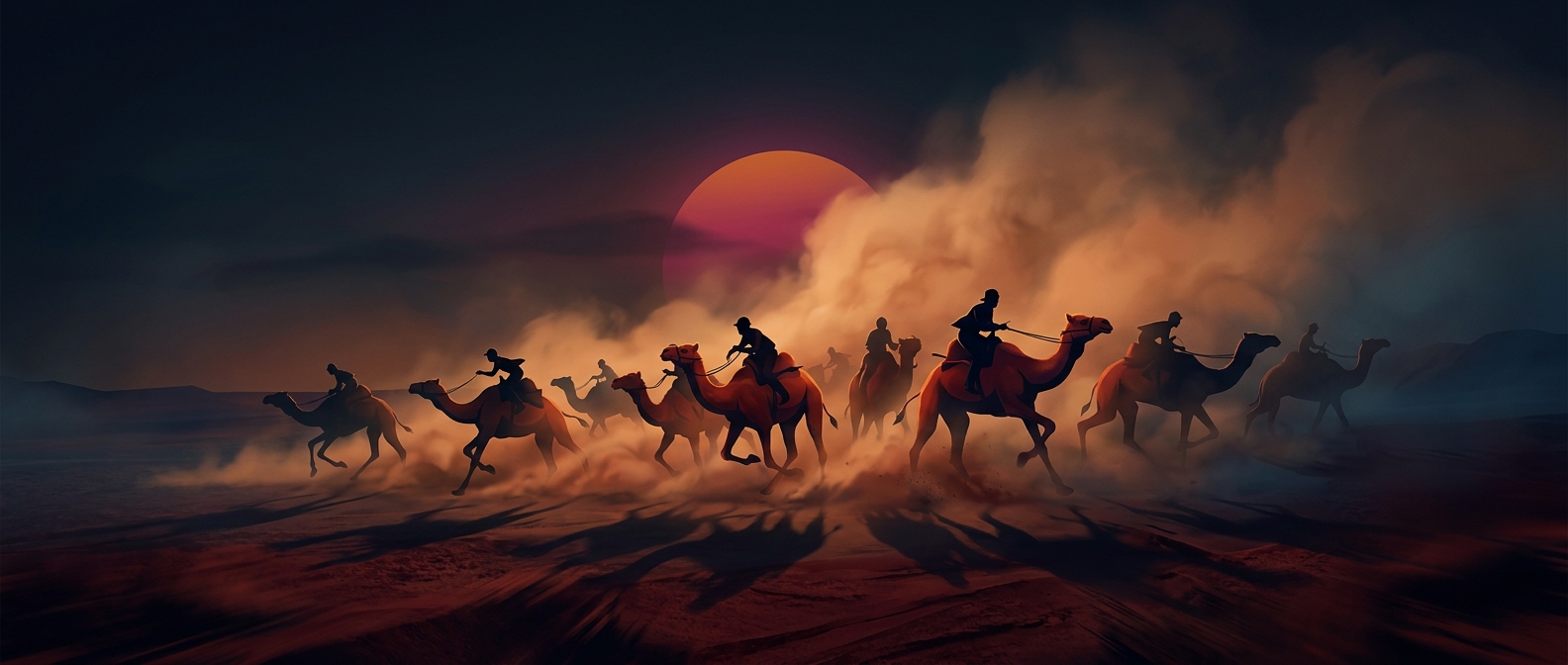
Camel racing in Alice Springs draws on a practical chapter of Australia’s inland history. Camels were brought to the continent to carry people and supplies across dry, remote country, where long distances and scarce water made ordinary transport difficult. When that work faded, some animals were released or escaped and formed wild populations. Racing turns that legacy into a public spectacle: a working animal of the outback becomes the star of a local event.
A race built around unpredictability
A camel does not move like a horse. Its long, rolling stride can jostle a rider, and its direction may shift abruptly. Even getting underway can be uncertain: camels may hesitate or sit down rather than respond neatly to the bustle around them. Riders have to balance, stay alert, and guide an animal whose next move is not always obvious.
That uncertainty changes the drama of the race. Speed matters, but so does simply keeping the camel moving in the right direction. The spectacle comes from watching riders adapt in real time—not from the smooth, tightly controlled pace people associate with conventional horse racing.
More than a novelty
The races give Alice Springs a distinctive way to connect entertainment with its desert setting and history. The camel is not an exotic import for the audience to admire from afar; it is part of the region’s story of travel across the interior. And when a camel veers sideways or refuses to cooperate, the past feels less like a museum display and more like a living reminder of how demanding inland transport could be.