How Floodwater Turned Trees Into Spider Shelters
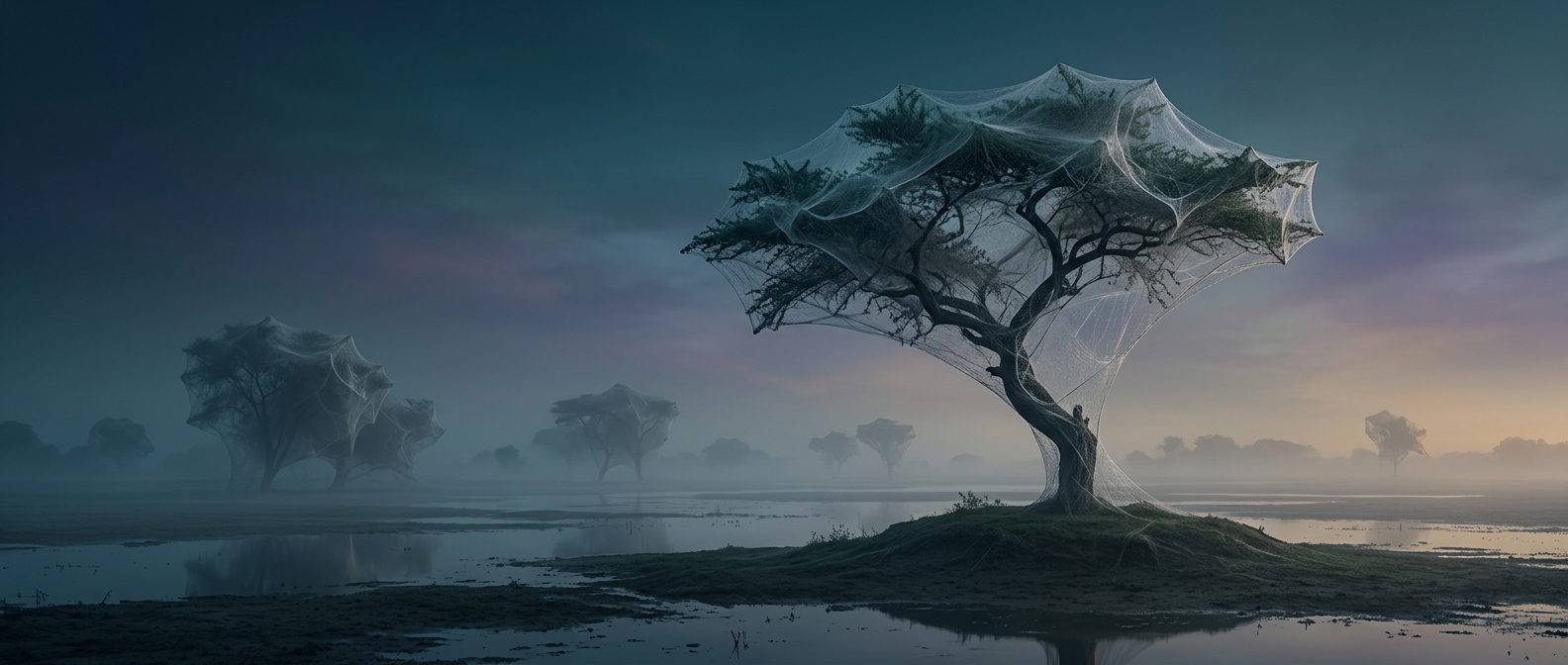
When floodwater spreads across the ground, spiders that normally live among plants and leaf litter lose access to their usual hiding places. Climbing into trees can keep them above the water and give them a place to wait while the landscape below remains inundated. In parts of Pakistan, the retreat from rising water left so many spiders in the branches that their silk covered trees in thick, pale layers.
A Blanket Built One Strand at a Time
The coating was not a single cocoon spun by one giant spider. It formed as many spiders made silk structures around branches and foliage. Spider silk is produced as liquid protein and becomes a fine, strong fiber when drawn out; spiders use it for webs, shelters, and other tasks. When strands and structures accumulate across a tree, they can catch the light and look almost like cotton candy.
The flood created the unusual spectacle by changing where the spiders could live. The trees became temporary refuges above submerged ground—and the silk they left behind made that survival strategy visible from a distance. After the waters receded, the web-draped branches served as a striking record of how far the flood had altered the animals’ habitat.