The image in your mind is bigger than the painting
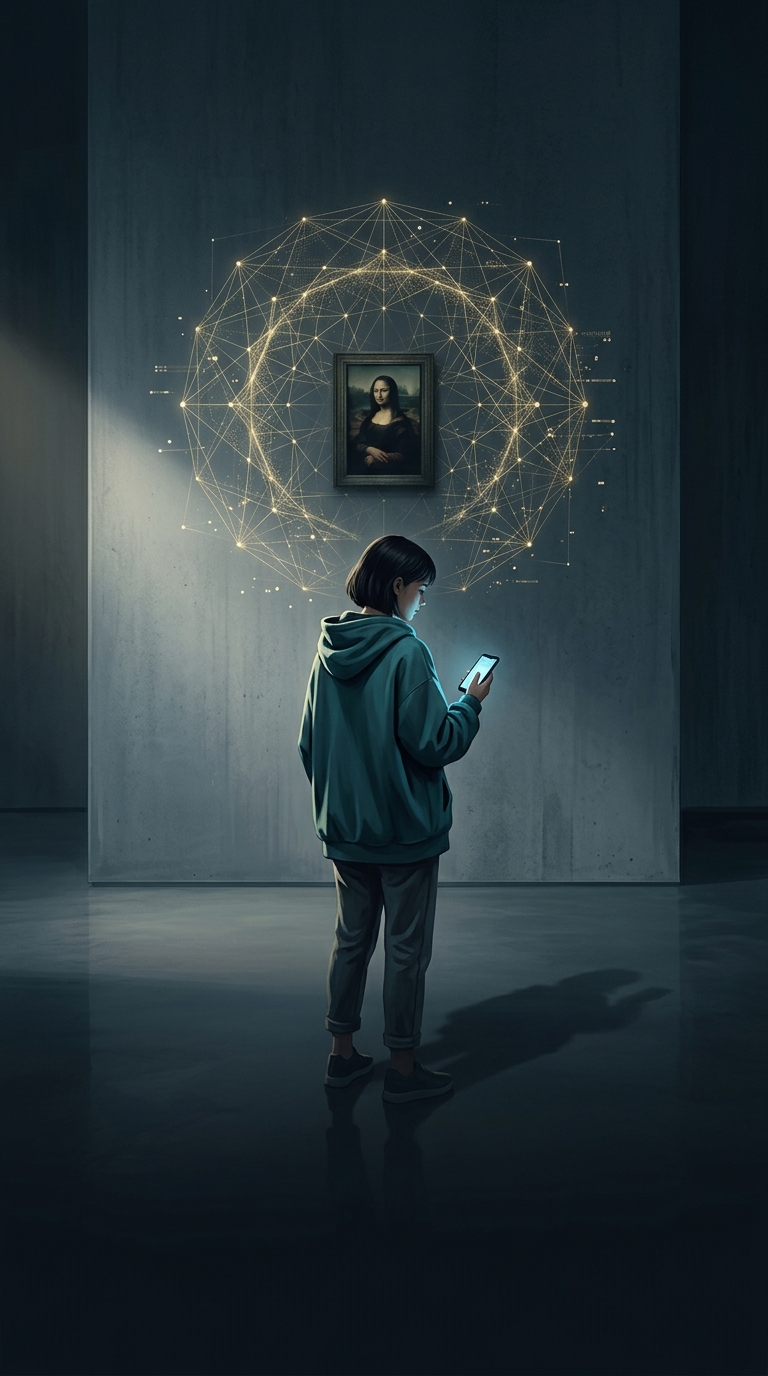
Most people meet the Mona Lisa long before they reach the Louvre: on screens, posters, postcards, and countless parodies. Those reproductions make the portrait feel familiar and often fill the frame. The original, by contrast, is a relatively small panel—about 30 by 21 inches. The gap between a monumental cultural reputation and a modest physical object can make the first sight feel surprisingly underwhelming.
A famous painting, viewed at a distance
Seeing it in the museum is not like standing alone in front of a picture at home. Visitors encounter it in a busy gallery, often among other people trying to get a clear look. A protective barrier keeps viewers back, and the painting is displayed behind glass. These safeguards help protect a heavily visited artwork, but they also make the encounter feel less intimate: details are harder to inspect, and the portrait can seem like a distant image rather than an object in the room.
That setting changes what the visit is about. Instead of lingering close to the surface, many people are navigating a crowd, finding a viewing angle, or trying to take a photograph. The practical effort can crowd out the quiet attention they imagined giving the painting.
The original cannot compete with its own copies
Reproductions are easy to see clearly and instantly, while the original comes with queues, distance, and expectations built up over years. The disappointment is often less a judgment of Leonardo’s work than a mismatch between those two experiences. The painting’s fame makes the visit feel as if it should deliver a dramatic revelation; in reality, its subtler effects take patience and attention.
Its curious consequence is that the most recognizable painting in the world can be harder to truly look at than an unfamiliar one—because so much of the experience happens before you ever enter the gallery.