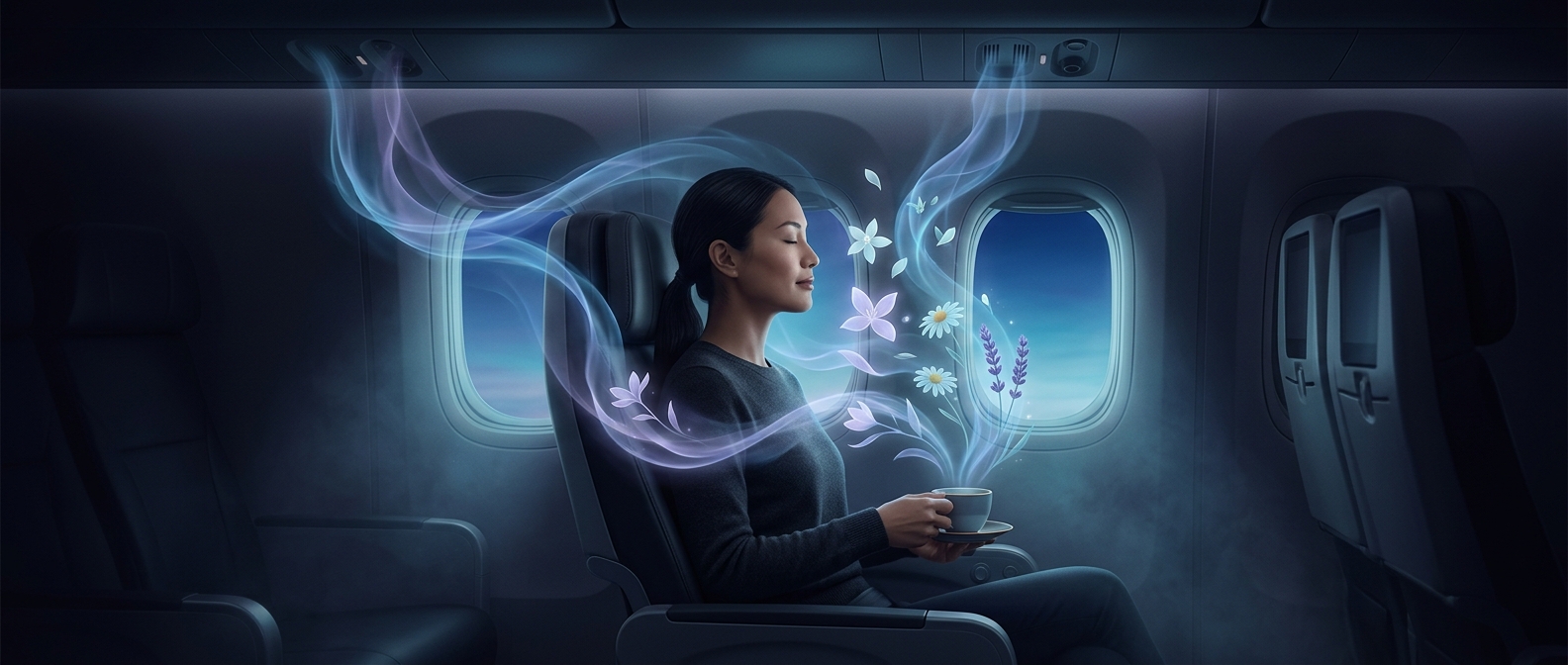
How a Cabin Scent Travels
An aircraft cabin is a small, enclosed space where smells can linger in seat fabric, carpets, and other surfaces. Ventilation continually moves and replaces cabin air, but it does not instantly erase every odor. A fragrance introduced into the airflow can spread through the cabin, making unwanted smells—such as perspiration or odors associated with fueling—less noticeable to passengers.
The scent works mainly by changing what people smell, not by removing the source. Fragrance molecules mix with the air and compete for attention with odor molecules; the result is a more uniform scent that can cover or soften sharper smells. Ventilation still matters because it dilutes airborne odors, while the fragrance gives the cabin a deliberately chosen smell.
A Practical Touchpoint—and a Tradeoff
A signature scent can also make an airline’s cabin feel distinctive, much as a familiar scent in a hotel lobby helps establish a sense of place. In an aircraft, though, that choice has to work in a shared, enclosed environment: one passenger may find a fragrance pleasant, while another may find it overpowering or irritating.
The useful distinction is that masking an odor is not the same as cleaning the air. A fragrance can change the cabin’s smell, but it does not itself remove odor sources or replace ventilation. Its effect is immediate and sensory: the air may smell more inviting even while the underlying cause of an unwanted odor remains.