The jet bridge usually sets the route
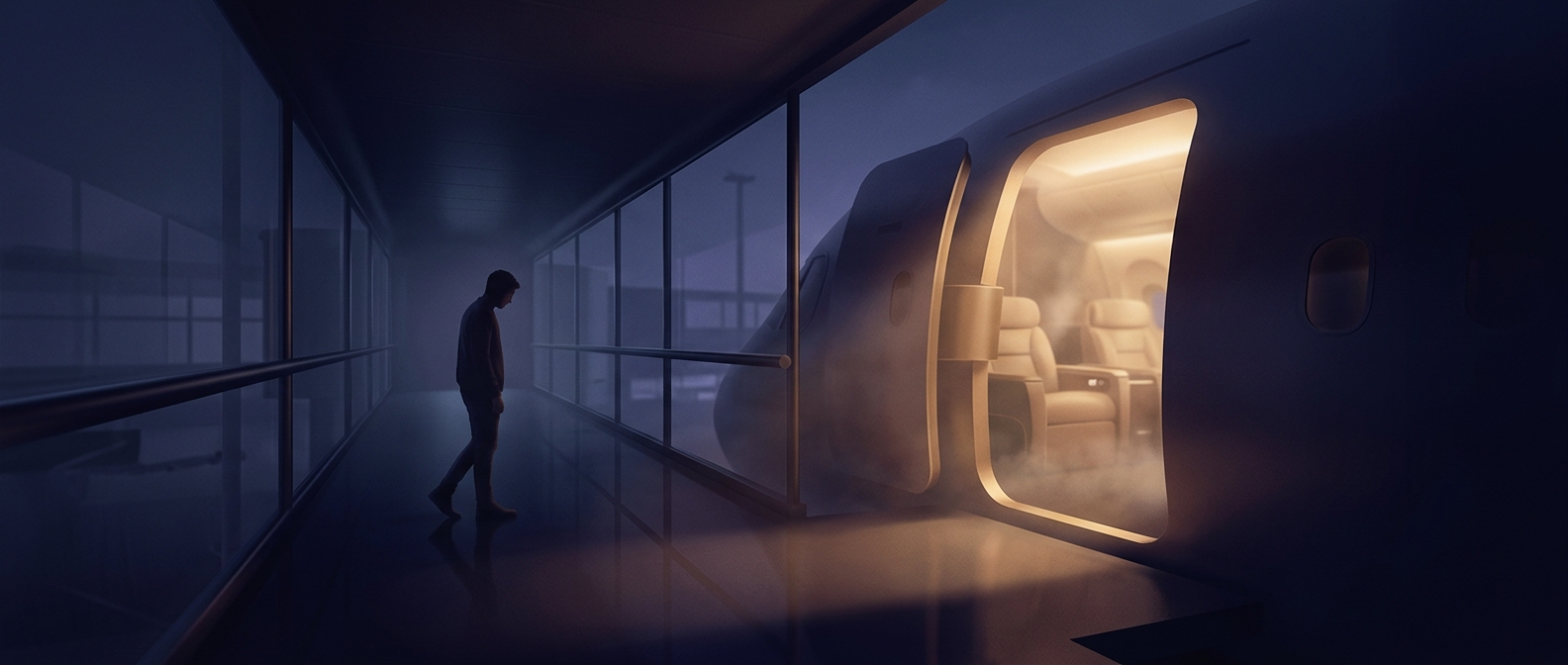
At many gates, the enclosed jet bridge lines up with a door near the front of the aircraft. When passengers enter there, anyone seated farther back has to walk down the aisle past the forward cabin, including first class. The route is largely a consequence of where the airport can connect to the plane—not proof that the airline deliberately marches economy passengers past premium seats to make a point.
A second door can change the flow
Some aircraft and gates can board through a rear door as well as a front one. Using both can send passengers toward different parts of the cabin and reduce the number crossing paths in the aisle. But the option depends on the plane, the gate equipment, and the airport’s boarding setup; it is not available at every flight.
Even with one entrance, airlines still have to get people, bags, and crew aboard in a workable order. Boarding groups and seat locations shape who enters when, while the narrow aisle leaves little room for passengers to pass one another. A traveler headed to the back may therefore pause as someone stows a bag in the front cabin.
That brief walk through first class is a visible side effect of a shared doorway. It can feel like a deliberate contrast between cabins, but the boarding route alone does not establish that psychological motive.