Why Las Vegas keeps its retired signs outdoors
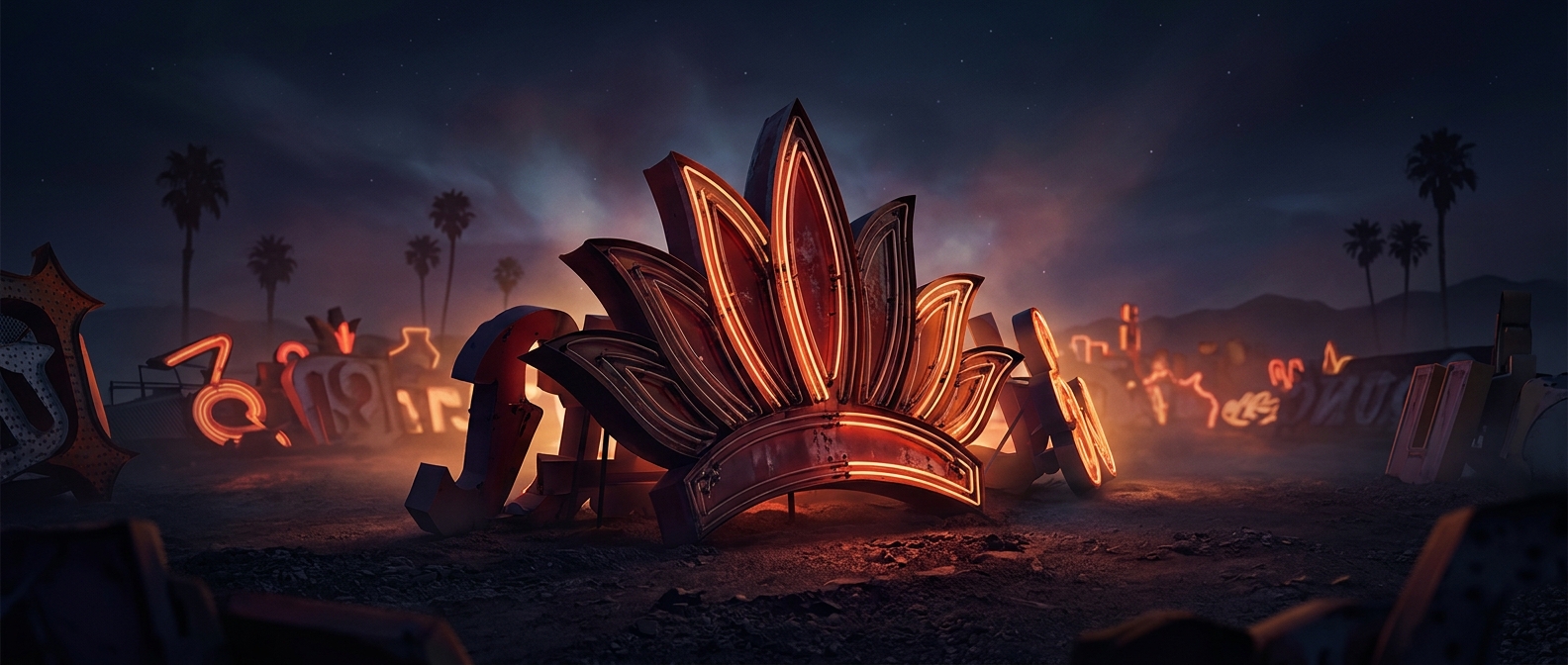
A casino sign was built to be seen from far away, not to fit neatly inside a museum. Its lettering may be several stories tall, and its frame can include steel supports, electrical hardware, painted panels and rows of lamps. The Neon Museum’s outdoor Boneyard gives these bulky objects room to remain assembled and lets visitors see them at something closer to their original scale.
That scale matters. A small photograph can show a sign’s design, but it cannot convey how its height and brightness competed for attention along the Strip. Up close, visitors can also distinguish the parts that made the spectacle: neon tubing is only one kind of illumination. Many signs combined glowing gas-filled tubes with incandescent bulbs or other lighting, so their appearance depended on a whole electrical assembly, not just a single neon tube.
From advertising to a record of the city
When a casino changes its name, redesigns its frontage or disappears, its sign can lose its commercial purpose even while the structure remains. Keeping it rather than scrapping it preserves evidence of how businesses presented themselves—and how Las Vegas made its streetscape part of the entertainment. A sign that once directed drivers toward a casino becomes a surviving piece of that era’s visual language.
Outdoor display also makes the collection’s condition part of the experience. These are large, aging objects exposed to the elements, not pristine reproductions. Their frames, faded surfaces and surviving bulbs show the practical challenge of preserving working-era advertising hardware: saving the object means caring for its materials, even when restoring every light or surface is not the same as keeping the original sign intact.
The result is a city history told at full size. What once urged passersby to stop and spend now invites them to slow down and look at the machinery behind the glow.