Why a Fork Loses the Rice Race
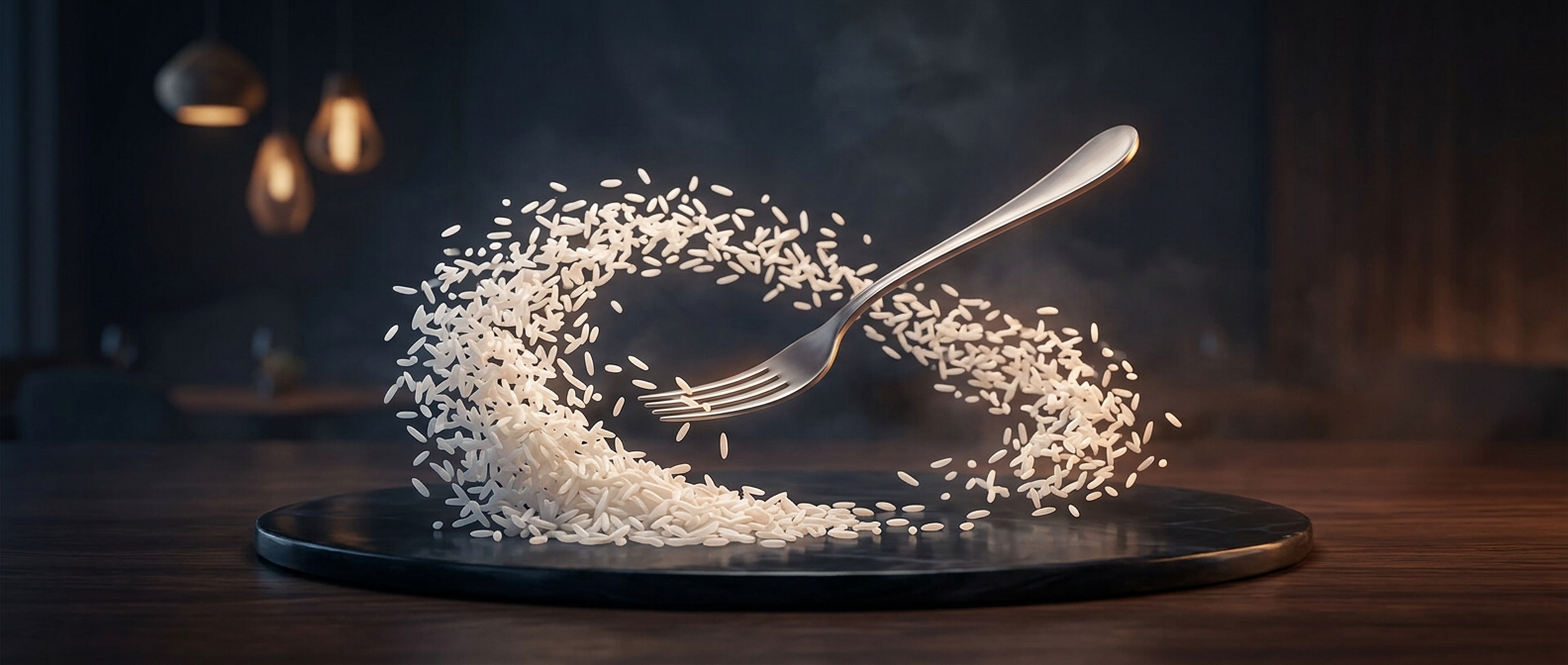
A fork is built to spear or hold food in place. Its tines leave open space between them, so loose grains can slip through as the fork lifts. Trying to gather rice by pushing it against a plate helps, but each pass can scatter grains before they reach the fork.
Shape Matters More Than Skill
A spoon works differently: its curved bowl surrounds a small pile, giving the grains a surface to rest on during the trip to the mouth. Chopsticks rely on another advantage—when rice grains cling together, the sticks can grip a compact clump rather than lift each grain separately.
Rice texture changes the challenge. Fluffier, drier grains tend to separate, while rice that holds together is easier to lift with chopsticks. Neither tool is universally best; the food’s texture and the utensil’s shape determine how much effort each bite takes.
That’s why a meal can feel surprisingly awkward when the available utensil is poorly matched to the dish. A fork may be excellent for many foods, yet with loose rice, its open design turns each bite into a small gathering job.