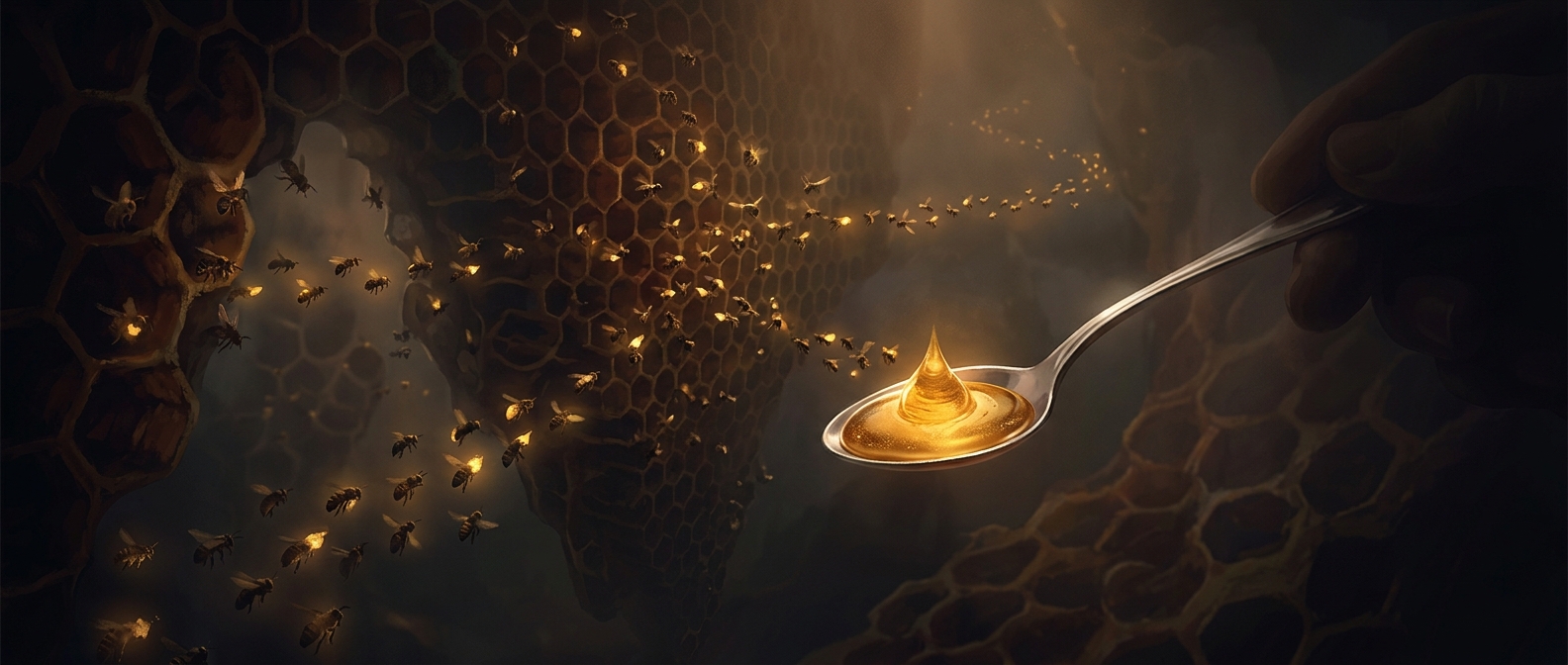
Why Honey Can Last for Millennia
Honey resists spoilage because it gives microbes an inhospitable place to grow. It contains little water that bacteria and molds can use, and its acidity further limits many of them. Honey also draws moisture out of nearby cells, adding another obstacle to microbial growth. Together, these traits help explain why honey sealed away in an ancient tomb can remain recognizable long after other foods would have decayed.
The Balance That Keeps It Stable
Honey’s durability depends on its chemistry staying in the right balance. If water gets into it, the honey can become diluted enough for yeasts to grow and ferment its sugars. That is why exposure to moisture matters: a naturally resistant food can still change when its conditions change. A sealed vessel helps preserve the original environment, though it cannot guarantee that the contents remain unchanged forever.
“Edible” Is Not the Same as Safe to Eat
Finding honey that has not visibly spoiled is different from establishing that it is safe to consume. An excavated pot may have been exposed to contaminants through cracks, handling, or the surrounding environment, and its contents may have changed during burial. Archaeologists can identify and study ancient honey without treating it as food. Its survival is evidence of honey’s unusual ability to resist decay—not a reason to sample material recovered from a tomb.