One Ghost Story, Several Local Histories
The Haunted Mansion is not dropped into each park as a free-standing attraction. It has to belong to the land around it, where buildings, music, scenery, and nearby rides all suggest a particular place and time. So the mansion’s exterior and story are adjusted to fit its neighbors—even when the ride keeps the basic promise of a spooky tour through a house full of ghosts.
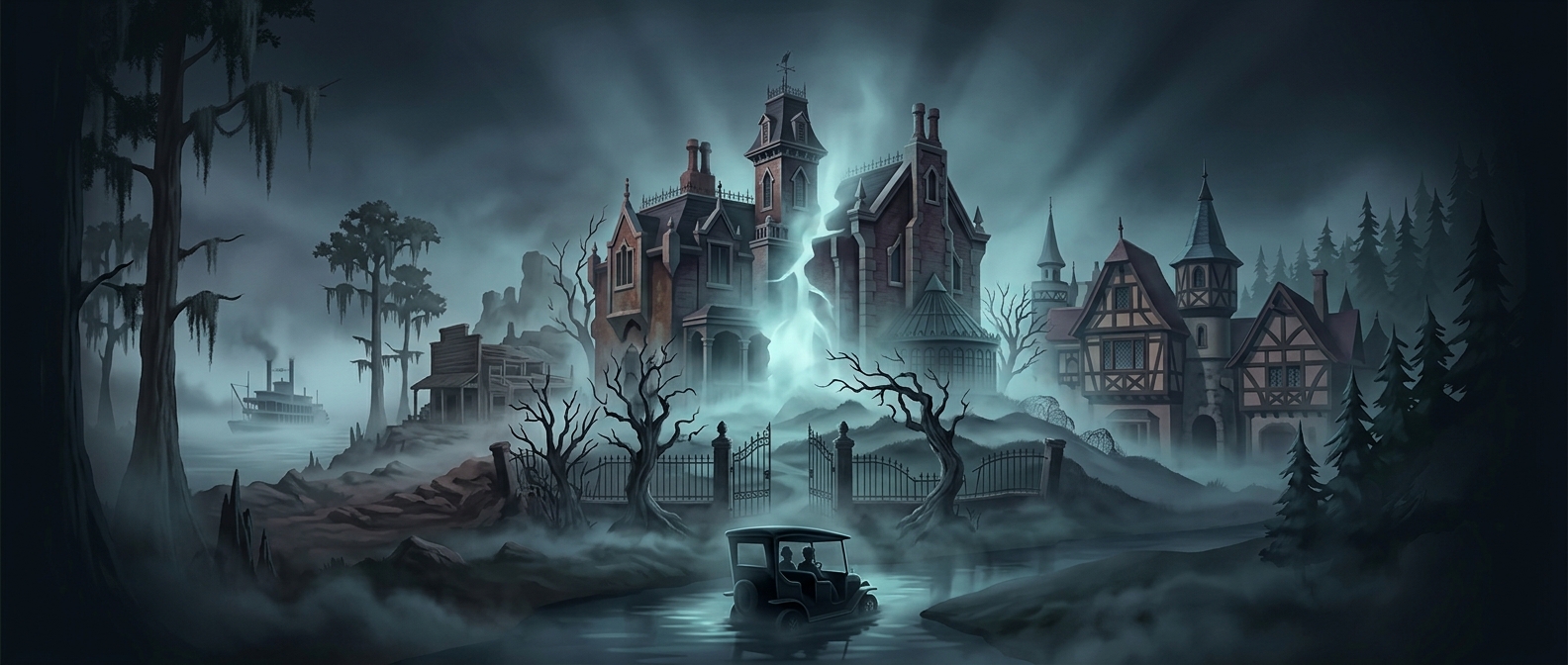
At Disneyland in California, the mansion sits in New Orleans Square, where its grand, Southern-style architecture feels at home among the land’s historic streets. At Disneyland Paris, the attraction is Phantom Manor, set in the park’s Western frontier. Its weathered manor belongs to the fictional mining settlement of Thunder Mesa, linking the haunting to the frontier town around it. The shift is more than a change of costume: it gives the attraction a reason to exist in that particular landscape.
The Land Shapes the Haunting
A themed land works best when its attractions feel like parts of the same imagined world. A mansion that looked like a Louisiana estate might seem out of place beside a frontier town; a Western manor would disrupt the atmosphere of a Southern square. Changing the setting lets each park maintain a continuous sense of place as visitors move from one attraction to the next.
That choice also changes the flavor of the story. The building’s surroundings suggest what kind of past might haunt it: a settled historic district in one park, a frontier community in another. The ride can keep its supernatural appeal while the park rewrites the local context around it. That is why a familiar attraction can feel like a different legend when it appears in a different land.