How a low skyline can hide a big drop
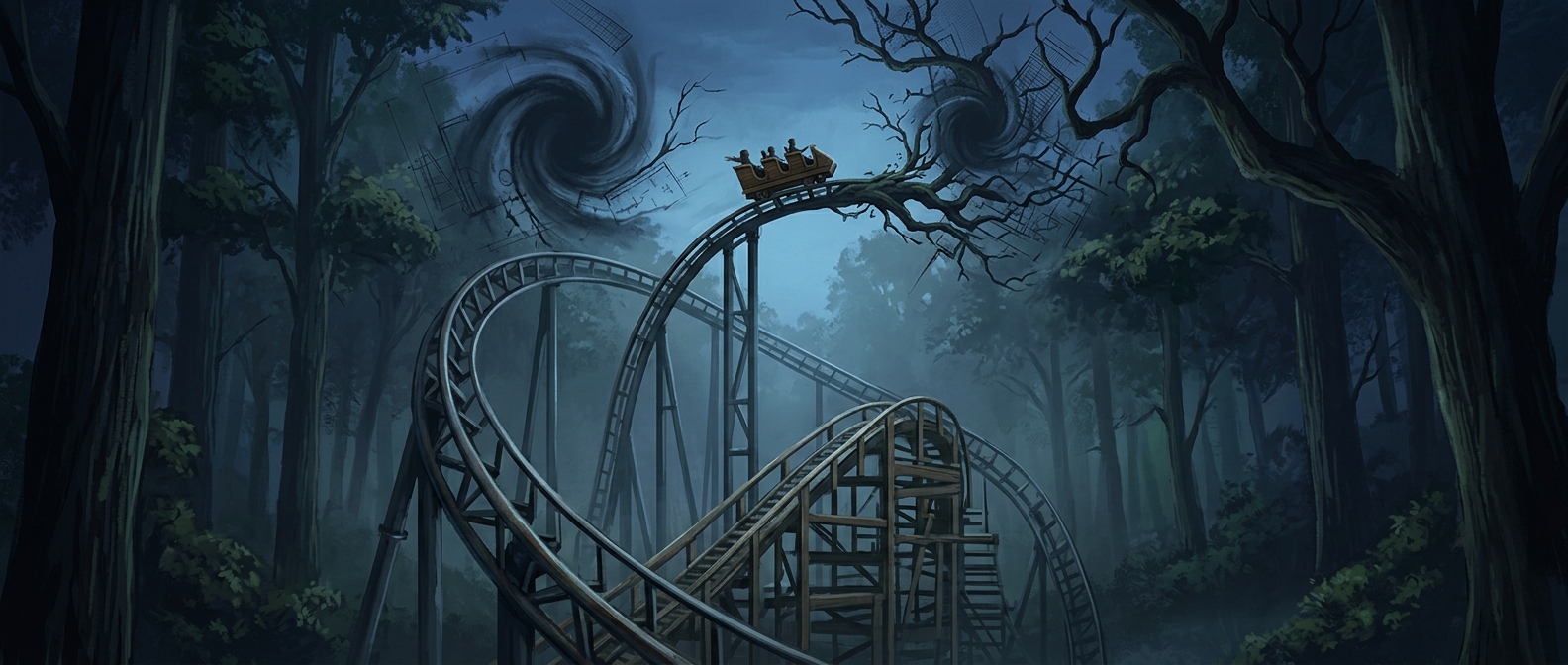
At Alton Towers, the challenge was not simply making a coaster exciting; it was fitting tall-looking rides into a landscape where structures were limited to roughly tree height to preserve the historic skyline. A conventional coaster gains height by raising its track high above the surrounding ground, making the lift hill and first descent prominent from far away.
Digging a trench changes the reference point. Engineers can keep the visible lift structure comparatively low, then route the track down into excavated ground. The train still travels through a steep, substantial descent, but much of that drop happens below the surrounding landscape rather than on a towering exposed structure. “Underground” can therefore describe a track cut into the ground, not necessarily a long enclosed tunnel.
The trade: height for excavation
This approach shifts work from building upward to moving earth and supporting track at a lower level. The coaster’s layout must fit the site’s contours, and the excavated section has to be engineered as part of the ride rather than treated as an ordinary hillside. The result preserves a lower profile from outside the park while allowing riders to experience a sharp plunge.
That tradeoff makes the landscape part of the ride’s design: a drop can feel dramatic to passengers without announcing itself as a tall landmark on the horizon.