How a Timpani Pedal Changes the Note
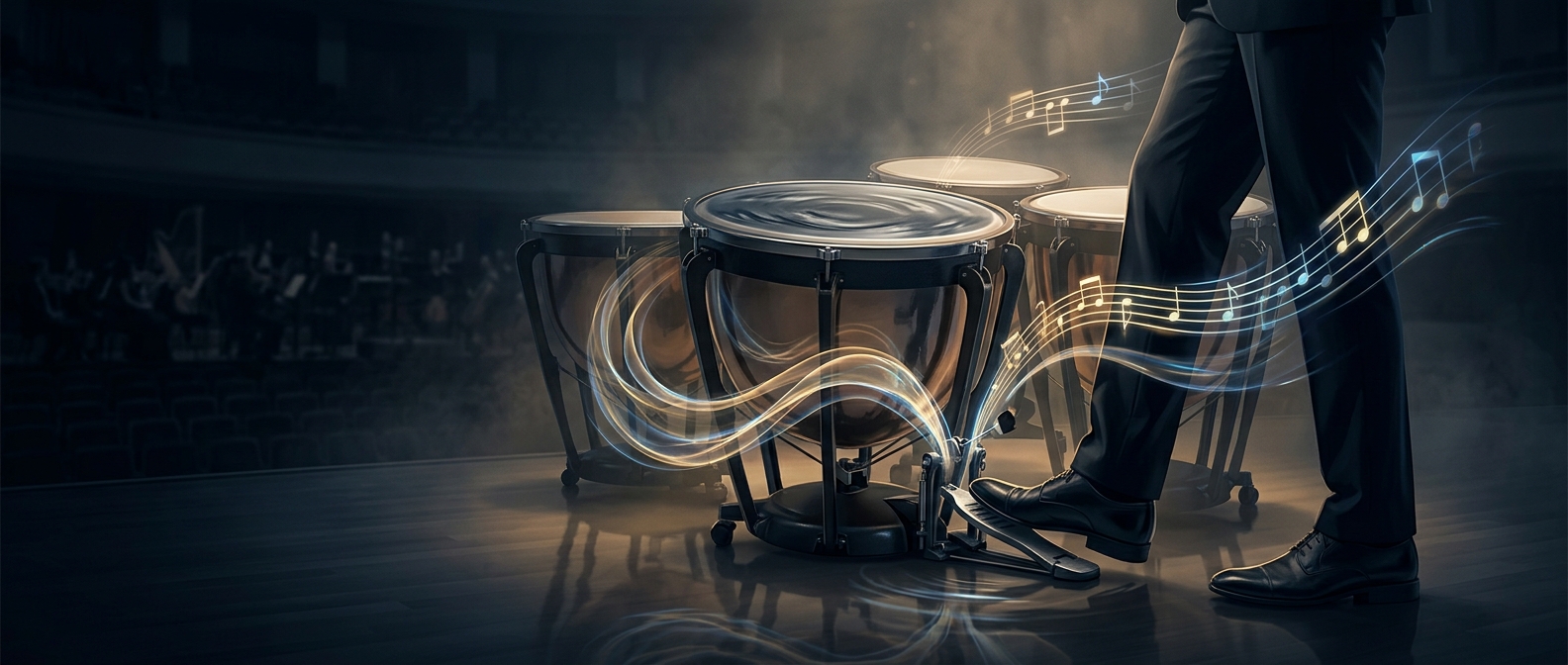
A timpani’s pitch depends on how tightly its drumhead is stretched. Pressing or releasing the foot pedal moves a mechanical linkage beneath the bowl, which shifts the hoop holding the head and changes its tension. A tighter head vibrates faster and sounds higher; a looser one vibrates more slowly and sounds lower.
Because the player can move the pedal while playing, the instrument can change pitch without stopping to replace or retune the head. The change can happen quickly, though the player must still guide the pedal to the right position and listen for the intended note.
From Dramatic Thud to Moving Bass Line
A timpani is not simply a large drum with one permanent sound. Its bowl and stretched head produce a recognizable pitch, so players tune it to notes that fit the music. Pedals let them move between notes during a passage, making it possible to follow changing harmony or shape a rising or falling line in the low register.
That flexibility also demands coordination: the player may strike with the hands while adjusting pitch with a foot. The pedal turns the timpani from a fixed-pitch accent into an instrument that can help carry the music’s melody and harmony.