Why a Small Pair of Shells Can Cut Through Music
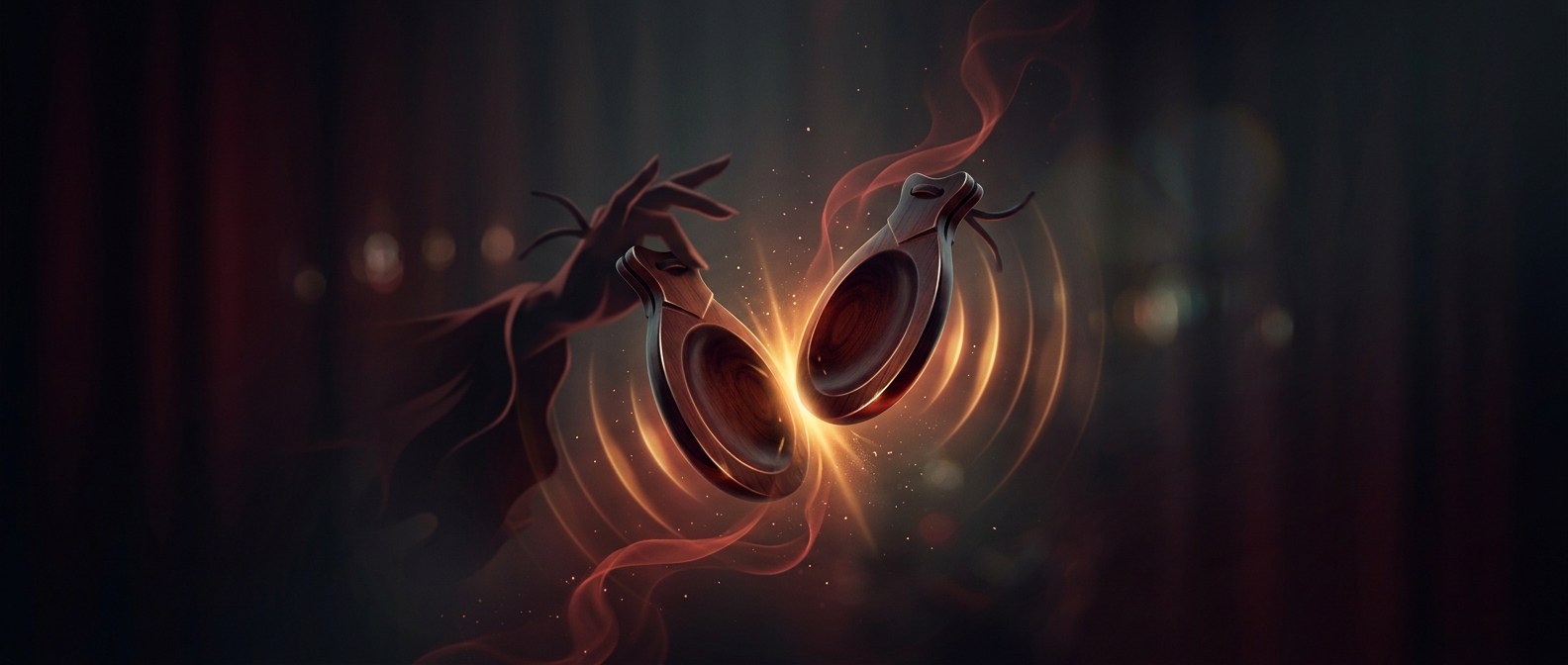
A castanet’s sharp sound comes from more than two pieces of wood colliding. Each half is carved into a shallow cup. When the shells meet, the impact makes the wood vibrate and briefly stirs the air inside the hollow. The cup helps shape that vibration into a crisp, bright click—one that can remain audible among instruments and dancers.
The shells are usually joined by a cord, which lets them open again after each strike. That quick rebound matters: the sound depends on a clean collision, not on squeezing the pieces together and muffling them.
The Fingers Become the Mechanism
Players commonly secure a castanet at the thumb and use the other fingers to strike it. Each finger can contribute a different stroke, so a performer can make more than a steady series of identical clacks. Fast patterns come from precise timing and controlled movement: fingers must release and return quickly enough for the shells to rebound between impacts.
That is why a simple-looking instrument takes practice. A loose or uneven strike can blur the rhythm; a well-controlled one keeps each click distinct, even at speed. In performance, castanets can mark a dance’s pulse while adding a rhythm of their own—the hollow shells turn small finger movements into a sound the whole ensemble can hear.