How a Tambourine Makes Its Bright Ring
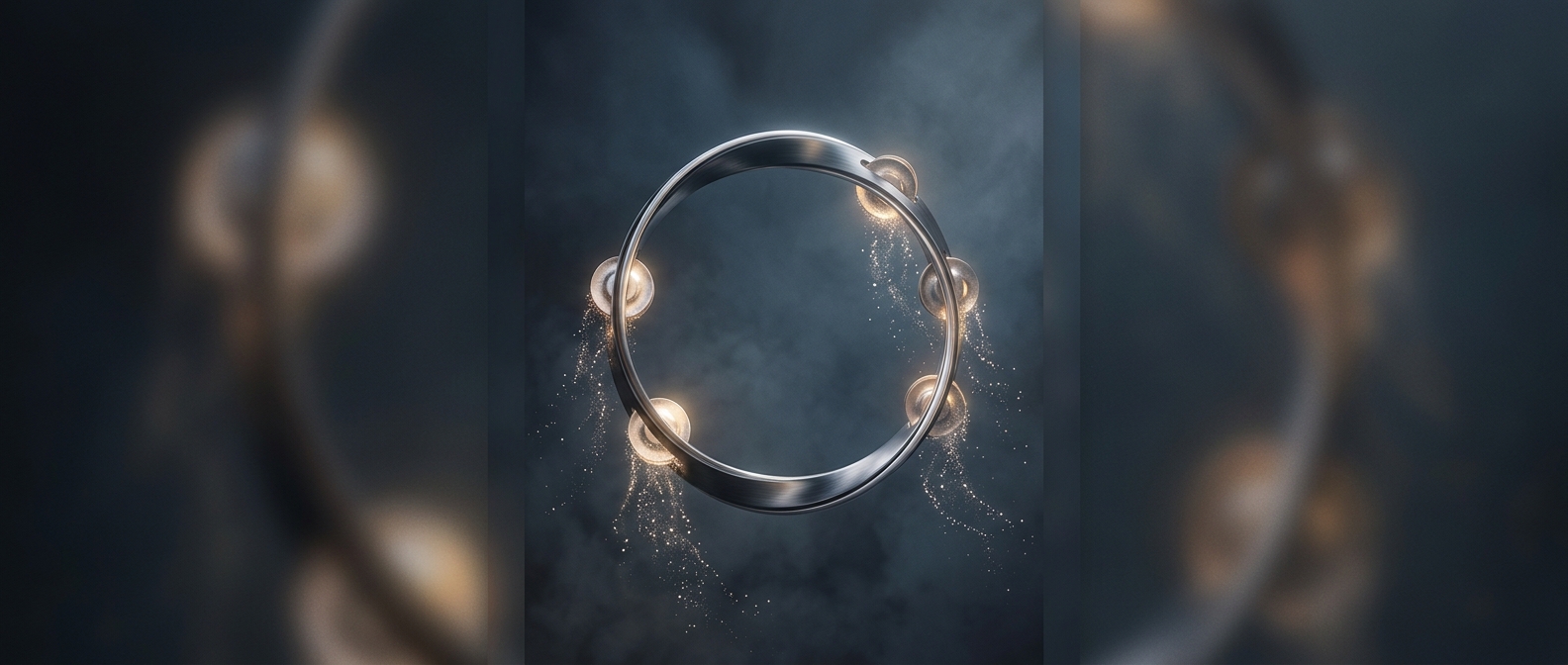
A tambourine’s sound comes from more than the player’s hand striking its frame or drumhead. Around the frame, pairs of small metal discs—often called zills—sit loosely in openings. When the instrument is shaken or tapped, the discs move and collide, producing a cluster of sharp, high-pitched sounds.
A Tiny Collision, Repeated Many Times
Each pair acts like two miniature cymbals. The impact makes the metal vibrate; those vibrations travel through the air as sound. Because the discs are light and strike quickly, their ring is bright and brief. A single shake sets many pairs rattling in rapid succession, so the ear hears a lively shimmer rather than one isolated clang.
The player controls that texture with motion. A quick shake creates a busy wash of jingles; a more restrained tap can add a crisp accent. The sound also depends on how freely the discs can move: they need enough space to collide, but their mounting keeps them attached to the frame.
Why the Jingles Matter
The metal discs let a tambourine cut through other sounds without requiring a large instrument or a forceful blow. They add a bright rhythmic layer alongside the deeper thump of a drumhead, when the tambourine has one. That contrast is the instrument’s small engineering trick: a simple hand motion produces both a beat and a burst of ringing metal.