How a Gong’s Raised Center Shapes Its Sound
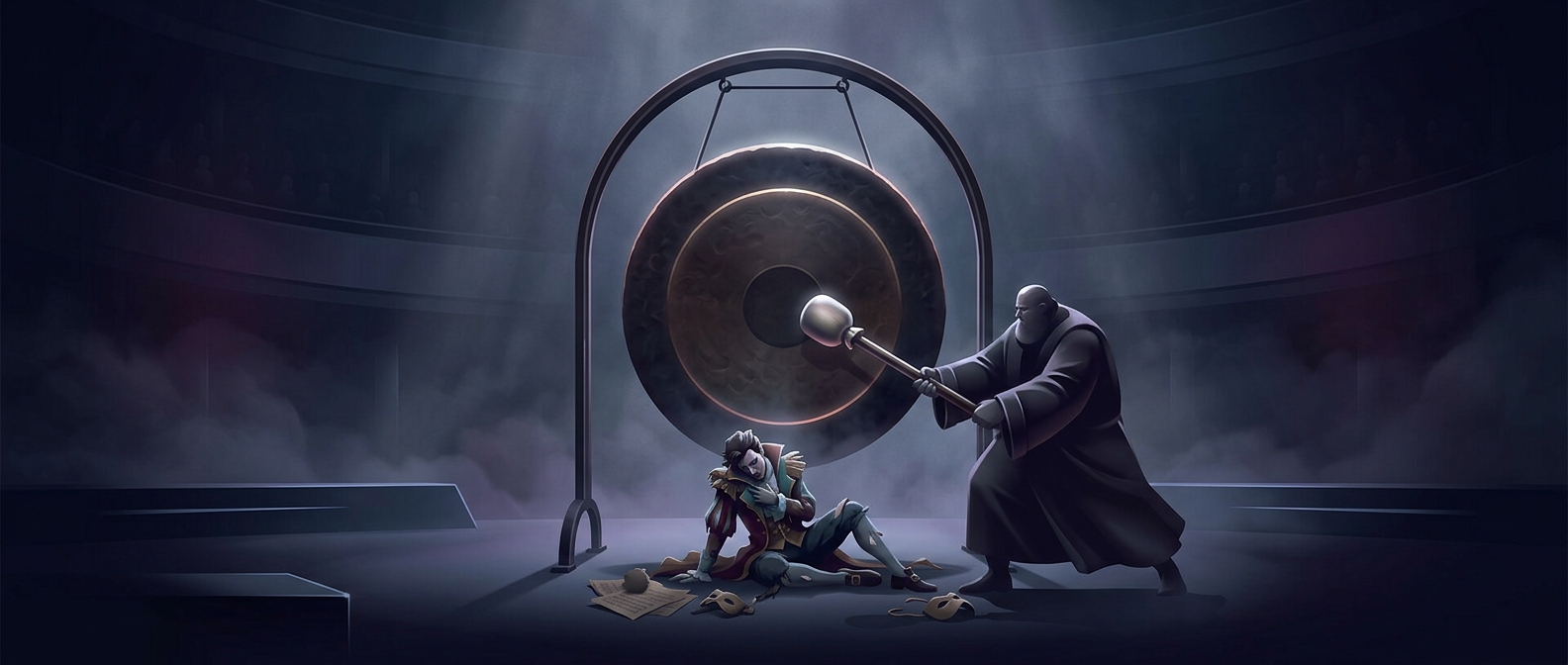
A gong is not simply a flat sheet that rings when struck. Its curved profile helps determine which parts of the metal can flex together—and which vibrations become strong enough to hear. The raised center, often called a boss, changes that profile at the point where the instrument is commonly struck.
When the mallet hits, the bronze bends and sends vibrations outward. The boss adds a rounded, stiffer region to the disc, changing how those vibrations travel and interact with the rest of the surface. Different patterns of motion produce different pitches, or partials; together, they give the instrument its characteristic blend of resonant tones. The boss also provides a distinct striking area, so the player can excite the gong’s vibrations in a controlled way.
Why a Flat Disc Rings Differently
A flat bronze disc has a simpler shape, but it is not acoustically simple: it still produces many overlapping vibrations. Its sound, however, tends toward the bright, sharply shimmering character associated with a cymbal. A shaped gong can sustain a broader, more complex resonance, with its contour helping organize the metal’s motion into a different tonal character.
The contrast is not a strict rule for every instrument. Gongs come in many shapes, and thickness, size, alloy, and striking technique also affect the sound. But the raised center is more than decoration: it is part of the instrument’s acoustic design. Change the metal’s shape, and you change the way a single strike spreads into sound.