Why a Marimba’s Bars Need Tubes Beneath Them
A wooden bar does not produce a single, perfectly clean tone when struck. It vibrates in several patterns at once, creating a mix of pitches; the bar’s shape and tuning determine which are strongest. In a marimba, the sound can be surprisingly quiet and its lowest, defining pitch relatively faint. The resonator beneath the bar helps that pitch carry.
Each Tube Is an Air Resonator
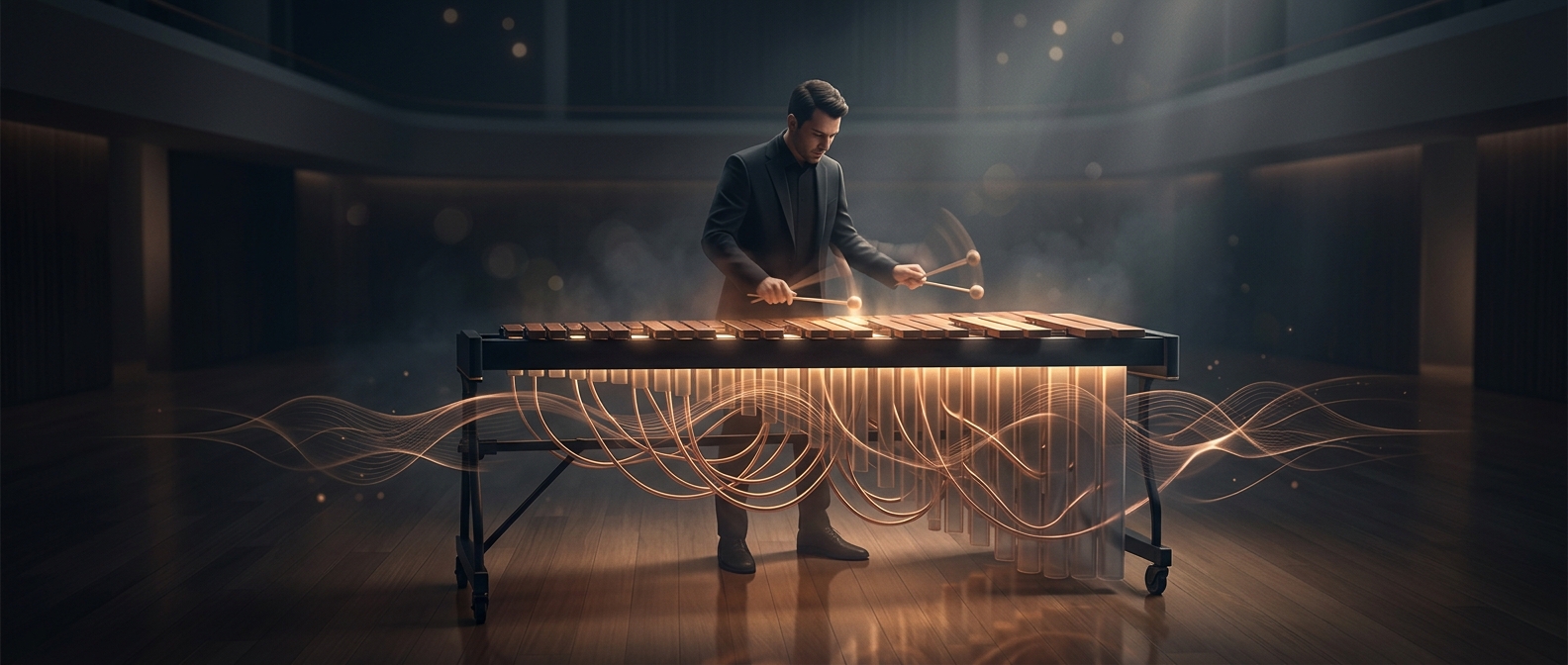
The tube is open at the top and closed at the bottom. When the bar vibrates, it sends pressure waves into the air inside the tube. Those waves bounce off the closed end. At the right tube length, the returning waves reinforce one another at a particular frequency, much as a swing moves higher when each push arrives at the right moment. The vibrating air then radiates sound out of the tube’s opening.
Because each bar is tuned to a different note, its tube must be a different effective length. Longer tubes generally reinforce lower pitches; shorter ones reinforce higher pitches. The result is not a new note added to the bar’s sound, but a stronger, more audible version of a pitch the bar is already making.
The Layout Shapes the Instrument
The tubes hang below the keyboard in a row, matching the bars above them. Low notes need long resonators, so the instrument’s frame must leave room beneath its lower bars; high notes can use much shorter tubes. That arrangement is why the marimba’s visible wooden keyboard is only part of its sound-making system. Strike a bar and the wood starts the vibration, but the column of air below it helps turn that brief impact into a tone that can fill a room.