How a Banjo Turns a Pluck Into a Burst of Sound
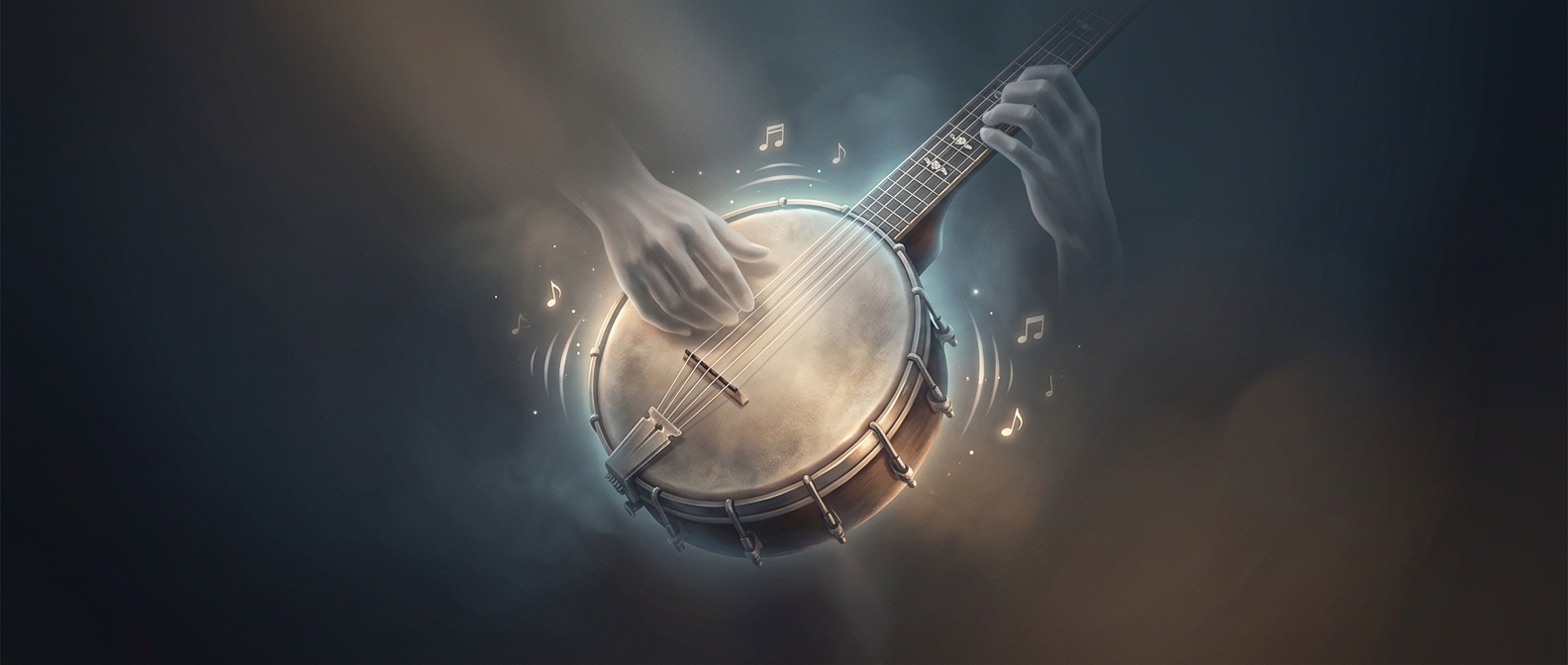
A plucked string moves only a little air on its own. The banjo’s bridge solves that problem: as the strings move, the bridge rocks against the head, setting a much larger surface into motion. The head then pushes and pulls the air around it, making the sound easier to hear across a room.
The head is stretched over a rim, forming a shallow air chamber. Vibrations travel through the head and rim and set that enclosed air moving too. Because the head is thin and under tension, it responds quickly to the strings rather than absorbing much of their motion. That helps give the banjo its sharp attack—the quick, distinct start of each note—and its characteristic ringing edge.
The Tradeoff Behind the Banjo’s Voice
A banjo’s sound depends on more than the head alone. Its tension, the bridge’s weight and placement, and the strings all affect how readily the head vibrates and which tones stand out. Tightening the head changes its response; changing the bridge can alter how much string energy reaches it. Small adjustments can therefore make the instrument sound brighter, warmer, or more forceful.
This construction favors projection and crisp notes over the smoother, fuller sustain associated with many wooden-bodied instruments. In a fast run, individual notes remain easy to pick out. The physical reason is also visible: the strings are not merely vibrating over a body; they are driving a taut drum surface that radiates their energy into the air.