How a Bow Turns Motion Into Vibration
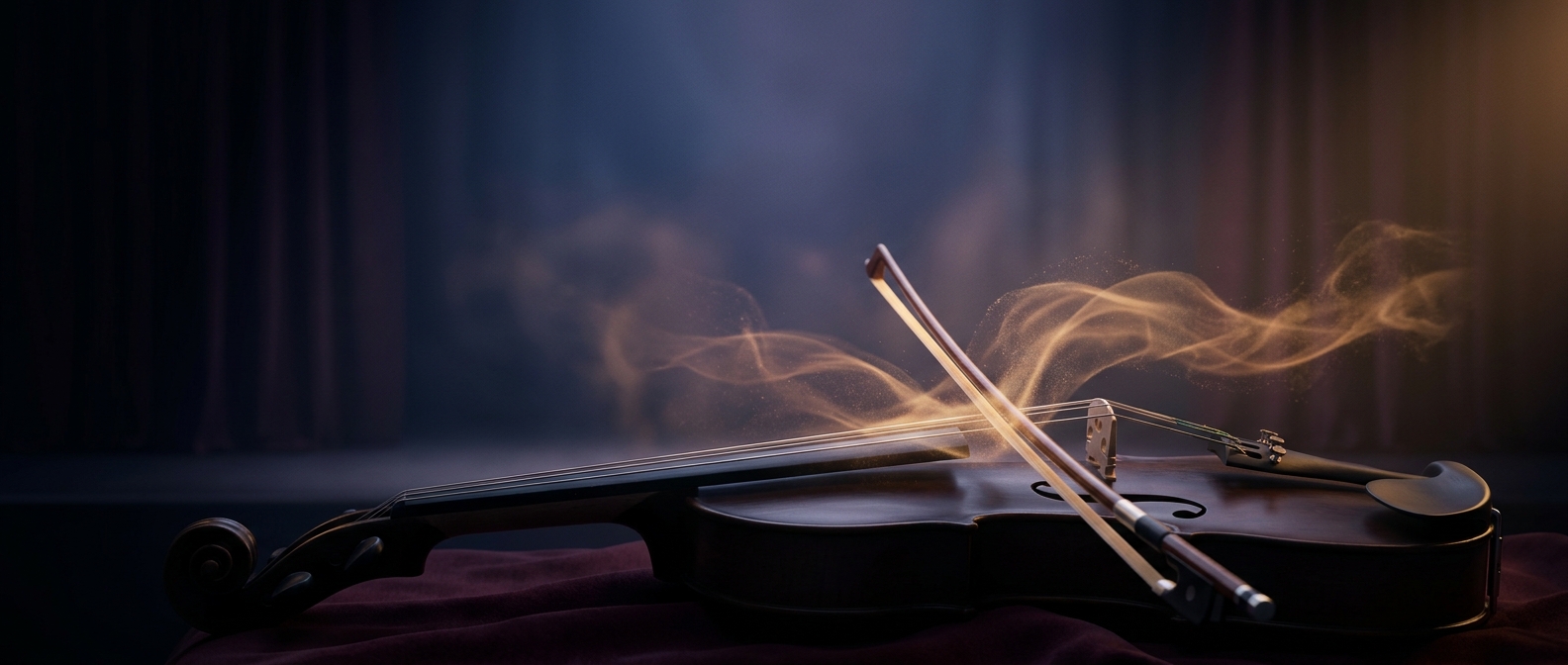
A violin string does not sound simply because the bow rubs against it. The bow has to transfer energy into a regular vibration, and rosin helps make that transfer possible. It is a solid, resinous material rubbed onto the bow’s hairs; the resulting rough, tacky coating increases their grip on the string.
As the bow moves, the string briefly sticks to the bow hair and is pulled sideways. The string’s restoring force then makes it slip free and snap back. This stick-and-slip cycle repeats rapidly, sustaining the string’s vibration for as long as the player keeps the bow moving.
Why the Grip Must Be Balanced
The repeating motion is orderly enough to produce a clear musical pitch. The vibrating string passes its energy through the bridge—the small wooden support beneath it—to the violin’s body, which moves the surrounding air and makes the sound audible. The player changes pitch by shortening the vibrating portion of the string with a finger, and changes loudness and tone by adjusting bow pressure, speed, and contact point.
Rosin is therefore not just a way to make the bow “stick.” Its grip must be sufficient for the bow to catch and drive the string, but controlled enough for the string to release smoothly. That balance is why players maintain the coating on the bow hair: without it, the bow struggles to set the string vibrating reliably, and the instrument’s sound can become faint or fail to start cleanly.