How a Drumstick Turns a Motion Into a Beat
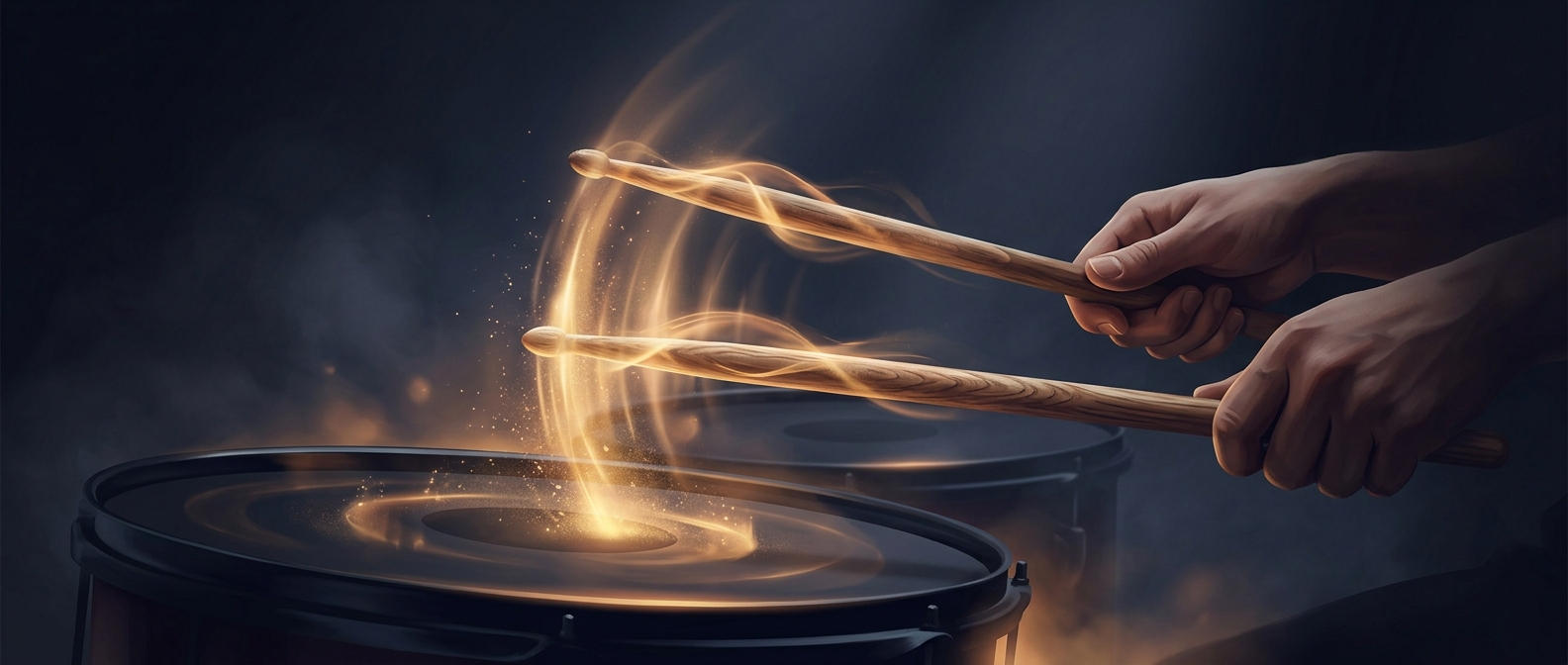
A drumstick does more than extend a drummer’s reach. Its weight and length give the hand leverage: a small wrist motion can send the tip toward the drumhead with enough speed to make a clear sound. After impact, the head pushes back, and the stick can rebound. A drummer can use that bounce for the next stroke—or restrain it to keep the stick from making an unwanted extra hit.
That balance between bounce and control is central to playing quickly. A loose grip lets the stick move, while fingers and wrist guide its return. For a soft note, the drummer limits the stroke’s speed and force; for a louder one, the stick travels faster or farther before impact. The same basic motion can therefore produce a wide range of volume and emphasis.
Small Choices Change the Sound
Sticks are not all identical. Their length, thickness, weight, and tip shape affect how they feel and how their impacts sound. A smaller tip concentrates contact on a narrower area; a broader tip spreads it out. Drummers choose and handle sticks to suit the sound they want and the demands of a particular passage.
On a kit, the stick also moves between surfaces: drumheads respond with a sharp attack and resonance, while cymbals ring and sustain. The drummer’s hands coordinate those different responses into a pattern. The stick’s rebound is not just a side effect of hitting a drum; it is part of what makes repeated, controlled strokes possible.