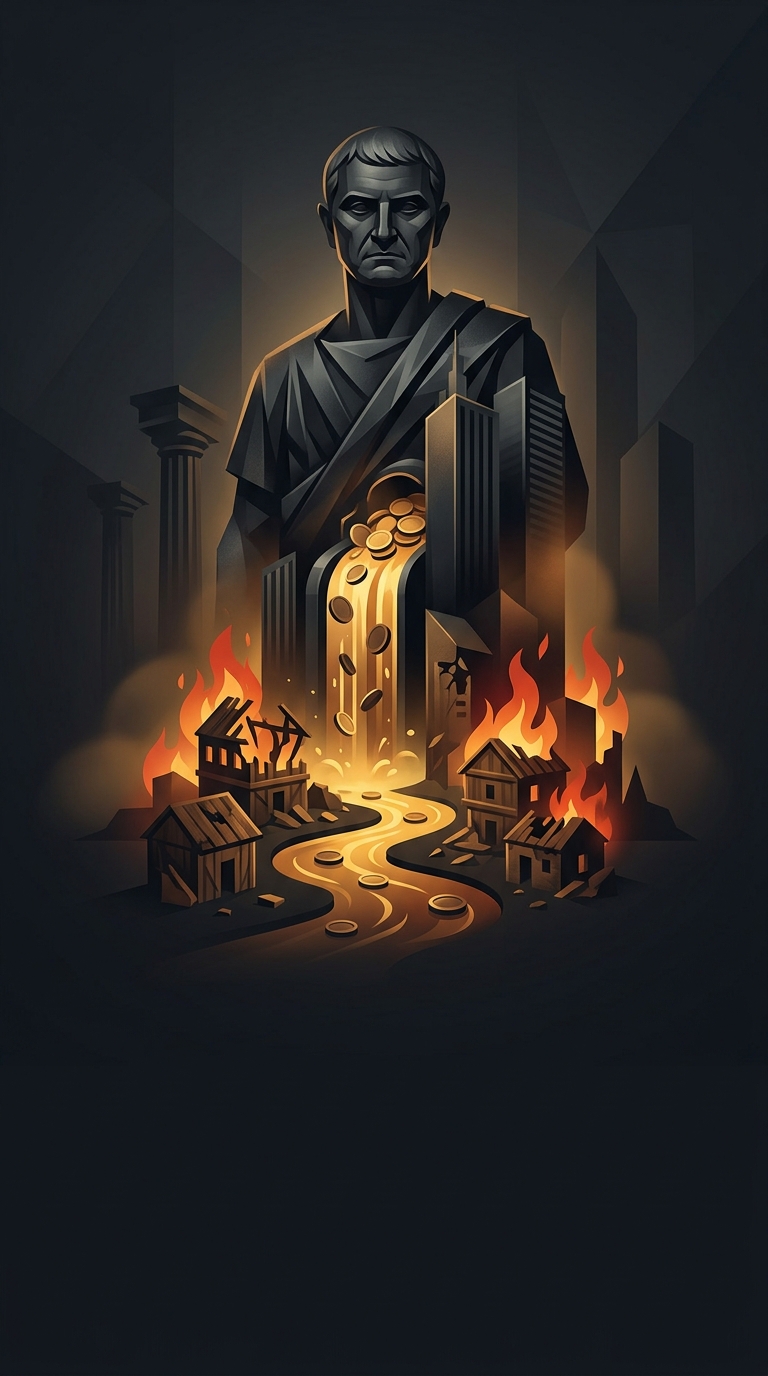
How a Roman fire became a real-estate bargain
In Crassus’s Rome, fire was not just a threat to a household; it could erase the value of an entire property before its owner had time to act. Buildings stood close together, and flames could spread through crowded streets faster than an owner could organize help. Rome had no modern municipal fire service ready to respond.
Ancient accounts describe Crassus keeping enslaved men trained to fight fires. But his crew’s arrival came with a business offer: Crassus would buy the burning property, often along with nearby buildings at risk, and the men would then put out the flames. The rescue and the purchase were part of the same transaction.
Why owners might accept
A proprietor facing a spreading blaze had little leverage. Refuse the offer, and the building might burn; accept, and at least some value could be recovered. Crassus could then repair or redevelop what he had bought, while the threat to neighboring properties gave him an opening to expand the deal.
The tactic turned emergency response into a source of bargaining power. His fire crew was useful not only because it could limit damage, but because it arrived at the moment when owners were most desperate to sell. The arrangement was private enterprise in a stark form: help was tied to a transfer of property, not offered as an unconditional public service.
A fortune built by more than one route
The fire brigade became one of the most memorable stories about Crassus’s wealth, though it should not be treated as the sole explanation for his fortune. He was also active in other areas of business and politics. What made the fire story remarkable was the way it joined those worlds: a crisis in the street could become an investment opportunity before the smoke had cleared.