Why a Stroller Basket Has a Weight Limit
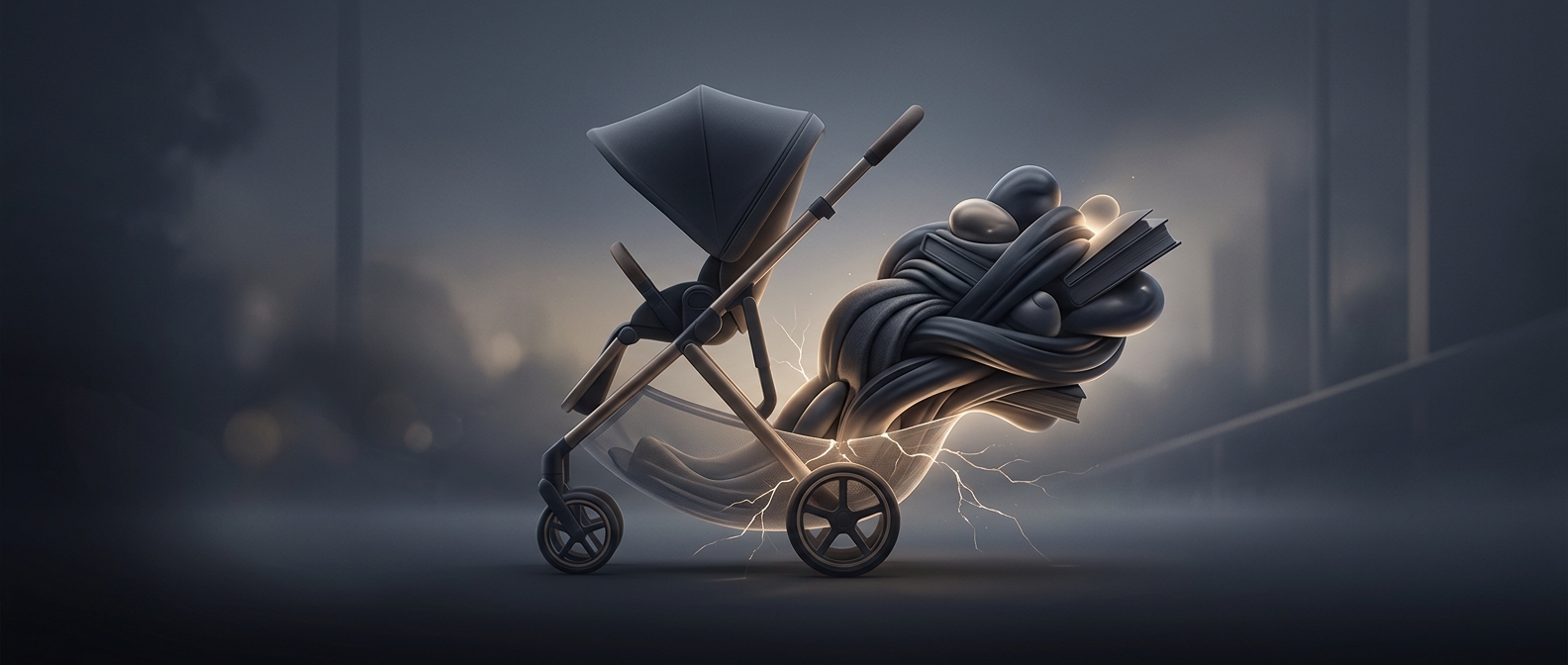
A stroller is stable only while its combined weight stays in a safe relationship to the wheels. The basket hangs low, but it is also behind the wheelbase—the area between the wheels that supports the stroller. A heavy load there can shift the combined center of gravity, the balance point of the stroller and everything in it, toward the rear.
How a Load Can Tip the Stroller
When that balance point moves too far back, the front wheels press less firmly against the ground. A bump, curb, or push on the handle can then rotate the stroller backward around its rear wheels. The risk depends not just on how heavy the load is, but on where it sits: weight farther from the wheelbase has more leverage, much like pushing down on the end of a seesaw.
The basket limit is therefore a design constraint, not a measure of how much fabric or plastic the basket can physically hold. A bag may fit without tearing and still make the stroller less stable. Manufacturers set limits for the model’s geometry and intended use, so a limit for one stroller should not be assumed safe for another.
Why Handle Loads Matter, Too
Hanging a heavy bag from the handle can create a similar problem, especially when a child is lifted out and the seat’s weight no longer counterbalances the bag. Keeping cargo within the stated limits—and placing it in the designated basket rather than stacking it high or hanging it from the handle—helps preserve the balance the stroller was designed around. That’s why a small grocery run can change how securely the front wheels stay on the ground.