Why a Free-Swiveling Wheel Can Wander
A stroller’s front swivel wheel is designed to pivot so the stroller can turn without lifting its front end. That freedom is useful on smooth pavement: a small push on the handle lets the wheel swing around and follow a new direction.
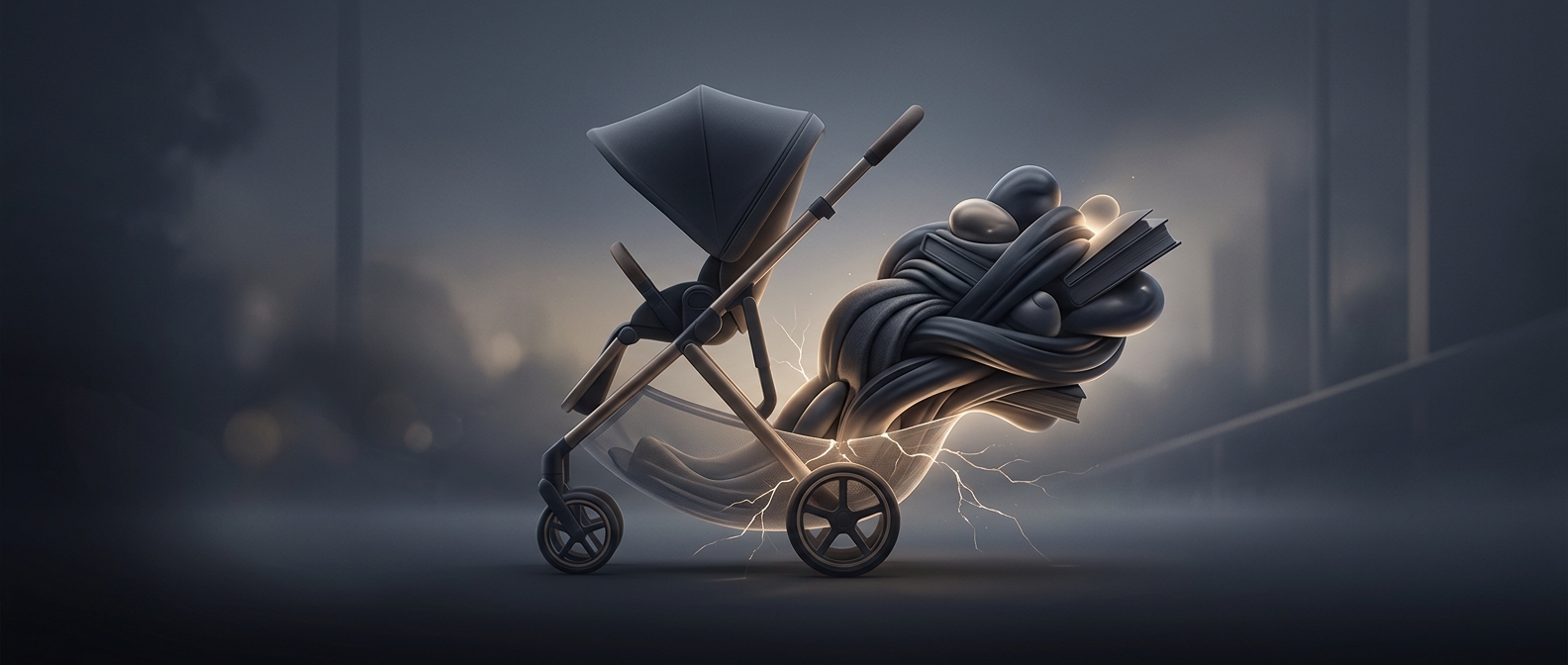
On gravel, grass, or broken pavement, though, the wheel can hit a bump at an angle. The impact may swivel it abruptly, changing its direction and tugging the stroller toward the side. The caregiver then has to correct the handle, sometimes repeatedly as the wheels cross uneven patches.
The Lock Trades Agility for Stability
A swivel lock holds the front wheel in line with the stroller rather than allowing it to pivot freely. When a bump strikes, the wheel is less able to turn sideways in response, so the stroller is less likely to be pulled off course. The lock does not cushion the bump or make rough ground smooth; it limits one way the bump can affect steering.
That comes with a tradeoff. A fixed wheel cannot swivel around for a tight turn, so changing direction may take more effort or require a wider arc. On smooth paths, swiveling is convenient. On uneven stretches, keeping the wheel pointed ahead can make the stroller easier to guide—even though it has less freedom to turn.